5.0 · 82 Google reviews
A Local Guide’s Honest Take on Family Tours
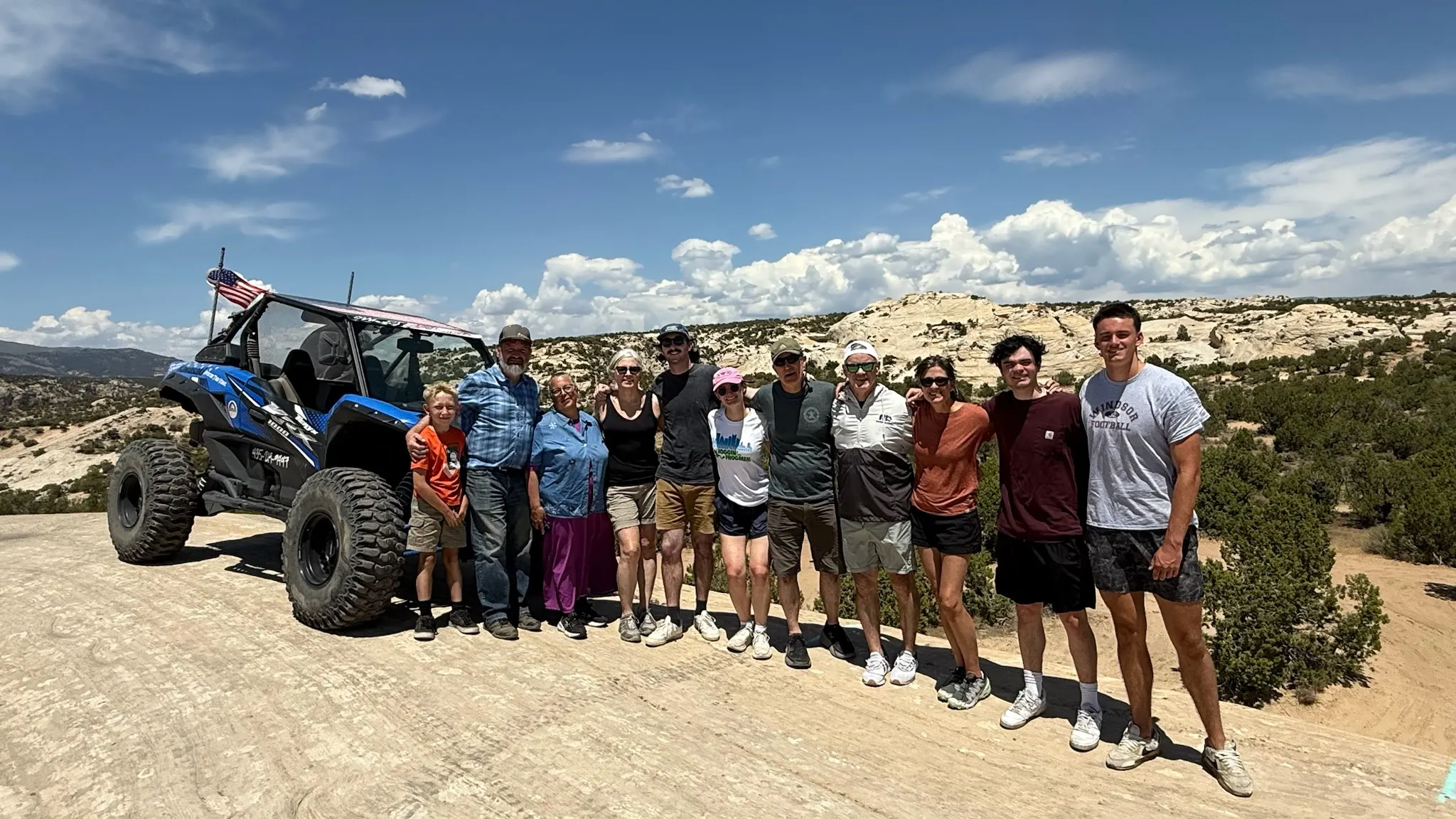
We’ve guided a lot of families through the canyons around Vernal — toddlers dozing against a parent’s arm, ten-year-olds who wouldn’t stop asking questions, teenagers who pretended to be too cool right up until the first sandy wash, and grandparents who quietly told us afterward it was the highlight of the trip. So this isn’t a brochure telling you every family will love it. It’s a straight answer to the question parents actually ask: will this work for my family, and how do I make sure it does?
The short version is that the equipment and the guiding remove the hard parts — an adult drives, the machine is stable and enclosed, and we set the pace. What’s left in your hands is the planning: matching the day to your kids’ ages and rhythms, setting expectations, and packing the few things that keep a child happy in the high desert. Get that right and a family UTV tour is one of the easiest big-payoff days you can plan in Dinosaur Country. This guide is about getting it right.
Key Takeaways
- An adult always drives; kids ride as passengers. Drivers must be 18+, and passengers can be as young as 2 — so parents drive while children ride. (Car-seat and specific-age details: VERIFY WITH OFFICIAL SOURCE.)
- The whole family stays together. Everyone rides the same trail at the same time, so no one is split off or left behind.
- The pace follows your youngest rider. Dave and Trudy set the tempo to the least experienced person aboard — relaxed and comfortable for children and grandparents alike.
- Grandparents don’t have to drive. The ride-along option ($125) lets anyone experience the full tour as a passenger with a guide.
- The machine is built for comfort. The Kawasaki KRX 1000 has a full roll cage, power steering, and FOX 2.5 PODIUM LSC suspension — stable and enclosed, not a bare quad.
- Planning is the real work — and it’s small. Timing the day around meals and energy, prepping the kids, and packing sun protection and water is most of what separates a great family day from a rough one.
- There’s an easiest trail. Doc’s Beach is the forgiving, open choice families ride most. You pick your trail when you book.
- Book ahead in peak season. May through October fills up. $349 per machine (up to 2 riders) for 3 hours. Call (435) 219-9447.
Is This Right for Your Family?
Most families are a good fit — but “family” covers everything from a couple with a napping toddler to four generations traveling together, and the honest answer depends a little on who’s in yours. Here’s how to think it through before you book.
Families with very young children. A guided tour can absolutely work with little ones riding as passengers, but this is where planning matters most. Toddlers have short attention spans and firm opinions about naps and snacks, so the three-hour window should land when your child is at their best, not their most fragile. Because restraint and car-seat specifics for the youngest passengers are changeable, VERIFY WITH OFFICIAL SOURCE when you call so you can plan around the real requirements rather than a guess.
Families with school-age kids. This is the sweet spot. Kids in this range are old enough to follow the safety briefing, stay engaged with the scenery and history, and genuinely remember the day — but still ride as passengers, so there’s no driving pressure on them or on you. For many families this is the single easiest age to bring along.
Families with teens. Teens 18 and over can drive their own machine, which turns the tour into a shared adventure rather than a chaperoned outing. Younger teens ride as passengers and tend to warm up fast once the trail opens. Either way, it’s an activity that competes well with a phone.
Multi-generation trips. One of the tour’s quiet strengths is that grandparents, parents, and kids can all ride the same trail together — more on making that comfortable below. If your extended family is large, our group UTV tours are built for bigger parties.
If your family has never done anything off-road before, that’s completely normal and no obstacle — the machines are beginner-friendly by design, which our Beginner’s Guide to UTV Tours covers in depth. This guide assumes you’ve got that part and focuses on the family logistics on top of it.
Couples vs. Families: What Changes
| A Couple Booking a Tour | A Family Booking a Tour | |
|---|---|---|
| Main planning question | Which trail do we want? | When are the kids at their best? |
| Who drives | Either or both, trading off | An adult (18+); kids ride along |
| Pace driver | Your own preference | Your youngest, least experienced rider |
| What to pack | The basics | Basics plus kid sun protection, water, snacks |
| Biggest variable | The scenery you choose | Timing the day around energy and meals |
| How to prep | Just show up | Talk the kids through it beforehand |
Planning a Family Tour
Planning a family tour is less about the trail and more about the clock. A three-hour tour is a long, wonderful stretch for a child who’s rested and fed, and a hard one for a child who’s tired and hungry — so build the day outward from your kids’ rhythm first, then slot the tour in. If your family runs best in the morning, book the morning; if a toddler naps at one, don’t book a tour that collides with it. This single decision does more for a family’s experience than anything else.
Once the timing is set, prepare the kids. Children do far better when they know what’s coming, so talk it through beforehand in simple terms: we’ll wear helmets, a guide will show us how everything works, a grown-up drives, we stay buckled, and we’ll stop to look at canyons and old rock drawings. Kids who’ve been told what to expect step into the safety briefing calm and curious instead of overwhelmed. If your child is anxious, mention it when you book — Dave and Trudy have settled a lot of nervous first-time young riders, and knowing in advance lets them tailor the introduction.
Finally, plan the logistics as a family unit, not a pile of individuals. Decide roughly who’s driving and who’s riding along, count your seats (each machine holds two, and there’s a $125 ride-along option for an extra passenger with a guide), and if you’re a larger extended group, talk to us early so we can arrange machines across the party — our group UTV tours page covers bigger bookings. For families building a whole Dinosaur Country trip around the tour, the 2-Day Family Itinerary shows how a UTV day fits alongside the region’s other family stops.
Children and Age Considerations
The most useful way to think about kids on a UTV tour is by developmental stage, not a single age number — because what a toddler needs and what a teen needs are completely different problems to plan for. Passengers can be as young as 2 and drivers must be 18 or older; within that range, here’s how the experience tends to land.
Toddlers vs. School-Age Kids vs. Teens
| Toddlers (approx. 2–5) | School-Age (approx. 6–12) | Teens (13–17, and 18+) | |
|---|---|---|---|
| Role | Passenger with an adult | Passenger | Passenger; 18+ can drive |
| Best part for them | The motion and being “in it” | Scenery, history, feeling included | Driving (18+) or the adventure of it |
| Biggest variable | Naps, snacks, attention span | Staying engaged for three hours | Buy-in — high once it starts |
| Plan around | Timing to their best hours | Questions, curiosity, breaks | Whether an 18+ teen wants to drive |
| Parent’s job | Comfort and timing | Point things out, keep it fun | Let them own it |
(Ages above are general planning ranges, not policy. For any age-specific requirement, car seat, or restraint question, VERIFY WITH OFFICIAL SOURCE.)
For toddlers, everything hinges on timing and comfort, and on confirming the restraint details ahead of time. For school-age kids, the win is engagement — this is the group that soaks up the petroglyphs and the outlaw history, so lean into it and let them ask questions. For teens, buy-in is the only real variable, and it evaporates about thirty seconds into the first sandy wash. If an 18-plus teen wants to drive, that ownership often makes the whole trip for them.
Grandparents and Multi-Generation Groups
The reason a UTV tour works so well for extended families is that it doesn’t ask everyone to do the same thing. On the same trail, at the same time, one grandparent can drive their own machine while another rides along as a passenger, parents drive with kids beside them, and nobody is sidelined. That’s rare in a family activity, and it’s the heart of why multi-generation groups book these tours.
For grandparents specifically, the two features that matter most are the power steering — which keeps driving light and low-effort — and the ride-along option, which removes driving from the equation entirely for anyone who’d simply rather take in the scenery. The full roll cage and the guide-set pace round it out. What we can’t do from here is judge any individual’s comfort with terrain and motion, so if a grandparent has mobility, back, or health considerations, VERIFY WITH OFFICIAL SOURCE by calling before you book — a two-minute conversation beats a guess every time.
Driver or Ride-Along? A Family Decision Guide
| Choose to drive when… | Choose ride-along when… |
|---|---|
| The person is 18+ and comfortable steering | The rider is a child, or an adult who’d rather relax |
| An 18+ teen wants to own the adventure | A grandparent prefers scenery over driving |
| A parent wants control of the machine’s pace | Someone is nervous about operating a vehicle |
| Your family has enough seats to go around | You need a spot for an extra passenger ($125 with a guide) |
Choosing the Right Trail
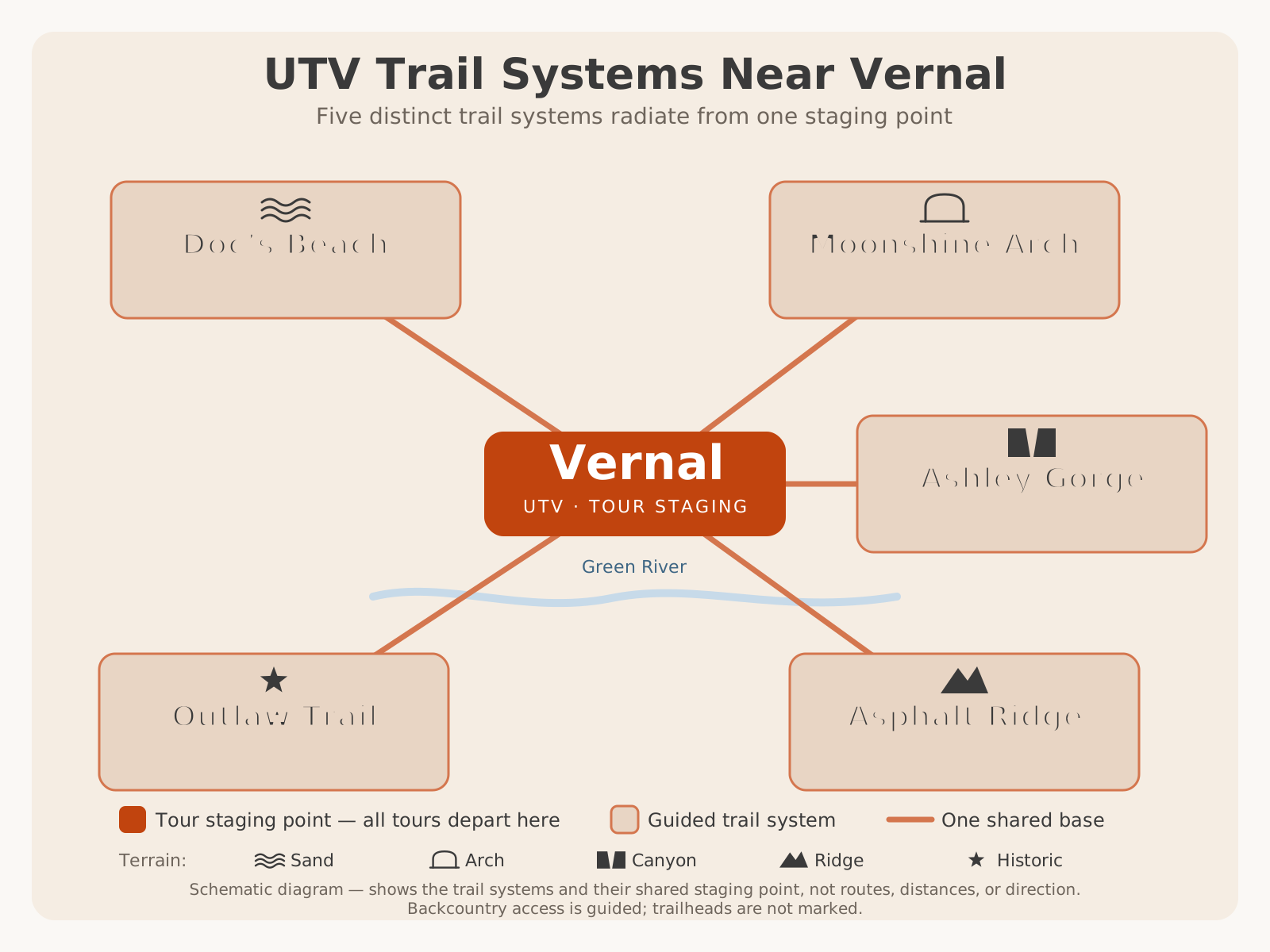
For families, the trail question has a simple starting point: Doc’s Beach. It’s the open, forgiving trail we point most families toward and the one first-time and younger riders tend to handle most comfortably — which is exactly why it’s the family default. You choose your trail when you book, so you’re never locked into terrain that doesn’t fit your group.
Beyond that, the honest advice is to let us help rather than pick from a list on your own. Tell Dave or Trudy your kids’ ages, your family’s comfort level, and what you’re hoping for, and they’ll match the trail to your group when you book — that conversation is worth more than any ranking. If you’d like to see the full lineup of trail systems and what each is known for before you call, our Best UTV Trails Near Vernal guide lays them all out.
It can help to picture the whole lineup before you call. The five trail systems all set off from one staging point in Vernal, with Doc’s Beach the gentlest of them — the diagram below shows how they relate.
One last thing: conditions in the backcountry change with weather and season. Whatever trail you’re considering, VERIFY WITH OFFICIAL SOURCE for current conditions and access when you book, so the plan matches the day you actually ride.
What to Wear
Family dressing follows the same high-desert logic as any tour, applied to kids: closed-toe shoes for everyone (the one firm rule), comfortable clothes nobody minds getting dusty, and layers for the cool-morning-to-warm-afternoon swing. The family-specific part is sun protection children will actually keep on — a hat that secures, sunglasses, and sunscreen applied before you arrive. Because desert weather shifts, dress for the day’s real conditions rather than last week’s forecast.
For a season-by-season breakdown, see What to Wear on a UTV Tour and the Vernal Weather Guide.
What to Bring
Helmets and required safety gear are provided, so your packing list is short — but with kids, the few items you bring are the ones that save the day. Prioritize water (the dry air dehydrates children faster than they’ll notice), sun protection you can reapply, and any small comfort item that keeps a young child settled. Secure everything: loose water bottles, phones, and toys bounce around on the trail, so a strap or a zippered pocket matters. If you need a child-size helmet, VERIFY WITH OFFICIAL SOURCE that one is available when you book rather than assuming. The complete What to Bring checklist covers the rest.
Safety Tips for Families
Safety is built into how a guided tour runs, which is exactly why it suits families: an adult 18-plus always drives, children only ride as passengers, and every tour opens with a full safety briefing before anyone moves. The Kawasaki KRX 1000’s full roll cage and power steering are standard, and Dave and Trudy ride alongside the whole way — which is a real advantage in backcountry where there’s no cell service to fall back on.
The family-specific safety layer is mostly preparation. Make sure kids understand they stay seated and buckled for the whole ride, keep hands and arms inside the cage, and listen to the guide — framing it as “the rules that let us have fun,” not scary warnings, lands better with children. Watch heat and hydration closely in summer, since kids overheat faster than adults. And for the specifics that genuinely can change — child restraint and car-seat requirements, minimum-age details, and any medical guidance — VERIFY WITH OFFICIAL SOURCE with us directly rather than relying on general advice.
Common Parent Concerns
“Will my toddler actually sit still for three hours?” Some do beautifully; some don’t. The honest answer is that timing decides it — a rested, fed toddler riding during their best hours does far better than a tired one. Plan the day around them and the odds shift heavily in your favor.
“Is it too intense for a sensitive or nervous child?” Usually not, because you and the guide control the pace, and the easy opening stretch lets a hesitant child warm up before anything scenic. Tell us at booking if a child is anxious so we can ease them in.
“What if a kid needs to stop mid-tour?” Then we stop. The tour bends to your family, not the other way around — needing a break is completely normal and never a problem.
“Will the grandparents be okay?” Often yes, thanks to power steering, the roll cage, and the no-driving ride-along option. For specific health or mobility questions, VERIFY WITH OFFICIAL SOURCE before you book.
“Is the desert heat safe for my kids?” It’s manageable with planning — hats, sunscreen, and plenty of water — but summer heat is real, so hydration and sun protection for children aren’t optional. Check the Vernal Weather Guide for what to expect.
Family Planning Mistakes to Avoid
The families who have a rough day almost always trace it back to one of these — all avoidable:
- Booking against your kids’ clock. A tour at nap time or after a long travel day is the single most common misstep. Book for your children’s best hours.
- Skipping the prep conversation. Kids who don’t know what’s coming get overwhelmed at the briefing. Two minutes of “here’s what we’ll do” changes everything.
- Under-packing sun and water for children. The high desert dehydrates and sunburns kids fast. This is the most common oversight — see What to Bring.
- Assuming the youngest can handle anything. Match your expectations to your actual child, not an idealized one, and plan breaks accordingly.
- Not asking about age and restraint details in advance. Car-seat and minimum-age specifics can change — call ahead and VERIFY WITH OFFICIAL SOURCE so there are no surprises.
- Forcing a nervous grandparent to drive. The ride-along option exists precisely so no one has to. Don’t let it become a sticking point.
- Booking too late in peak season. May through October fills up, and only one full-fleet tour runs at a time — lock in your date early.