Key Takeaways
- Dinosaur tracks you can actually walk to. Red Fleet preserves hundreds of roughly 200-million-year-old footprints on an exposed sandstone slope — a rare, tangible dinosaur experience that complements the fossils at the national monument.
- Paddle to the past. The classic way to reach the trackway is by kayak or paddleboard across the reservoir, turning the visit into an adventure in itself.
- A genuine swimming reservoir. Warm summer water, a beach, and red-rock scenery make it a favorite family cool-off spot — no lifeguards, so supervise closely.
- Small, quiet, and uncrowded. Red Fleet is more intimate than Flaming Gorge and less developed, which is exactly its charm for families and paddlers.
- Verify the specifics. Fees, hours, campground availability, trail distance, fishing rules, and the trackway’s access all change — this guide flags what to confirm with Utah State Parks before you go.
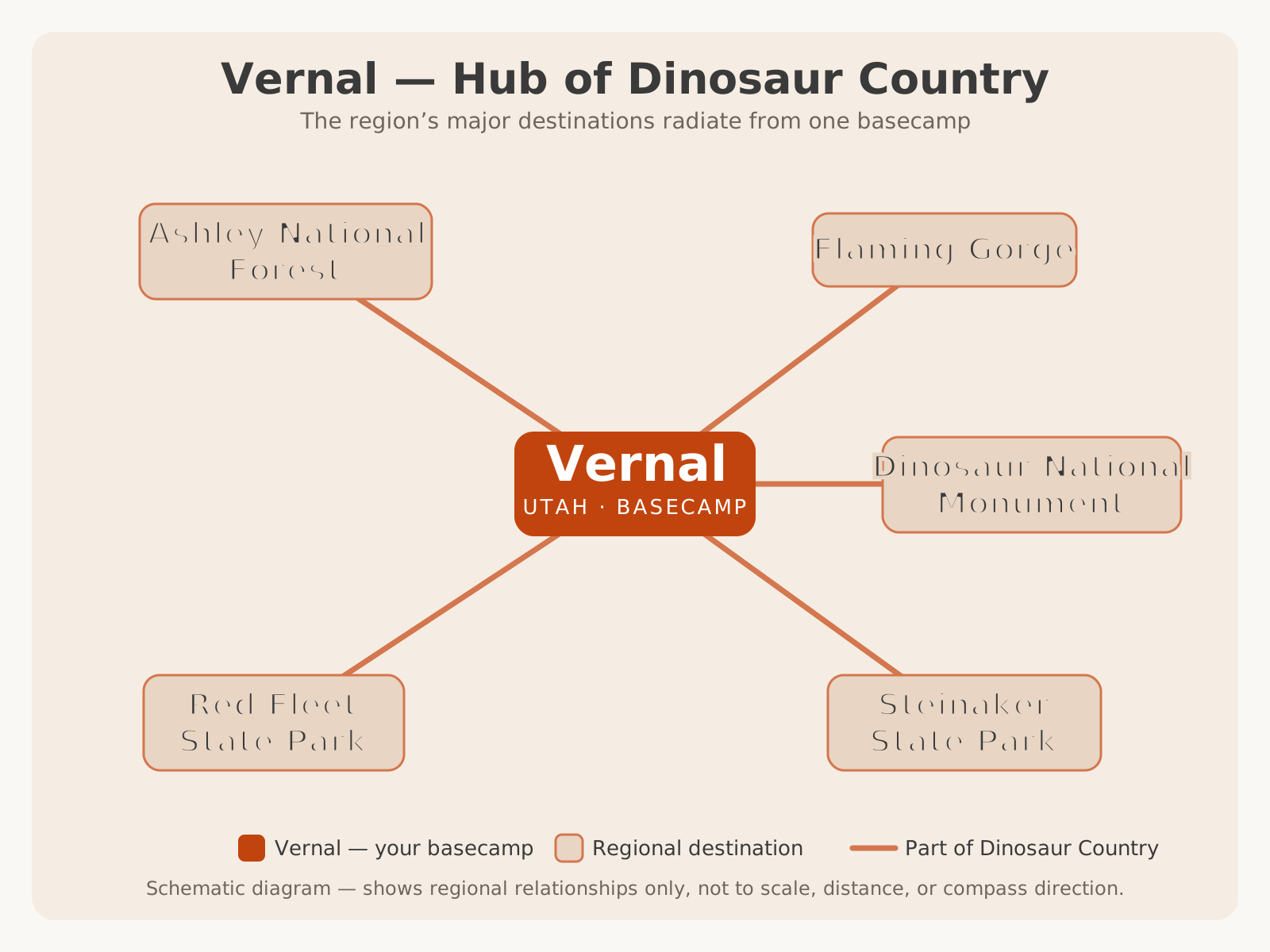
It helps to place Red Fleet in the wider region first. The park is one of five destinations that radiate from Vernal — the basecamp town a short drive south — close enough to pair easily with the national monument or with its neighbor, Steinaker.
Why Visit Red Fleet State Park
Most visitors come to the Vernal area for the big names — Dinosaur National Monument, Flaming Gorge — and treat Red Fleet as an afterthought, if they hear about it at all. That’s a mistake. Red Fleet packs an unusually satisfying combination into a small, easy package: you can stand on a rock face covered in genuine dinosaur tracks in the morning and be swimming in a warm red-rock reservoir by lunch, all within ten miles of town.
The scenery alone justifies the trip. The reservoir is cradled by dramatic Navajo sandstone formations — the “red fleet” of the name — that glow at the ends of the day and reflect in the water on a calm morning. It’s the kind of place that photographs like a far more famous park but rarely has a crowd. And because it’s compact and low-key, it’s forgiving: easy to navigate, easy on families, and easy to combine with the region’s bigger attractions.
For a Vernal-based trip, Red Fleet is the perfect change of pace — a half-day of dinosaurs and water that slots neatly between a monument visit and a mountain day. It sits within a cluster of destinations that includes its neighbor Steinaker State Park, the fossils at Dinosaur National Monument, and the high country of Ashley National Forest. For how it all fits together, start with our Ultimate Guide to Vernal.
History
Red Fleet Reservoir is a made landscape laid over a very old one. The reservoir was created by damming Big Brush Creek to store water for the surrounding basin — one of several reservoirs built across the Uintah Basin to serve ranching, agriculture, and communities. As it filled, it created the recreation area that became Red Fleet State Park, managed today by Utah’s Division of State Parks. VERIFY WITH OFFICIAL SOURCE (Utah State Parks) for the dam’s construction date and the park’s establishment history.
The park’s name comes from its most striking feature: three large tilted formations of red Navajo sandstone that rise from the water and, from the right angle, resemble the sails and hulls of a fleet of ships at anchor. That nautical image gave the “Red Fleet” its name and remains the park’s visual signature.
But the site’s real history runs vastly deeper than any reservoir. Long before there was water here, this was sand and mud at the edge of an ancient environment where dinosaurs walked — and some of their footprints survived, pressed into stone. That trackway, exposed at the reservoir’s edge, connects a modern recreation area to a moment roughly 200 million years in the past.
Geology
The rock that defines Red Fleet is Navajo sandstone, the same iconic formation responsible for much of southern Utah’s most famous red-rock scenery. It began as an enormous field of wind-blown dunes in a desert that covered the region in the Early Jurassic, and you can still read that origin in the sweeping, cross-bedded lines that curve through the cliffs — fossilized dune faces, frozen mid-drift.
Over millions of years those dunes were buried, cemented into stone, then lifted and eroded into the tilted, sculpted formations that ring the reservoir today. The red comes from iron oxide — rust — staining the sandstone, and it’s what makes the “fleet” glow so intensely at sunrise and sunset.
The dinosaur trackway sits within this same geological story. The footprints were made on a surface of sand and mud that later hardened and was preserved, and the exposed, sloping rock at the reservoir’s edge is essentially a page of that ancient landscape turned face-up. For the broader geologic story of how these layers were tilted and carved across the region, our Dinosaur National Monument guide covers the uplift and erosion in more depth.
Dinosaur Trackways
The trackway is Red Fleet’s headline attraction and one of the most remarkable dinosaur sites in Utah that most people have never heard of. On a sloping expanse of sandstone near the reservoir, hundreds of dinosaur footprints are preserved — three-toed tracks left by dinosaurs walking across the ancient surface roughly 200 million years ago, in the Early Jurassic. Unlike the fossilized bones at the national monument, these are trace fossils: not the animals themselves, but the direct impressions of living dinosaurs in motion, which gives them an uncanny immediacy.
Reaching the tracks is part of the experience. There are two common approaches:
- By trail. A hiking route leads from a park trailhead to the trackway site along the reservoir. It’s the straightforward option, but it’s an exposed high-desert walk — plan for sun and carry water.
- By water. Many visitors paddle a kayak or paddleboard directly across the reservoir to the trackway shoreline, which shortens the overland walk and turns the visit into a small adventure. It’s the local favorite when the water is calm.
Because the trackway is exposed at the water’s edge, access can be affected by reservoir levels and conditions. Confirm the current situation with Utah State Parks before you build a trip specifically around it.
Reservoir Recreation
At its heart, Red Fleet is a water park in the natural sense — a warm, scenic reservoir made for a summer day. Its relatively compact size and red-rock surroundings make it feel intimate and protected compared with the vastness of Flaming Gorge, and that’s a big part of its appeal for families and paddlers. The reservoir supports the full range of flat-water recreation: swimming, kayaking, paddleboarding, canoeing, motorized boating, and fishing, along with a boat ramp and shoreline for launching and lounging.
Because it’s smaller and closer to town than Flaming Gorge, Red Fleet is an easier, lower-commitment outing — you can be on the water within minutes of arriving, without the distances, wind exposure, and logistics of a big reservoir. For a full day of big-water boating and trophy fishing, the Flaming Gorge guide covers that experience; for a relaxed paddle, a swim, and a dinosaur hike, Red Fleet is hard to beat.
| Activity | At Red Fleet |
|---|---|
| Swimming | Warm summer water, beach area (no lifeguards) |
| Kayaking / paddleboarding | Excellent — calm, scenic, and the route to the trackway |
| Motorized boating | Yes — boat ramp available |
| Fishing | Shore or boat; trout and warm-water species |
| Camping | Lakeside campground |
| Dinosaur trackway | By trail or by paddle across the reservoir |
Kayaking and Paddleboarding
Paddling is arguably the best way to experience Red Fleet. The reservoir’s sheltered size keeps the water calm on a still morning, the red sandstone formations make a spectacular backdrop, and — uniquely — a paddle here can double as your route to the dinosaur trackway. Gliding across the water toward a shoreline of 200-million-year-old footprints is the kind of experience that sticks with people.
A few practicalities:
- Go early. Mornings are typically calmest; afternoon wind can pick up and ripple the water, making both paddling and reflections harder.
- Life jackets on. Cold water below the warm surface, no lifeguards, and open water mean life jackets for everyone, especially kids.
- Bring your own or check rentals. Whether on-site rentals are available changes — VERIFY WITH OFFICIAL SOURCE before counting on renting a kayak or paddleboard at the park.
- Mind the trackway shoreline. If you paddle to the tracks, land carefully and treat the site with the same respect as any hiker would.
Swimming
On a hot Uintah Basin summer day, Red Fleet’s reservoir is a genuine relief. The water warms nicely through the season, there’s a beach area for wading and sunning, and the red-rock setting beats any municipal pool. It’s a popular family swimming spot precisely because it’s warm, scenic, and manageable.
The essential caution: there are no lifeguards. Supervise children closely, keep non-swimmers in life jackets, and remember that water temperature drops with depth even when the surface feels warm. VERIFY WITH OFFICIAL SOURCE (Utah State Parks) for current designated swim areas, water conditions, and any seasonal advisories before swimming.
Fishing Overview
Red Fleet is a pleasant, approachable fishery — not the trophy destination that Flaming Gorge is, but an easy, family-friendly place to catch fish from shore or a boat. The reservoir is generally known for rainbow trout along with warm-water species such as bass and bluegill, giving anglers variety through the seasons. Its size makes it especially good for beginners and kids, who can fish the shoreline without needing a boat.
Camping
Red Fleet has a campground near the reservoir, which makes it easy to turn a day trip into an overnight — falling asleep under dark desert skies and waking up steps from the water for an early paddle before the wind and crowds arrive. Camping beside the red rock, with the reservoir glowing at sunset, is a genuinely lovely experience and a quieter alternative to the busier campgrounds elsewhere in the region.
Because site types, amenities, fees, reservation windows, and seasonal availability change, this guide won’t publish specifics that could go stale. As general guidance:
- Summer weekends fill up — reserve ahead where possible.
- Confirm whether your intended dates are reservable or first-come, first-served.
- Check what amenities (water, restrooms, hookups) are currently available before you rely on them.
VERIFY WITH OFFICIAL SOURCE (Utah State Parks and the reservation system) for current campground details and to book. For packing guidance for high-desert camping and big day-to-night temperature swings, see our what to bring guide.
Hiking
Hiking at Red Fleet is centered on the dinosaur trackway trail, the park’s signature walk, which leads from a trailhead across high-desert terrain to the track site at the reservoir’s edge. It’s the hike most visitors come for, and the payoff — a rock face of ancient footprints — is unmatched. Beyond it, shorter shoreline walking and exploration around the formations round out the on-foot options.
This is exposed, high-desert hiking: little shade, intense sun, and dry heat, especially in summer. Carry more water than you think you need, wear sun protection, start early in the warm months, and wear real footwear for uneven rock. VERIFY WITH OFFICIAL SOURCE (Utah State Parks) for current trail distances, conditions, and the trackway route before you set out — and remember there’s little to no cell service to fall back on.
Wildlife
For a small park, Red Fleet supports a nice range of high-desert and water-loving wildlife. Around the sagebrush and rock you may see mule deer, jackrabbits, cottontails, lizards, and a variety of desert birds, while the reservoir draws waterfowl and other birds to its shoreline — a good spot for casual birdwatching, especially in the softer light of morning and evening.
As always in the high desert, give animals their space, never feed wildlife, and watch where you put your hands and feet on rocky ground, since rattlesnakes live in the region. Keep a respectful distance and let the animals be.
Photography Tips
Red Fleet is a photographer’s gift — dramatic red rock, reflective water, and far fewer people than comparable scenery elsewhere.
- Shoot the golden hours. The Navajo sandstone “fleet” glows at sunrise and sunset; midday flattens the color. Early and late light is everything here.
- Chase reflections at dawn. Calm morning water mirrors the red formations — get out before the wind picks up for the signature shot.
- Photograph the trackway respectfully. Capture the footprints with natural light and a low angle to bring out the depth, but never chalk, wet, or touch the prints to “improve” a photo — it damages the resource.
- Use the paddle perspective. A kayak or paddleboard puts you at water level for unique low-angle compositions of the formations and shoreline (protect your gear from the water).
- Watch the skies. Summer thunderheads build dramatic backdrops but bring lightning risk on open water and exposed rock — get off the water and off high ground when storms approach.
Seasonal Advice
Red Fleet is primarily a warm-season destination, with its recreation peaking when the water warms up.
- Summer (peak). Prime time for swimming, paddling, and camping, with warm water and long days. It’s also the busiest and hottest — start water activities and the trackway hike early to beat the afternoon heat and wind.
- Spring & fall (shoulder). Cooler, quieter, and beautiful, with excellent light and comfortable hiking to the trackway. The water may be too cold for comfortable swimming, but paddling, fishing, photography, and the tracks are all rewarding, and crowds are thin.
- Winter. Cold and quiet, with limited recreation; some facilities and services may be reduced or closed. It can be starkly scenic, but confirm what’s open first.
Family Tips
Red Fleet might be the single most family-friendly stop in the Vernal area, because it hits so many kid priorities at once: real dinosaur footprints, a warm reservoir to swim in, easy shoreline fishing, and a paddle adventure — all in a compact, low-stress setting.
To make a family visit go smoothly:
- Do the tracks early. The trackway hike is exposed; tackle it in the cool morning, with hats, sunscreen, and plenty of water.
- Life jackets, always. No lifeguards, cold water below the surface — kids in life jackets near or on the water.
- Turn it into a story. Let kids imagine the dinosaurs that made the prints; it makes the site come alive and pairs perfectly with a trip to the fossils at the monument.
- Pack for sun and dryness. Shade is scarce; bring more water and snacks than you expect to use.
For a broader kid-focused plan around Vernal, see fun things to do in Vernal with kids, and for the fossil side of the dinosaur story, the Dinosaur National Monument guide.
Accessibility Notes
As a developed state park, Red Fleet generally provides accessible parking and basic facilities in its day-use and campground areas, and much of the reservoir’s shoreline and beach experience is close to parking. However, the dinosaur trackway trail is an unpaved, high-desert route over uneven ground, and reaching the tracks — whether on foot or by paddle — involves terrain that is not uniformly accessible.
Because specific accessible facilities and current conditions vary and change seasonally, VERIFY WITH OFFICIAL SOURCE (Utah State Parks) for current accessibility provisions before a visit if you have specific needs.
Suggested One-Day Itinerary
A half to full day is all Red Fleet needs, and it pairs beautifully with the rest of a Vernal trip.
- Early morning: Arrive early and head straight for the dinosaur trackway while it’s cool — either hike the trail or paddle across the calm morning water to the site. Photograph the prints respectfully.
- Late morning: Back at the main area, swim, paddle, or fish the reservoir as the day warms, with the red formations as your backdrop.
- Lunch: Picnic at the shoreline or day-use area.
- Afternoon: More time on the water, or pack up and continue to a nearby destination — Steinaker State Park is minutes away, and Dinosaur National Monument is a short drive southeast.
- Golden hour: If you’re staying, catch the sunset light on the “fleet” and the reflections on the water before dark.
Suggested Weekend Itinerary
With an overnight, Red Fleet becomes the relaxed anchor of a broader weekend.
- Day 1 — Red Fleet. Set up at the campground, do the trackway in the morning, spend the afternoon swimming and paddling, and enjoy a red-rock sunset and a night under dark skies.
- Day 2 — Dinosaurs & beyond. Pair the tracks you saw with the fossils at Dinosaur National Monument for the full dinosaur story, or head north to the big water of Flaming Gorge or the high country of Ashley National Forest.
- Optional Day 3: A guided backcountry adventure or more of the region’s things to do in and around Vernal.
Planning Tips
A few things to get right for a smooth Red Fleet visit:
- Confirm fees and hours first. Red Fleet is a fee state park with day-use, camping, and boat-launch charges and seasonal hours — VERIFY WITH OFFICIAL SOURCE (Utah State Parks) before you go.
- Reserve summer camping early. Weekends fill; book ahead where you can.
- Bring your own water craft and gear unless you’ve confirmed on-site rentals.
- Do the trackway in the morning. It’s exposed and hot midday; go early with sun protection and water.
- Respect the tracks. Look, photograph, and leave them untouched — vandalism has damaged sites like this, and protecting them keeps them open for everyone.
- Fuel and supplies in Vernal. Stock up in town; services at the park are minimal.
- Pair it up. Red Fleet is at its best combined with the nearby state parks, the monument, or a mountain or reservoir day — build it into a bigger Dinosaur Country plan rather than a standalone stop.
Red Fleet State Park is the region’s best-kept secret hiding in plain sight — a place where you can trace a dinosaur’s footprints and then swim in a red-rock reservoir a stone’s throw away, all without a crowd. Give it a morning or a full weekend, verify the details that change, and use Vernal as your base for the wider trip. When you’re ready to add a guided backcountry adventure to your Dinosaur Country itinerary, book a UTV tour with Adventure Tours Vernal and let Dave and Trudy show you the country beyond the pavement.