Key Takeaways
- It’s Dinosaur Country for a real reason. Vernal’s identity traces directly to a 1909 fossil discovery that became Dinosaur National Monument — this isn’t a marketing gimmick layered onto an ordinary town.
- You need a vehicle. Vernal’s attractions ring the town at distances of 5 minutes to an hour; there’s no transit network connecting them.
- It’s a working town, not a resort. Expect straightforward pricing, a walkable but modest Main Street, and a slower pace than tourist-built destinations.
- Two to three days is the right amount of time. One day only covers the monument or one other headline stop; three lets you add Flaming Gorge or the mountains.
- It’s the practical, uncrowded alternative to Moab for red-rock scenery and off-road adventure — cooler, cheaper, and quieter, with fossils and rock art Moab can’t match.
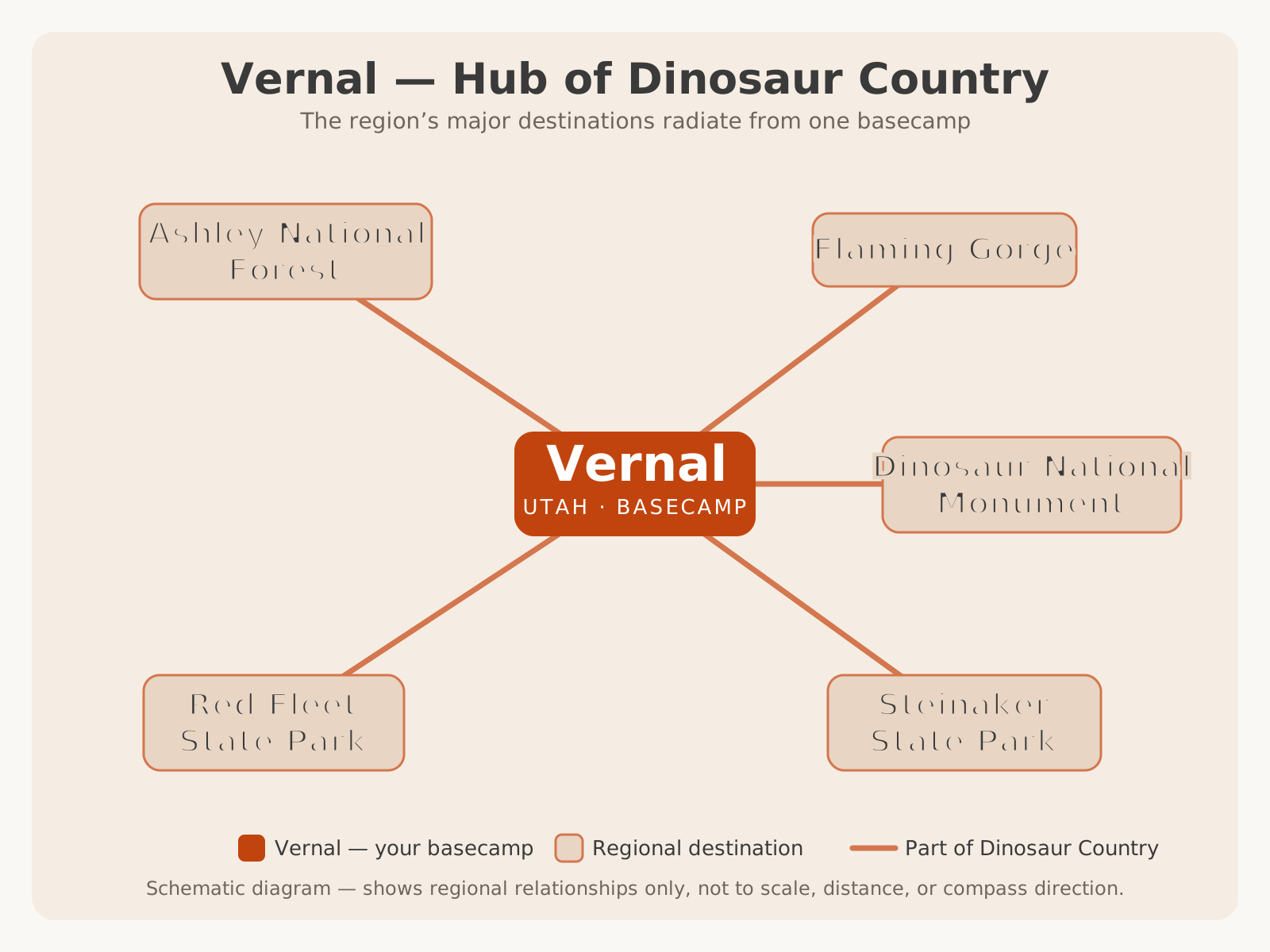
Vernal’s single greatest practical advantage is its position: nearly everything worth seeing in Dinosaur Country radiates outward from town, so one basecamp puts the whole region within a day’s reach. The diagram below shows that relationship at a glance before the details that follow.
Where Is Vernal, Utah?
Vernal sits in the Uintah Basin, a broad high-desert valley in the northeastern corner of Utah, closer to the Colorado border than to any other major Utah city. It’s ringed by the Uinta Mountains — Utah’s highest range — to the north, and by canyon and mesa country running south and east toward Dinosaur National Monument. The elevation in town is about 5,331 feet, high enough to shape everything from the sunburn risk to the overnight temperature swing.
Two things put Vernal on the map geographically. First, it’s the closest full-service town to Dinosaur National Monument’s Utah entrance, about 20 minutes east near Jensen — no other town gets you to the fossil quarry faster. Second, it sits at the base of the Uinta Mountains, which means genuine alpine terrain, high lakes, and Flaming Gorge Reservoir are all within an hour’s drive north, a very different landscape from the desert canyons to the south.
For orientation purposes: Salt Lake City is roughly three hours west, Moab is about 2.5 hours (170 miles) south via US-191, and Flaming Gorge is about an hour north.
A Short History: How Vernal Became Dinosaur Country
The town’s identity isn’t an accident of marketing — it traces to a specific event. In 1909, paleontologist Earl Douglass, working for the Carnegie Museum of Pittsburgh, found a line of fossilized vertebrae eroding out of a sandstone ridge east of town. What he’d found was an ancient Jurassic riverbed where dinosaur bodies had washed up, been buried, and turned to stone over roughly 149 million years. President Woodrow Wilson designated the original Dinosaur National Monument in 1915, and the monument was expanded dramatically in 1938 to include the river canyons that make up its Colorado side.
Rather than removing the remaining bones, the National Park Service eventually left about 1,500 of them exposed in place and built the Quarry Exhibit Hall around them — the “Wall of Bones” that remains the region’s signature attraction. Vernal grew up as the supply town for that discovery and, later, for the ranching and energy activity across the wider Uintah Basin, and the dinosaur identity stuck: it shows up in the town’s public art, its museums, and the name every local business seems to lean on in one form or another.
Human history in the basin runs much deeper than 1909. The Fremont people lived, farmed, and carved petroglyphs across these canyons from roughly 200 to 1300 AD, and their rock art — along with later Ute work — is still visible on canyon walls throughout the region. The more recent past has its own legend: the canyons east of town sheltered Butch Cassidy and the Wild Bunch, whose old escape routes are now some of the most requested backcountry trails in the area. For a deeper dive into the rock art specifically, see our guide to petroglyphs and rock art near Vernal.
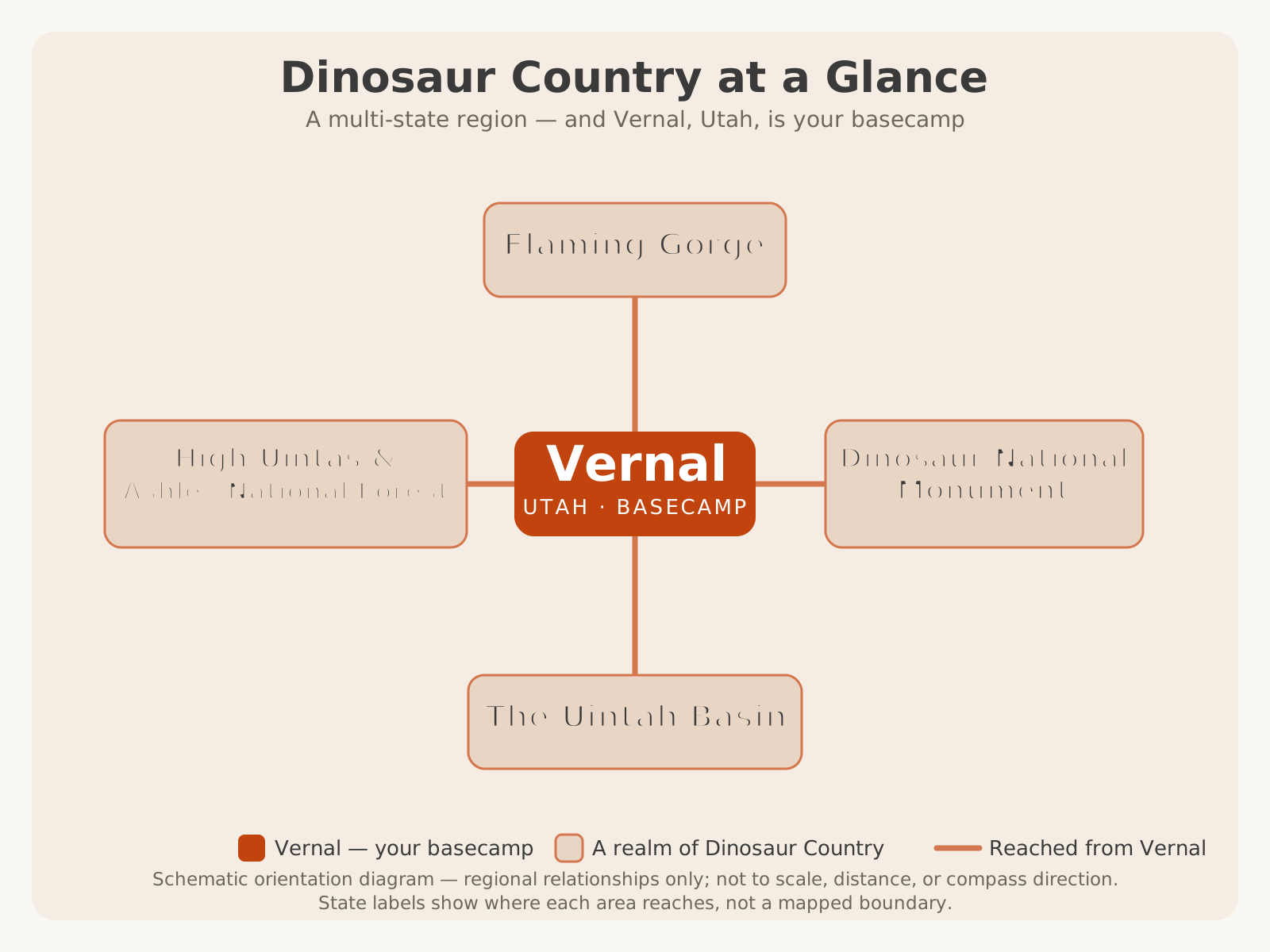
Zoom out from the town and “Dinosaur Country” turns out to be a genuinely multi-state region: the monument alone spills from Utah into Colorado, and Flaming Gorge reaches north into Wyoming, with Vernal sitting as the Utah basecamp that ties those realms together.
Getting to Vernal
Most visitors arrive by car, and for good reason — Vernal isn’t served by frequent commercial air routes. Salt Lake City International Airport is the practical gateway: it’s the nearest major airport, and the drive from there to Vernal takes about three hours via US-40, climbing over the Wasatch Back through Heber City, Daniels Summit, and Strawberry Reservoir before dropping into the Uintah Basin. It’s a genuinely scenic drive, not just a means to an end. For the full route breakdown, see our Salt Lake City to Vernal travel guide.
Vernal Regional Airport does exist locally, but service is limited — VERIFY WITH OFFICIAL SOURCE (the airport or your airline) for current routes before building a trip around flying directly in. Coming from Moab, the drive is about 2.5 hours (170 miles) north via US-191 — an easy add-on if you’re already road-tripping through southern Utah. See our honest Vernal vs. Moab comparison if you’re weighing the two.
Getting Around Vernal
A car is essential once you’re here. Vernal’s own downtown is compact and walkable, but the attractions that make the trip worthwhile ring the town at a range of distances: Dinosaur National Monument is about 20 minutes east, Red Fleet State Park about 15 minutes north, Steinaker State Park 5 to 10 minutes north, McConkie Ranch’s petroglyphs 15 to 20 minutes north in Dry Fork Canyon, and Flaming Gorge about an hour further north. None of that is reachable on foot, and there’s no transit network connecting them — rent or bring a vehicle, and plan on driving daily.
| Destination | Approx. Drive from Vernal | Direction |
|---|---|---|
| Dinosaur National Monument (Quarry Visitor Center) | Approx. 20 min | East |
| Red Fleet State Park | Approx. 15 min | North |
| Steinaker State Park | Approx. 5–10 min | North |
| McConkie Ranch petroglyphs (Dry Fork Canyon) | Approx. 15–20 min | North |
| Flaming Gorge | Approx. 1 hour | North |
| Salt Lake City | Approx. 3 hours | West |
| Moab | Approx. 2.5 hours (170 miles) | South |
Downtown Vernal & Main Street
Vernal’s Main Street is the town’s actual center of gravity — a modest, walkable strip carrying the region’s classic dinosaur imagery, local shops, and a small but growing restaurant scene. It’s a comfortable place to regroup between adventures, refuel, and pick up anything you forgot, rather than a destination in itself. The Utah Field House of Natural History State Park Museum, with its outdoor Dinosaur Garden of life-size replicas, anchors downtown as the area’s best rainy-day and orientation stop.
Don’t expect a resort strip. Vernal reads as a real, working town first and a tourist destination second — which is exactly the appeal for travelers tired of manufactured experiences. Expect straightforward pricing, unhurried service, and the kind of local knowledge you only get by asking someone who’s lived here for decades.
Where to Stay
Lodging in Vernal is concentrated in and around downtown, with camping and cabin options at the surrounding state parks and up in Ashley National Forest for travelers who want to stay closer to the outdoors. As a rough benchmark, expect meaningfully lower rates than comparable red-rock destinations — hotel nights in the Vernal area have historically run in the $90–$150 range, well under what similar lodging costs in Moab. VERIFY WITH OFFICIAL SOURCE (current listings) before relying on that range for budgeting, since rates shift with season and demand.
Adventure Tours Vernal partners with Best Western Extended Stay Vernal — use discount code “ROCCO” when booking for 10% off your stay. Beyond that specific partnership, we don’t maintain a comprehensive, up-to-date lodging directory here; check current listings and availability directly before booking.
Where to Eat
Vernal won’t pretend to be a fine-dining capital, and that’s part of its charm — expect honest, hearty, unpretentious food built for people who’ve spent the day outside: classic American diners and steakhouses, a solid range of Mexican restaurants, barbecue and burgers, and a few local coffee shops for an early start. Main Street is the natural place to graze. For our current, vetted picks with specifics on cuisine and standout dishes, see the companion guide to the best restaurants in Vernal, Utah — we keep exact names, hours, and menus there rather than duplicating them across the site, since that’s the page we maintain as the source of truth.
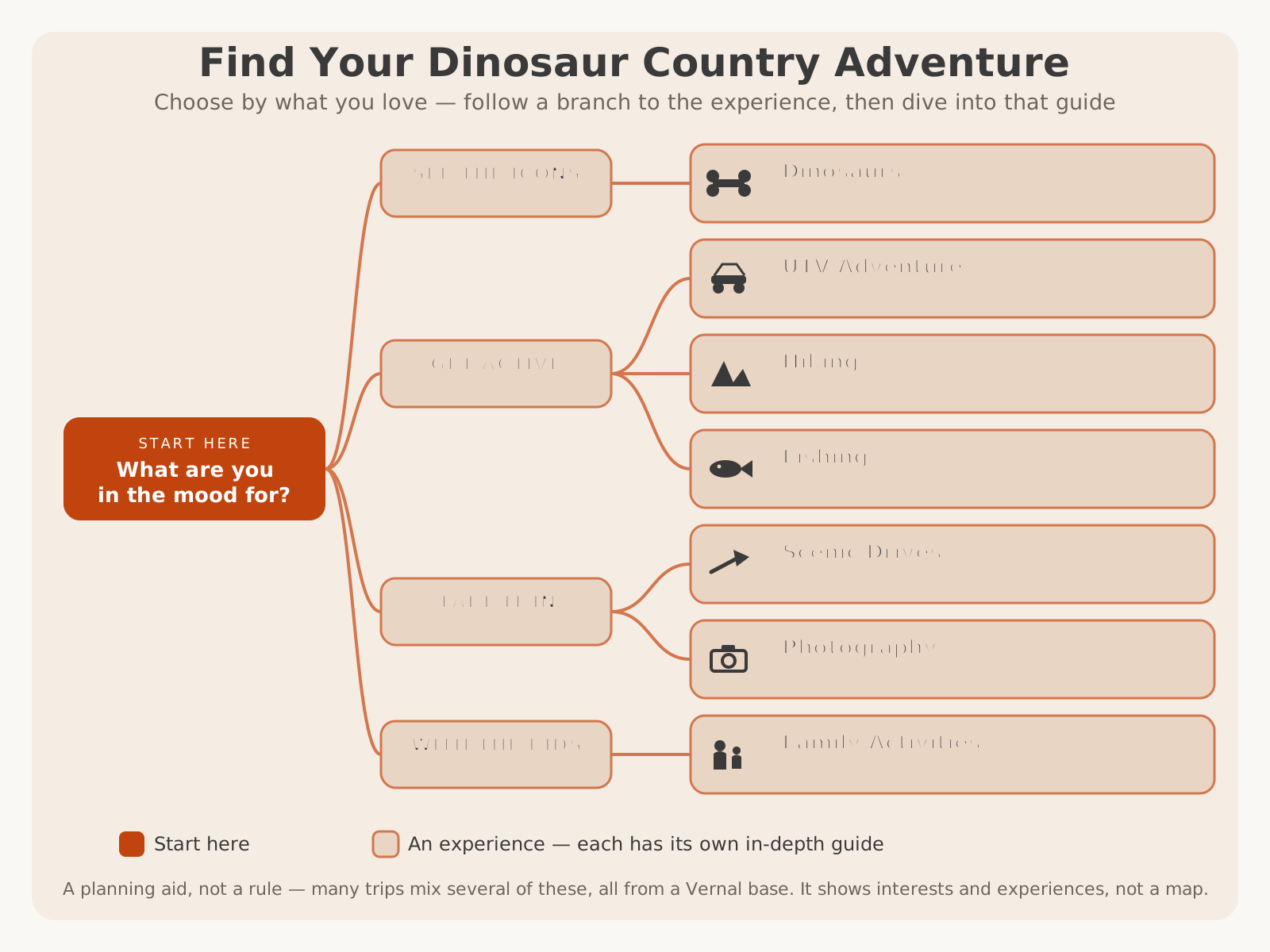
Before the specifics, here’s a quick way to point yourself in the right direction. Dinosaur Country rewards visitors who lead with what they enjoy, so use the selector below to move from an interest to the experience — and the in-depth guide — that fits it best.
What to Do in Vernal
The short version: Dinosaur National Monument, a guided backcountry UTV tour, petroglyphs, and a cluster of state parks form the core of almost every good Vernal itinerary. Rather than repeat that breakdown here, our two dedicated guides go deep:
- Things to Do in Vernal, Utah — the complete activity-by-activity planning guide, including seasonal advice, family tips, and ready-made itineraries.
- The Ultimate Guide to Dinosaur National Monument — everything about the fossils, scenic drives, hikes, and history at the monument specifically.
If you’re deciding where to start, start with whichever of those two matches what you came for: the monument guide if the fossils are the point of your trip, the things-to-do guide if you’re building a broader itinerary.
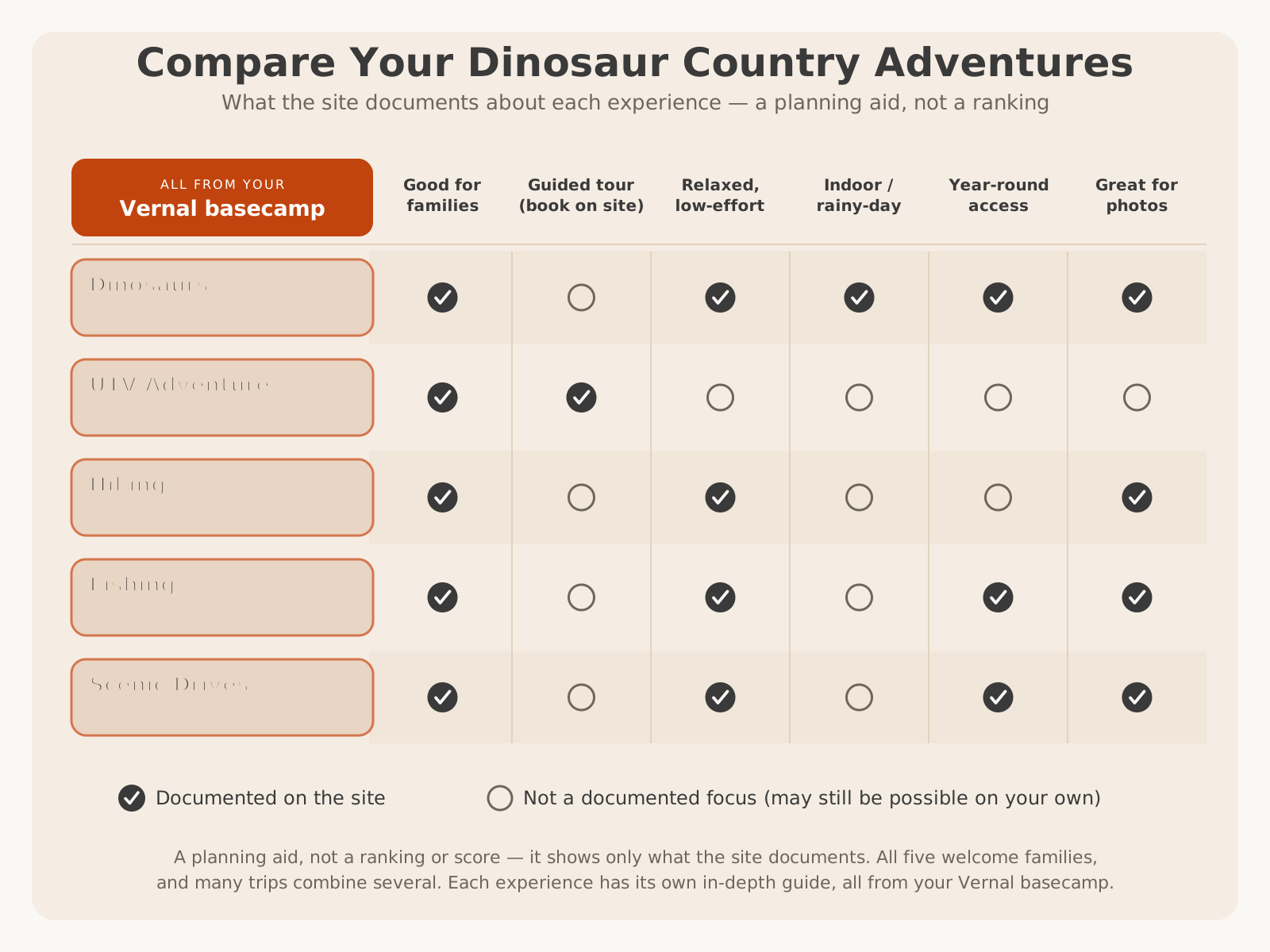
Those two guides go deep on each experience; before you commit to one, it helps to see them side by side. The matrix below sets the region’s five core experiences against the practical things that actually shape a Vernal trip — drawn only from what this guide and its companions document, and offered as a planning aid rather than a ranking.
Family Considerations
Vernal is a genuinely strong family destination — real fossils kids can touch, dinosaur trackways they can walk on, and a guided UTV tour that welcomes passengers from age 2. Most of the headline sights involve only short walks, which keeps the pace forgiving for younger travelers. For the full kid-focused breakdown — age guidance, rainy-day options, and what to prioritize with children in tow — see fun things to do in Vernal with kids.
Accessibility Notes
Vernal’s core attractions are largely car-accessible, with the monument’s Quarry Exhibit Hall reachable by a short accessible path or seasonal shuttle, and most of the best scenic drives and petroglyph stops viewable from the car or with only short walks. Downtown is flat and walkable. Backcountry trails and unpaved roads are not accessible and vary widely in surface and grade. Because specific accessibility services can change seasonally, VERIFY WITH OFFICIAL SOURCE (the relevant park, museum, or venue) for current provisions before a visit if you have specific accessibility needs.
Photography Tips
Vernal rewards photographers who chase the low sun. The tilted rock formations at the monument, the red canyons around town, and the ridge-top trails all come alive at sunrise and sunset, when raking light picks out texture that flattens out at midday. Downtown itself offers a handful of dinosaur-themed public art and murals worth a quick stop. A wide lens covers the canyon panoramas and the Wall of Bones; a longer lens is useful for wildlife, distant overlooks, and isolating petroglyph detail without approaching the rock. Afternoon summer thunderstorms build dramatic skies but bring lightning risk on exposed overlooks — watch the weather and get off high points when storms threaten.
Seasonal Considerations
Vernal is a genuine four-season destination. Late spring (May–June) and early fall (September–October) offer the most comfortable temperatures and the thinnest crowds — the best all-around windows for a first visit. Summer is warm, fully open, and the best time for water activities at the reservoirs and hiking in the high Uintas of Ashley National Forest. Winter is quiet and scenic but colder, with some seasonal facilities and mountain roads limited or closed. For a full month-by-month breakdown with temperature ranges and what to pack, see our Vernal weather guide.
Vernal vs. Moab: The Honest Comparison
If you’re weighing Vernal against a more familiar red-rock destination, here’s how the two actually compare.
| Vernal | Moab | |
|---|---|---|
| Elevation | Approx. 5,331 ft | Approx. 4,000 ft |
| Summer temperatures | 5–10°F cooler | Regularly 100°F+ |
| Crowds | Light to moderate | Heavy in peak season |
| Dinosaur fossils on display | Yes — Wall of Bones | No |
| Petroglyphs | Extensive, accessible | Present, more limited |
| Typical hotel night | Approx. $90–$150 | Approx. $200–$350+ |
Neither destination is objectively “better” — Moab has Arches and Canyonlands, which Vernal simply doesn’t. But if crowds, cost, and a quieter pace matter to your trip, Vernal delivers a very similar landscape with real advantages. Our full Moab comparison guide goes deeper on trail-by-trail specifics.
Safety & Practical Tips
Cell service is unreliable to nonexistent across much of the backcountry, the state parks, and the monument’s more remote sections — download offline maps and tell someone your plan before heading out. Fuel up in town before any day trip; services thin out quickly once you leave Vernal, especially heading toward Flaming Gorge or into the monument. The high-desert sun is more intense than it feels — carry more water than you think you need and take sun protection seriously, even on a short outing. For community events, current local happenings, and anything specific to a particular week of your visit, VERIFY WITH OFFICIAL SOURCE (the local visitor/chamber resources) rather than relying on this guide, since that kind of information changes constantly.
Day Trips From Vernal
Vernal’s location makes it a natural base for day trips in several directions: Dinosaur National Monument to the east (20 minutes), Flaming Gorge and Ashley National Forest to the north (about an hour), and the state parks — Red Fleet and Steinaker — in between. For visitors with more time, Vernal itself makes a worthwhile day-trip or overnight add-on to a Moab vacation, about 2.5 hours south. If you’re coming from Salt Lake City for a shorter trip, our Salt Lake City to Vernal guide lays out a full weekend built around the drive.
Planning Your Visit
Give Vernal two to three days if you can. Reserve your anchor activities — a guided UTV tour, and any specific monument programs — before you arrive, especially in summer and on weekends, then build the rest of the trip around them. Bring a vehicle, pack for high-desert sun and temperature swings (see our what to bring guide), and don’t treat Vernal as a drive-through on the way to somewhere else — the visitors who give it real time, and who make room for the backcountry as well as the paved sights, are the ones who come away understanding why the town’s identity has stayed so firmly rooted in dinosaurs and canyon country for well over a century.