Key Takeaways
- Two very different halves. The Utah side (near Vernal) is where you see real dinosaur fossils in the rock. The Colorado side is deep river canyons and long scenic overlooks. They share a name but sit about a two-hour drive apart.
- The fossils are the headline, but not the whole story. Fremont petroglyphs, a frontier homestead, tilted rock layers, and abundant wildlife make this far more than a one-building stop.
- It’s easy to visit. Most signature sights are close to the car with short walks, which makes the monument unusually friendly to kids, seniors, and first-time park-goers.
- Vernal is your basecamp. It’s the closest full-service town to the fossil side and the launch point for guided UTV tours in the surrounding canyons.
- Timing matters. Shoulder seasons are ideal; summer is hot and busy; winter is quiet but limited. Always confirm current hours, fees, and road status with the National Park Service.
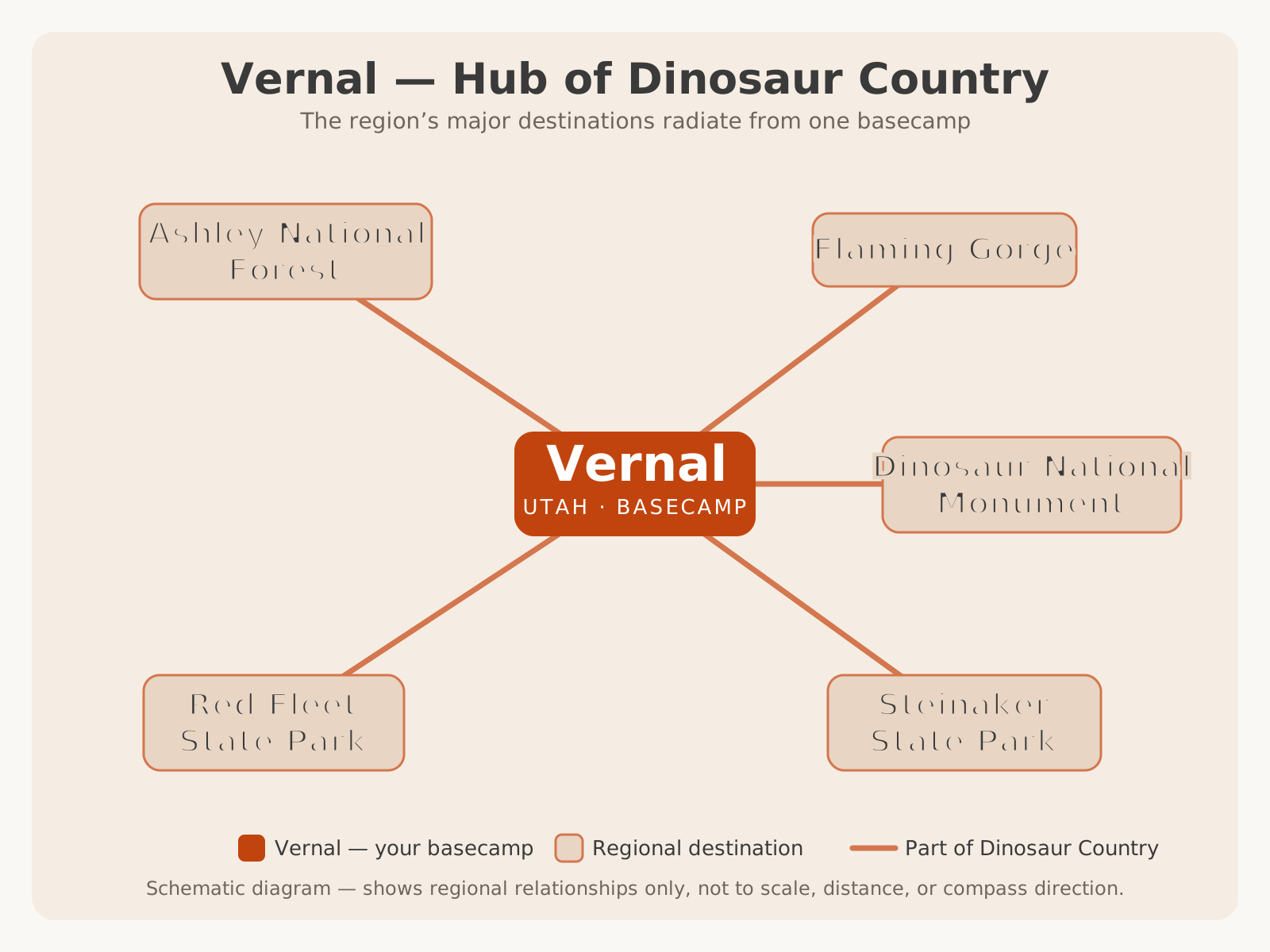
Before the details of the monument itself, it helps to see where it sits in the wider region. Dinosaur National Monument is one of five major destinations that radiate from Vernal, the full-service basecamp town about 20 minutes to its west.
Overview: What Dinosaur National Monument Actually Is
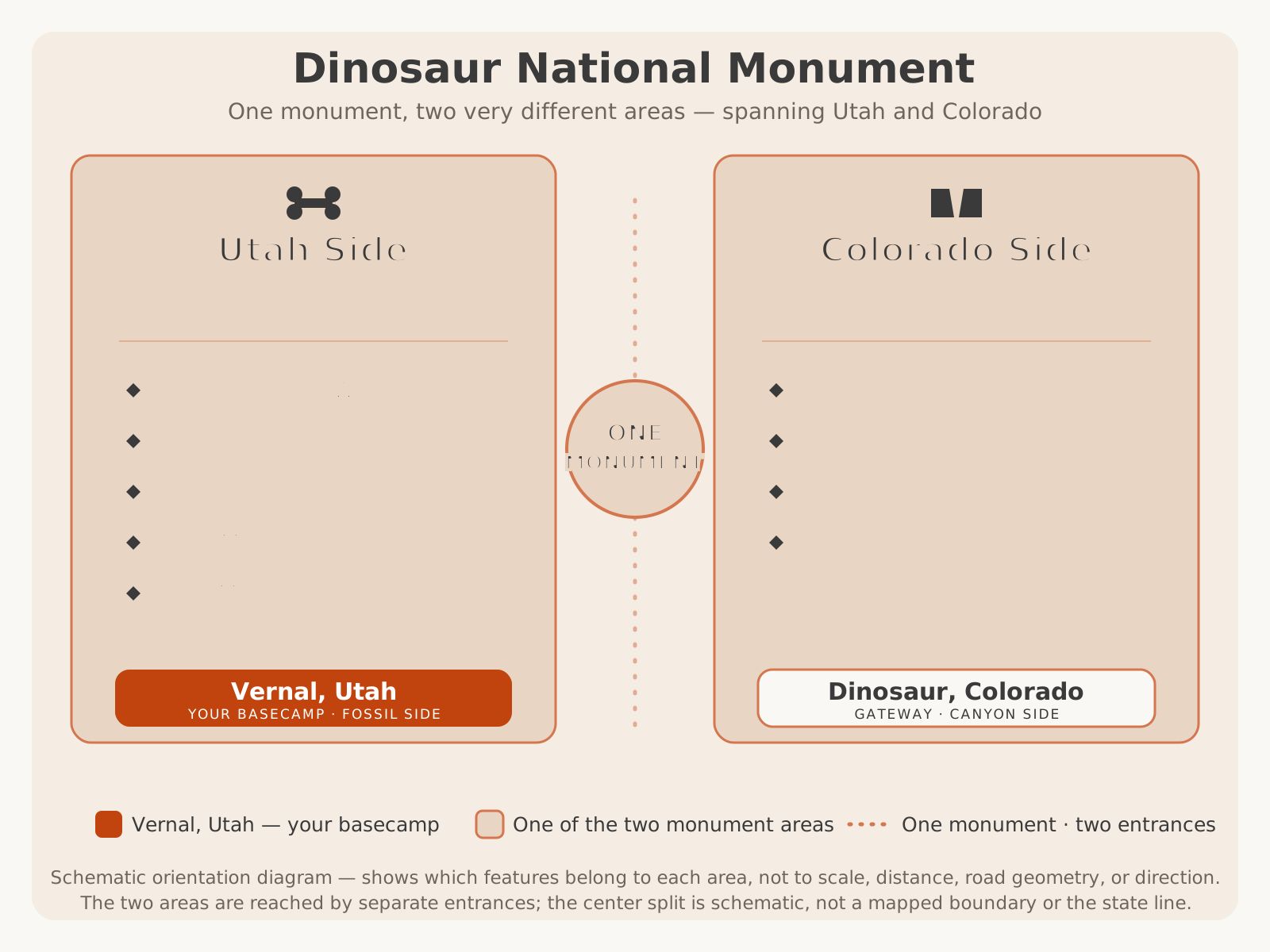
Most people arrive expecting a single museum full of dinosaur skeletons. The reality is bigger and more interesting. Dinosaur National Monument spans more than 200,000 acres straddling the Utah–Colorado state line, and it protects two distinct experiences under one name.
On the Utah side, near the small town of Jensen and about 20 minutes east of Vernal, is the reason the monument exists: the Quarry Exhibit Hall, a climate-controlled building constructed directly over a cliff face that holds roughly 1,500 dinosaur bones still embedded in the rock. This is one of the only places on Earth where you can stand in front of a Jurassic riverbed and touch a fossil that has been in that exact spot for about 149 million years.
On the Colorado side, near the town of Dinosaur, Colorado, there are no fossils on display. Instead you find some of the most dramatic canyon country in the interior West, where the Green and Yampa rivers have carved sheer walls thousands of feet deep. This is the domain of scenic overlooks, backcountry roads, and multi-day river trips.
The two areas are managed as one monument but reached by different entrances roughly a two-hour drive apart. For most visitors — and certainly for anyone basing their trip in Vernal — the Utah side is the main event, with the Colorado side as an optional second day for those who want the full canyon experience.
Here is the monument’s two-area layout at a glance — which signature sights sit on each side, and why the two really are separate trips:
A Short History: From a Frontier Discovery to a National Treasure
The story begins in 1909, when paleontologist Earl Douglass, working for the Carnegie Museum of Pittsburgh, spotted a line of fossilized vertebrae eroding out of a sandstone ridge in the Utah desert. What he had found was an ancient sandbar in a Jurassic river — a place where the bodies of dinosaurs had washed up, been buried in sand, and gradually turned to stone over the intervening ages.
The site proved extraordinarily rich. Over the following years, crews excavated hundreds of tons of bones and shipped them east to museums, assembling some of the most complete dinosaur skeletons ever mounted. To protect what remained, President Woodrow Wilson designated the original 80-acre Dinosaur National Monument in 1915.
In 1938 the monument was dramatically expanded to more than 200,000 acres to include the spectacular canyons of the Green and Yampa rivers on the Colorado side. Decades later, rather than removing the remaining bones, the National Park Service made a farsighted decision: leave roughly 1,500 of them in place, exposed in relief on the quarry wall, and build a hall around them. The result is the Wall of Bones you can visit today — a fossil exhibit that is also a working, in-situ archaeological record.
Human history runs deep here, too. Long before the paleontologists arrived, the Fremont people lived along these creeks and canyons for centuries, farming, hunting, and carving elaborate images into the rock. In the early 1900s a remarkable frontier woman named Josie Bassett Morris homesteaded a box canyon on the Utah side and lived there largely alone for about 50 years. Her cabin still stands at the end of the Cub Creek road, and it is one of the monument’s quiet highlights.
Geology: Why the Rocks Look the Way They Do
Even visitors who don’t consider themselves “rock people” tend to be struck by the landscape here, and the reason is dramatic geology on open display.
The bones survive because of the Morrison Formation, a layer of Jurassic-age rock famous across the American West for its dinosaur fossils. About 149 million years ago this was a warm floodplain crossed by seasonal rivers; the quarry itself was a sandbar where carcasses collected during floods.
What makes the monument visually unforgettable is what happened later. The rise of the Uinta Mountains tilted these once-flat rock layers upward, so that beds which were originally laid down horizontally now stand on end. The best example is Split Mountain, a massive hump of pale Weber Sandstone that the Green River — improbably — cut straight through rather than going around. Along the Cub Creek drive, the auto-tour points out layer after layer of tilted, colorful strata, a visible timeline hundreds of millions of years thick.
For a family or first-time visitor, you don’t need to memorize the formations to appreciate them. The simple version is this: everything you’re standing on was once flat, buried, and full of life; then the land rose and tilted, and rivers and weather sliced it open so we can read the pages. That’s the whole story of the monument in one sentence.
Why Dinosaur National Monument Is Unique
Plenty of places have fossils, and plenty have canyons. Dinosaur is unusual because of the specific combination it offers:
- You touch the real thing. In most museums the fossils are casts or reassembled mounts behind glass. Here you place your hand on genuine, unmoved bone in the rock. That distinction lands with kids and adults alike.
- It layers deep time on human time. Within a single afternoon you can move from 149-million-year-old dinosaurs to 1,000-year-old Fremont petroglyphs to a 100-year-old frontier cabin. Few places compress the timeline so vividly.
- It’s uncrowded by national-park standards. Because it sits far from major cities and interstate corridors, the monument rarely feels overrun. You can often have an overlook or a petroglyph panel to yourself.
- It rewards effort with solitude. The paved sights are accessible to everyone, but a short walk or a backcountry route quickly delivers genuine wilderness.
The Best Attractions: What to Prioritize
If your time is limited, these are the sights that define a visit, roughly in the order most Vernal-based visitors experience them.
The Quarry Exhibit Hall & the Wall of Bones
This is the centerpiece and the one thing no visitor should skip. Inside a glass-and-steel hall built over the original quarry, a tilted rock face displays roughly 1,500 dinosaur bones in relief — skulls, limbs, vertebrae, and ribs of animals like Allosaurus, Camarasaurus, Stegosaurus, Diplodocus, and Apatosaurus. Rangers are usually on hand to explain what you’re seeing, and there is a designated spot where visitors are actually invited to touch a real fossil embedded in the wall.
Access to the Exhibit Hall is from the Quarry Visitor Center below it. During busier seasons visitors ride a short shuttle up to the hall; at quieter times you may be able to drive your own vehicle. Because the shuttle arrangement and hours change through the year, confirm the current system on the National Park Service site before you arrive.
The Fossil Discovery Trail
Connecting the visitor-center area to the quarry is a walking trail that passes through several rock layers where fossils — including dinosaur bone, clam shells, and other marine life — can be spotted in place along the route. It’s a rewarding, low-commitment way to extend the fossil experience on foot. (Confirm the current length and difficulty on the official trail page before relying on exact figures.)
The Cub Creek Road (Tour of the Tilted Rocks)
This is the Utah side’s essential scenic drive, running roughly 10 miles from the quarry area past tilted rock formations, the Split Mountain area, petroglyph panels, and ending at the Josie Morris cabin. A self-guided auto-tour booklet (available at the visitor center) explains each numbered stop. It’s the single best way to see the monument’s variety in a short window, and almost everything is viewable from the car or with a few steps.
The Cub Creek Petroglyphs
Partway along the Cub Creek road, short walks lead to some of the finest Fremont rock art in the region, including the famous lizard petroglyphs pecked high on a cliff face and large panels of human-like figures and animals. These are must-see stops and a natural bridge to the region’s deeper rock-art story. For much more on this subject, see our dedicated guide to petroglyphs and rock art near Vernal.
The Josie Morris Cabin
At the end of the Cub Creek road sits the homestead of Josie Bassett Morris, who lived here largely on her own for roughly half a century. The cabin, outbuildings, and the shady box canyons nearby make a peaceful final stop, with easy short walks into Hog Canyon and Box Canyon.
Most visitors photograph the cabin without learning whose it was. Josie grew up in Browns Park, the remote valley that sheltered Butch Cassidy and the Wild Bunch, and her sister Ann was tried for cattle rustling — read her full story before you drive out, and this stop becomes the most interesting half hour of the day.
The Colorado Canyon Country (Second-Day Option)
For visitors with more time, the Colorado side delivers the monument’s grandest scenery. The Harpers Corner Scenic Drive climbs roughly 30 miles to a series of overlooks, ending at a trail out to a promontory high above the confluence of the Green and Yampa rivers at Echo Park far below. There are no fossils here — this is about vast canyons, sweeping light, and quiet. Remote areas like Echo Park are reached by unpaved roads that are impassable when wet, so check conditions first.
Must-See Petroglyphs
The Fremont culture flourished across this region from roughly 200 AD to 1300 AD, and Dinosaur National Monument protects some of their most striking work. Two areas stand out.
The Cub Creek petroglyphs, on the Utah side, are the easiest to reach and among the most photographed in the state — especially the lizard figures and the large panels of broad-shouldered anthropomorphs. Swelter Shelter, a short walk near the start of the Cub Creek road, is another accessible panel. Deeper in, the McKee Springs petroglyphs (reached by a backcountry dirt road) are considered by many to be the finest in the monument, though access depends on road conditions.
Rock art is irreplaceable and legally protected. Never touch the panels — the oils from skin accelerate their decay — and photograph from a respectful distance. Our companion article on petroglyphs and rock art near Vernal covers the Fremont and Ute cultures, viewing etiquette, and the many additional sites scattered across the surrounding backcountry — including remote panels reachable only by guided UTV tour.
Scenic Drives
| Drive | Side | Character | Best For |
|---|---|---|---|
| Cub Creek Road (Tour of the Tilted Rocks) | Utah | Paved to gravel; tilted rock, petroglyphs, Josie cabin | Everyone; short on time |
| Harpers Corner Scenic Drive | Colorado | Long paved climb to canyon overlooks | Big views, photographers |
| Echo Park Road | Colorado | Rough unpaved; dramatic descent to river confluence | High-clearance vehicles, dry weather only |
| Island / Rainbow Park Road | Utah | Unpaved backcountry to McKee Springs petroglyphs & river | Rock art seekers, dry weather |
Note: paving and current road status change with weather and season. Unpaved roads in the monument can become impassable when wet. Always confirm conditions at a visitor center or with the National Park Service before setting out.
The Best Hikes
The monument’s trails range from paved strolls to rugged backcountry routes. Rather than quote exact mileages that change with trail maintenance and re-signing, here is how to think about the options by character — confirm current distances, elevation, and difficulty on the official National Park Service trail descriptions before you commit. For how the monument’s trails compare with the region’s alpine and reservoir hikes, see our guide to hiking in Dinosaur Country.
- Fossil Discovery Trail (Utah, easy–moderate): The signature short hike, linking the visitor-center area toward the quarry through fossil-bearing rock layers. Great for families who want to find fossils in place.
- Desert Voices Trail (Utah, easy–moderate): An interpretive loop near Split Mountain with big desert views and signs partly written by kids for kids.
- Sound of Silence Trail (Utah, moderate): A rougher route-finding loop through washes and slickrock that rewards more confident hikers with solitude.
- Harpers Corner Trail (Colorado, moderate): A ridgeline walk at the end of the Colorado scenic drive to a jaw-dropping overlook of the river confluence. Arguably the best view-per-effort hike in the monument.
- Box Canyon & Hog Canyon (Utah, easy): Short, shady walks near the Josie Morris cabin — ideal for young children and hot afternoons.
Wildlife
Dinosaur National Monument supports a surprising amount of life for such an arid landscape, and patient visitors are often rewarded.
Desert bighorn sheep are the marquee sighting, often spotted on rocky slopes near Split Mountain and along the river corridors. Mule deer and pronghorn are common in open areas, especially at dawn and dusk. Overhead, watch for golden eagles, peregrine falcons, and other raptors riding the canyon updrafts. Closer to the ground you’ll see lizards basking on warm rock and, in riparian zones, a variety of songbirds.
A few animals deserve respect rather than pursuit. Rattlesnakes live here; watch where you place hands and feet on rocky trails and never reach into crevices. Give all wildlife plenty of room, keep food secured, and never feed animals — a fed animal quickly becomes a problem animal.
For photographers and families alike, the golden hours around sunrise and sunset are both the best light and the most active wildlife windows.
Photography Tips
The monument is a genuinely photogenic place, and a little planning goes a long way.
- Chase the low sun. The tilted rock layers and canyon walls come alive at sunrise and sunset, when raking light picks out texture and turns the sandstone warm. Midday light is flat and harsh.
- Bring a range of lenses. A wide lens for the Wall of Bones and canyon panoramas; a longer lens for wildlife, distant overlooks, and isolating petroglyph details without approaching the rock.
- Respect the petroglyphs. Photograph rock art from a distance with a zoom rather than crowding it. Never chalk, wet, or touch panels to “improve” a shot — it’s both illegal and destructive.
- Shoot inside the Quarry Hall carefully. The glass building and mixed light are tricky; a higher ISO and steady hands (tripod rules permitting) beat a flash bounced off the rock. Confirm the current photography and tripod policy on site.
- Plan for storms. Summer afternoon thunderstorms build dramatic skies — great for photos, dangerous on exposed overlooks. Keep an eye on the weather and get off high points when lightning threatens.
Season-by-Season Advice
Spring (April–June) is arguably the finest season. Temperatures are comfortable, wildflowers appear, wildlife is active, and both sides of the monument open up as snow clears from the high country. Late spring is a sweet spot before the summer heat and crowds.
Summer (July–August) is peak visitation and peak heat, with daytime temperatures frequently in the 90s°F and beyond. Everything is open, ranger programs run, and long daylight helps — but you’ll want early starts, serious sun protection, and lots of water. Afternoon thunderstorms are common.
Fall (September–October) rivals spring for the best experience: cooling temperatures, thinning crowds, golden cottonwoods along the rivers, and beautiful light. Early fall is ideal for combining the monument with outdoor adventures around Vernal.
Winter (November–March) is quiet, stark, and often stunning under snow — but limited. Some roads (particularly unpaved and Colorado-side routes) and facilities close or run reduced hours, and conditions can change fast. A winter visit can be magical, but confirm what’s open with the National Park Service before you drive.
Month-by-Month Considerations
| Month | What to Expect |
|---|---|
| January | Cold, quiet, possible snow; limited services and roads. Confirm access. |
| February | Similar to January; crisp clear days possible. Winter gear essential. |
| March | Shoulder season; variable weather, snow lingering on high roads. |
| April | Spring arrives; comfortable, uncrowded; occasional wind and mud. |
| May | Excellent — mild temperatures, active wildlife, most access open. |
| June | Warm and beautiful; the peak-summer crowds not yet at full strength. |
| July | Hot and busy; early starts, full water, storm awareness. Everything open. |
| August | Hottest and busiest; same summer strategy. Watch for monsoon storms. |
| September | Excellent — cooling, quieter, superb light. Top pick with May. |
| October | Fall color, crisp mornings, low crowds; some high-country cooling. |
| November | Shoulder to winter; reduced services begin. Confirm conditions. |
| December | Cold and quiet; scenic under snow but limited. Verify what’s open. |
Sample Half-Day Itinerary (3–4 Hours)
Perfect for a family passing through or anyone pairing the monument with a Vernal-based activity.
- Start at the Quarry Visitor Center (Utah side, ~20 min from Vernal). Get oriented, grab the Cub Creek auto-tour booklet, and check the shuttle status.
- Tour the Quarry Exhibit Hall & Wall of Bones. Spend real time here — touch the fossil, let the kids find bones, ask a ranger questions.
- Drive the Cub Creek road. Stop at Swelter Shelter and the Cub Creek petroglyphs, including the lizard panel.
- Finish at the Josie Morris cabin with a short shady walk into Box Canyon if time allows, then head back to Vernal for lunch.
Sample Full-Day Itinerary
For visitors who want to see the Utah side thoroughly without rushing.
- Morning: Quarry Visitor Center and Exhibit Hall at opening, before it warms up and fills in. Walk part of the Fossil Discovery Trail on the way.
- Late morning: Drive the full Cub Creek road, taking every numbered stop — tilted rocks, Swelter Shelter, the petroglyph panels, and the Josie Morris cabin.
- Lunch: Picnic at Split Mountain or Green River area, or drive back into Vernal to eat. (See our guide to the best restaurants in Vernal.)
- Afternoon: Choose one — a Desert Voices or Sound of Silence hike near Split Mountain, or a guided UTV tour in the surrounding backcountry.
- Golden hour: Return to a favorite overlook or petroglyph panel for the best light and wildlife activity, then back to Vernal for dinner.
Sample Weekend Itinerary (Two Days)
The ideal way to experience both halves of the monument.
Day 1 — Utah fossil side + Vernal. Follow the full-day plan above: Quarry Exhibit Hall, Cub Creek road, petroglyphs, Josie cabin, and an afternoon hike or UTV tour. Overnight in Vernal.
Day 2 — Colorado canyon side. Drive to the Colorado entrance near Dinosaur, CO, and take the Harpers Corner Scenic Drive to its overlooks, finishing with the Harpers Corner Trail for the confluence view. Strong, well-prepared travelers with a suitable vehicle and dry weather can consider the rough road down to Echo Park. Return to Vernal, or continue your road trip east.
For visitors coming from further afield, Vernal is roughly a three-hour drive from Salt Lake City — see our Salt Lake City to Vernal travel guide for the drive and trip-planning details.
Family Advice
Dinosaur National Monument is one of the best national-park experiences in the country for children, and it earns that reputation honestly.
- Real fossils they can touch. Nothing beats a kid’s face when they realize the bone under their hand is 149 million years old and has never been moved.
- Short walks, big payoffs. The petroglyphs, the cabin, and most overlooks require only brief walks, so little legs stay happy.
- Free Junior Ranger program. Pick up a booklet at the visitor center; kids complete activities and earn a badge, which turns the whole day into a mission.
- Scavenger-hunt the rock art. Challenge kids to spot the lizard petroglyphs and count the animals on the panels.
Bring more water and snacks than you expect to need, plan around the midday heat in summer, and build in downtime. Our family-focused things to do in Vernal guide has more ideas for rounding out a family trip.
Senior Advice
The monument is very approachable for older visitors and multi-generational groups.
- The Quarry Exhibit Hall is reached by a short accessible path or the seasonal shuttle, and the hall itself is level and wheelchair accessible.
- The best scenery — the Cub Creek tilted-rock drive and the Harpers Corner overlooks — is enjoyed largely from the car with optional short walks, so you set the pace.
- Facilities, benches, and restrooms are concentrated around the visitor centers.
- The main caution is heat and elevation: at around 5,000 feet, exertion feels harder, and summer afternoons are hot. Go early, rest often, and hydrate.
Accessibility
The Quarry Visitor Center and Exhibit Hall are designed for accessibility, with accessible parking, restrooms, and a wheelchair-accessible route to the fossil wall (via the shuttle or the accessible path, depending on the season). Many of the marquee sights along the Cub Creek road are viewable from the car or from short, relatively firm walkways. Backcountry trails and unpaved roads are not accessible and vary widely in surface and grade.
Because specific accessibility services — shuttle accessibility, current facility status, assistive resources — can change seasonally, contact the monument or check the National Park Service accessibility page before your visit to confirm current provisions for your needs.
Packing Checklist
The single biggest mistake visitors make is under-preparing for high-desert conditions. Pack for sun, dryness, and swings in temperature.
- Water — lots of it. At least a half-gallon per person for any active day; more in summer.
- Sun protection: wide-brim hat, sunglasses, high-SPF sunscreen, and lip balm.
- Layers: mornings and evenings can be cool even when afternoons are hot; a light jacket or fleece earns its place.
- Sturdy footwear: closed-toe shoes or hiking boots for rocky trails and slickrock.
- Snacks or a picnic: services inside the monument are minimal; stock up in Vernal.
- A full tank of fuel: fill up in Vernal or Jensen; there is no gas inside the monument.
- Camera and binoculars for wildlife, overlooks, and petroglyph detail.
- Downloaded maps and any auto-tour materials — cell service is unreliable to nonexistent in much of the monument.
- First-aid basics and any personal medications.
- A printed or saved copy of current NPS hours, fees, and road status.
Our detailed what to bring and Vernal weather guides go deeper on seasonal gear.
Comparison: Which Side of the Monument Should You Visit?
| Utah Side (near Vernal) | Colorado Side (near Dinosaur, CO) | |
|---|---|---|
| Main draw | Dinosaur fossils (Wall of Bones) | River canyons & overlooks |
| Signature sight | Quarry Exhibit Hall | Harpers Corner |
| Petroglyphs | Yes — excellent, accessible | Limited |
| Best for | First-timers, families, short trips | Photographers, canyon lovers, longer trips |
| Gateway town | Vernal, Utah | Dinosaur, Colorado |
| Time needed | Half to full day | Half to full day |
If you can only do one side, and especially if you’re basing in Vernal, choose the Utah side. It has the fossils, the best petroglyphs, and the frontier history, all within easy reach.
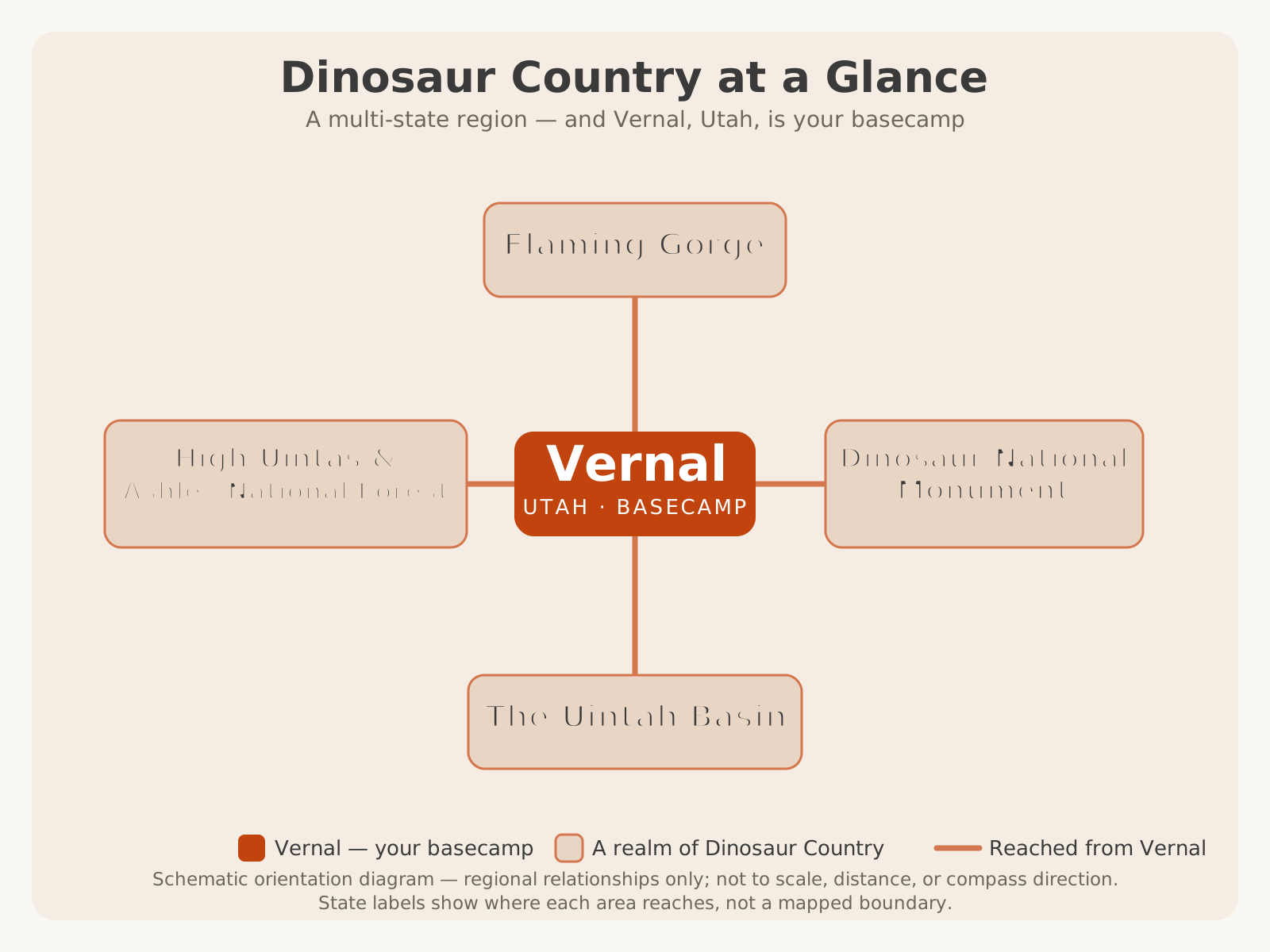
The monument’s two-sidedness is really the whole region in miniature: Dinosaur Country crosses more than one state, and the monument itself is the clearest example, reaching from its Utah quarry side into the river canyons of its Colorado side.
Driving Times
(Approximate driving times from Vernal, Utah. Confirm with a current map app before travel, as routes and conditions change.)
| From Vernal to… | Approx. Drive |
|---|---|
| Quarry Visitor Center (Utah entrance, Jensen) | ~20 minutes |
| Colorado entrance (Dinosaur, CO) | ~1.5–2 hours |
| Harpers Corner overlook (via Colorado drive) | ~2.5–3 hours |
| Salt Lake City | ~3 hours |
| Moab, Utah | ~2.5–3 hours |
| Flaming Gorge (Red Canyon area) | ~1 hour |
Nearby Attractions Around Vernal
The monument anchors a region full of outdoor and family attractions, which is what makes a multi-day trip so rewarding. Within easy reach of Vernal you’ll find the Utah Field House of Natural History State Park Museum (with its outdoor dinosaur garden), Red Fleet State Park and its own dinosaur trackway, the vast Flaming Gorge reservoir and its red-rock canyons, Steinaker State Park, the alpine high country of Ashley National Forest, and the trails and rock art of Dry Fork Canyon. Our complete guides to top Vernal attractions and things to do in Vernal map out how to combine them.
Where a UTV Tour Fits Into a Vernal Vacation
Here’s the piece most first-time visitors miss. Motorized vehicles aren’t allowed inside Dinosaur National Monument, so the monument shows you the fossils, the overlooks, and the roadside petroglyphs — but not the wild backcountry that surrounds it. That backcountry is exactly where a guided UTV tour comes in.
The BLM land and canyons around the monument share the same geology, the same tilted rock, and much of the same Fremont rock art — but they’re threaded with off-road trails that no paved scenic drive reaches. On a guided Kawasaki KRX 1000 tour with Adventure Tours Vernal, you ride into hidden arches, remote petroglyph panels, and canyon terrain that most monument visitors drive right past.
The logistics are easy because it all clusters around Vernal. The classic combination is a morning at the monument and an afternoon on the trails (or the reverse) — deep time and living landscape in a single day. Tours run about three hours, cost $349 per machine for up to two riders, welcome all skill levels, and include machines, helmets, and safety gear, with Dave and Trudy Wilson guiding alongside your group. Browse the full range of UTV trail tours or book a tour directly, and call (435) 219-9447 with any questions about planning around your monument visit.