Key Takeaways
- Hike here for what’s at the end, not the mileage. Fossils in the rock, ancient petroglyphs, and canyon confluence overlooks make these some of the highest payoff-per-effort trails in the region.
- There’s a trail for every ability. From paved-and-easy fossil walks to rugged slickrock route-finding, the monument meets families and experienced hikers alike.
- The park spans two states. The fossil Quarry and most short trails are on the Utah side near Vernal; the best view — Harpers Corner — is a long drive away on the Colorado side.
- This is serious desert. Little to no shade, intense sun, and heat make water and an early start the difference between a great hike and a dangerous one.
- Verify the specifics, every time. Trail distances, difficulty, fees, shuttle and Quarry access, and seasonal closures are set by the National Park Service and change — this guide describes trails by character and never invents the numbers.
Why Hike in Dinosaur National Monument
Most visitors come to Dinosaur National Monument for the famous wall of fossils in the Quarry Exhibit Hall — and then drive away without realizing that the best of the park is on foot. Hiking here is unlike hiking almost anywhere else, because the trails don’t just lead to scenery; they lead to fossils still embedded in the rock, to petroglyphs left by people a thousand years ago, and to overlooks where two wild rivers meet at the bottom of a canyon. It’s an outdoor classroom disguised as a hiking destination, twenty minutes east of Vernal.
What makes it special is the range packed into one park. You can take small kids on a paved trail to find fossils in place in the morning, walk an interpretive loop with big desert views after lunch, and stand on a ridgeline overlook above a river confluence by evening. Few places let you go from a stroller-friendly walk to a rugged, route-finding slickrock loop without leaving the same monument. And because most people never leave the visitor center, the trails are quiet — you can find real solitude a short walk from the parking lot.
The monument also anchors the region’s strongest authority cluster. Its hikes pair naturally with the Cub Creek scenic drive and its petroglyphs, with the dinosaur trackway at Red Fleet, and with a night of camping nearby to be at the Quarry early. For where these trails sit among the region’s alpine, reservoir, and desert hiking, start at the hiking hub; for the full story of the park itself — its history, geology, fossils, and everything to do — pair this with our guide to visiting Dinosaur National Monument.
Choosing Your Hike
The monument’s trails range from paved strolls to rugged backcountry routes, and the smartest way to choose is by character and ability rather than by a number, because exact mileages change with trail maintenance and re-signing. Here is how the signature hikes compare — then decide by what you want out of the day, and confirm the current specifics with the National Park Service before you commit.
| Trail | Side | Character | Best for |
|---|---|---|---|
| Fossil Discovery Trail | Utah | Easy–moderate; links the visitor-center area toward the Quarry through fossil-bearing rock layers | Families, fossil lovers, first-timers |
| Desert Voices Trail | Utah | Easy–moderate interpretive loop near Split Mountain with big desert views | Families, curious walkers, kids |
| Box Canyon & Hog Canyon | Utah | Short, shady walks near the Josie Morris cabin | Young children, hot afternoons |
| Sound of Silence Trail | Utah | Moderate route-finding loop through washes and slickrock | Confident hikers wanting solitude |
| Harpers Corner Trail | Colorado | Moderate ridgeline walk to a river-confluence overlook | View seekers (long drive to reach) |
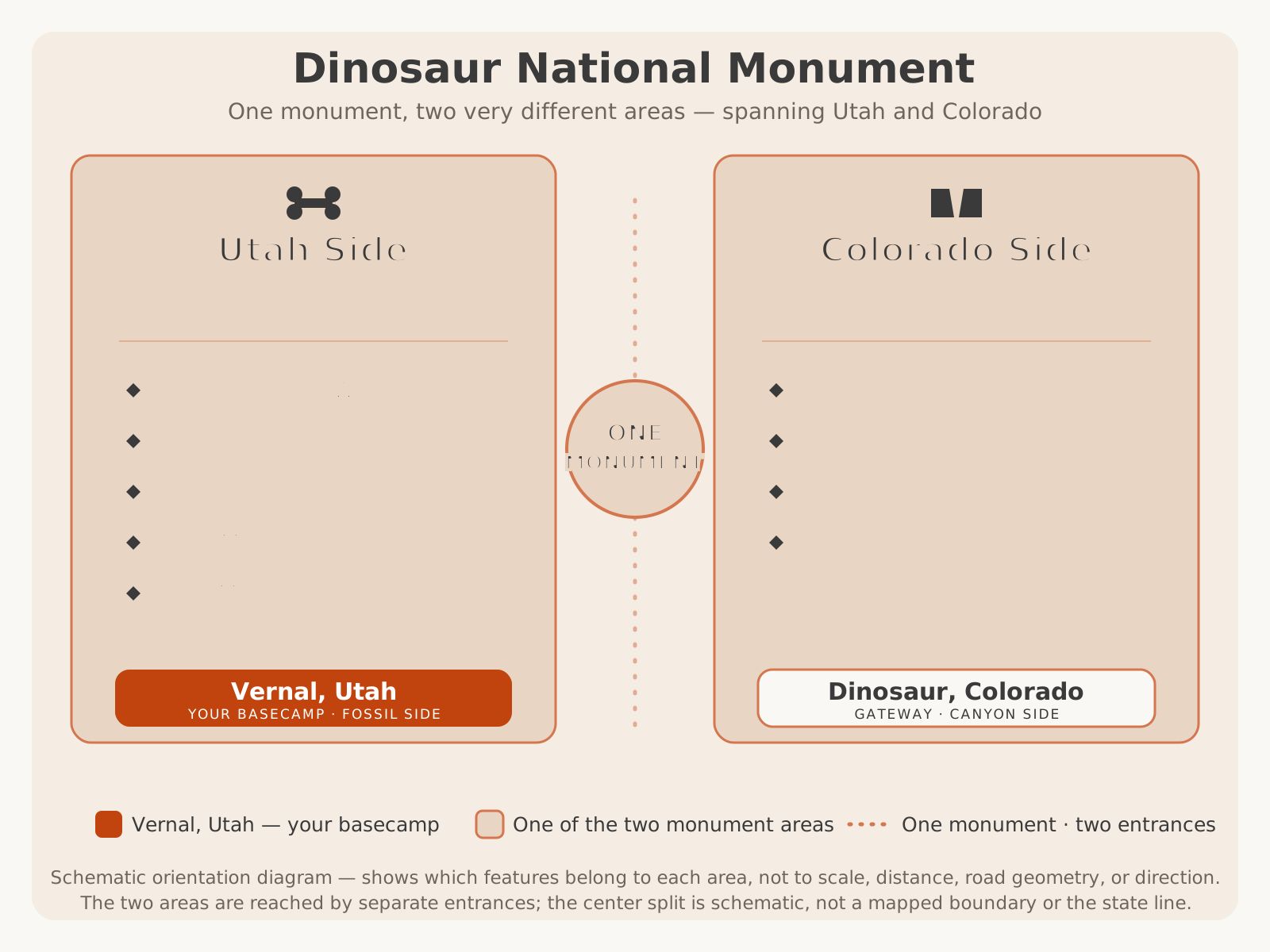
Notice the “Side” column: nearly every trail here is on the Utah side near Vernal, while the standout view — Harpers Corner — sits across the monument on the Colorado side, a long drive away. This orientation makes that split clear before you plan a hiking day:
Fossil Discovery Trail
If you hike only one trail in the monument, make it this one. The Fossil Discovery Trail is the signature short hike on the Utah side, linking the visitor-center area toward the Quarry through fossil-bearing rock layers — which means you’re not just walking to a fossil exhibit, you’re walking across the very rock the fossils come from, with the chance to find bones still in place along the way. It’s the perfect pairing with the Quarry Exhibit Hall itself: see the great wall of bones indoors, then walk the trail to understand how they got there.
It’s an easy-to-moderate trail that suits families and casual hikers, and it turns a museum visit into a genuine hike. The one rule that matters most: look, don’t touch — fossils are protected, collecting is illegal, and the whole point is to leave them for the next person to discover. Go early in summer, carry water, and give yourself time to actually look at the rock.
Desert Voices Trail
Near Split Mountain on the Utah side, the Desert Voices Trail is an easy-to-moderate interpretive loop that’s a favorite for families and curious walkers. It delivers big desert views and reads like a self-guided nature lesson, with interpretive signs — some of them partly written by kids for kids — that make it especially engaging for young hikers. It’s the kind of trail where children lead the way, reading the signs and spotting the features they describe.
Because it’s a loop with plenty to look at, it’s a great choice for a family’s second hike after the fossils, or for anyone who wants to understand the desert landscape rather than just walk through it. As with every trail here, it’s exposed high desert — go in the cooler part of the day and carry more water than you expect to drink.
Box Canyon & Hog Canyon
For the youngest hikers and the hottest afternoons, the short walks at Box Canyon and Hog Canyon near the historic Josie Morris cabin are the gentlest options in the monument. These are short, shady canyon walks — a rare thing in this exposed country — which makes them ideal for little legs, for cooling off when the sun is high, and for pairing with a visit to the Josie Morris homestead, a genuine piece of the area’s pioneer history. Those two canyons are not incidental to the homestead — Josie fenced their narrow mouths so the cliffs themselves served as her pasture, which is why her cabin sits exactly where it does. Her full story is worth reading before you walk in.
They’re also a natural add-on to the Cub Creek scenic drive, since the cabin sits at the end of that Utah-side route. Think of these less as a workout and more as a pleasant, cool, historical stroll — exactly what a family needs when the fossils and the sun have worn everyone out.
Sound of Silence Trail
When you want to leave the crowds behind, the Sound of Silence Trail near Split Mountain is the monument’s answer. It’s a moderate, rougher route-finding loop through washes and slickrock that rewards more confident hikers with real solitude and a genuine taste of the desert backcountry. This is not a stroller trail: it asks you to pay attention to the route, watch your footing on uneven ground, and navigate rather than simply follow.
For experienced hikers, that’s exactly the appeal — a chance to feel like you’ve found a corner of the park that’s your own. Bring navigation skills and a map, don’t count on cell service, watch the sky for afternoon storms, and carry plenty of water. It’s the best trail here for hikers who want the desert to feel wild.
Harpers Corner Trail
The single best view-per-effort hike in the monument is the Harpers Corner Trail, a moderate ridgeline walk at the end of the Colorado-side scenic drive that leads to a jaw-dropping overlook of the Green and Yampa river confluence far below. Standing at the end of Harpers Corner, with canyons falling away on either side and two wild rivers meeting at the bottom, is one of the great views in this part of the West — and it comes for a very reasonable amount of walking.
The catch is logistics: this hike is on the Colorado side of the monument, reached by a long scenic drive that is itself a highlight but takes real time from Vernal, and the road is typically a seasonal, fair-weather route. It’s best treated as its own dedicated day rather than tacked onto a fossil morning. If you have the time and the road is open, it’s absolutely worth it.
Best Hikes for Families
Dinosaur National Monument is one of the best places near Vernal to hike with kids, precisely because the trails have a payoff that keeps little hikers moving — bones, canyons, and cabins instead of just miles. For families, the winning combination is the Fossil Discovery Trail (find real fossils in the rock), the Desert Voices Trail (an interpretive loop with signs written partly by kids), and the short, shady Box Canyon and Hog Canyon walks for the hottest part of the day. Together they make a full, varied day that never feels like a forced march.
The formula is simple: go early to beat the heat, keep each walk short, carry far more water and sun protection than seems necessary, and let the fossils and history pull the kids along. Save the Sound of Silence route-finding and the long Harpers Corner drive for older kids or a separate trip. For more kid-focused ideas around the area, see fun things to do in Vernal with kids, and for the other great family dinosaur hike in the region — the trackway at Red Fleet — see our Red Fleet guide.
Petroglyphs & the Cub Creek Area
Some of the monument’s most rewarding “hikes” are really short walks to extraordinary rock art. Along the Cub Creek area at the end of the Utah-side Tour of the Tilted Rocks scenic drive, you can walk to some of the region’s most accessible petroglyph panels, near the historic Josie Morris cabin — a chance to see images pecked into the rock by people who lived here a thousand years ago. These are short, family-friendly walks, not long hikes, which makes them an easy and profound add-on to a day in the park.
The one non-negotiable rule is respect: rock art is irreplaceable and fragile. Never touch, chalk, trace, or add anything to a panel — the oils on your hands alone can damage it. Look, photograph respectfully, and leave it exactly as you found it. For more on the region’s rock art, see our petroglyphs and rock art guide, and VERIFY WITH OFFICIAL SOURCE (the National Park Service) for current access to the Cub Creek panels.
Desert Hiking Safety
Every hike in this park is a desert hike, and the desert sets the rules. This is high, exposed country with little to no shade on most trails, and the most common real hazards are heat and dehydration — not wildlife, not terrain. A few habits keep a great hike from turning into a hard day:
- Carry more water than you think you need. A common rule of thumb is at least a half-gallon per person for any midday walk, and more when it’s hot or the hike is longer. Drink before you’re thirsty.
- Start early and respect the heat. Summer midday sun on an exposed trail is genuinely dangerous. Hike the exposed trails in the cool morning and save the shady canyon walks for the afternoon.
- Wear real sun protection. Hat, sunscreen, sunglasses, and light long sleeves beat sunburn at this elevation, where the sun is intense even on mild days.
- Watch your hands and feet. Rattlesnakes live in the region — don’t reach blindly onto ledges or into brush, and give any snake plenty of room.
- Carry a map and tell someone your plan. Some areas have little or no cell service, and the Sound of Silence loop in particular asks for navigation.
- Protect the resources. Never touch, collect, chalk, or move a fossil, petroglyph, or artifact — they’re protected by law and irreplaceable.
Seasonal Advice
The monument hikes best in the shoulder seasons, and matching your visit to the calendar makes a real difference in a desert park like this.
| Season | What to Expect | Best For |
|---|---|---|
| Spring | Moderate temperatures, thin crowds, and comfortable trails — arguably the best hiking season. Weather is variable and the Colorado-side road may still be seasonal. | All trails, families, comfortable fossil and canyon hiking |
| Summer | Hot and intensely sunny on exposed trails; demands very early starts and lots of water. Afternoon thunderstorms build. | Early-morning hikes and shady canyon walks only; the Quarry indoors |
| Fall | Cooling temperatures, beautiful low light, and fewer people — a local favorite that rivals spring. | All trails, photographers, view hikes, solitude |
| Winter | Cold and quiet, with short days and possible snow or ice on trails and roads; some access is seasonal. | Well-prepared cold-weather visitors; confirm access first |
Accessibility
The monument’s most accessible experiences are around the visitor centers and the Quarry area, where paved and well-graded surfaces and facilities tend to be more accommodating than the backcountry trails. Some viewpoints along the scenic drives are reachable with little walking from a parking area, which puts real scenery within reach of many visitors regardless of hiking ability.
By contrast, the route-finding slickrock of the Sound of Silence loop, the uneven ground on parts of other trails, and the long Colorado-side drive to Harpers Corner are more demanding and not uniformly accessible. Because specific accessible trails, facilities, and services vary and change over time, VERIFY WITH OFFICIAL SOURCE (the National Park Service) for current accessibility provisions before a visit if you have specific needs.
Photography Tips
Hiking here puts you in position for some of the region’s best photography, if you time it right.
- Shoot the golden hours. Low, warm light on the tilted rock layers and canyon walls at dawn and dusk is far better than flat midday sun.
- Frame the confluence. The Harpers Corner overlook of the Green and Yampa rivers is a signature shot — go on a clear morning before haze builds, and mind your footing near edges.
- Photograph fossils and petroglyphs respectfully. Use natural low-angle light to bring out depth, and never chalk, wet, or touch them to “improve” a photo — it damages an irreplaceable resource.
- Work the dark skies. Away from town, the monument offers excellent star and Milky Way photography on clear, moonless nights.
- Watch the storms. Dramatic desert skies make great images but dangerous conditions — get off exposed ridges and overlooks when lightning threatens.
A Day of Hiking in the Monument
Here’s how a great, realistic hiking day comes together on the Utah side, close to Vernal:
Morning — fossils first. Start early at the Quarry and walk the Fossil Discovery Trail while it’s cool, finding fossils in place along the rock. This is the headline experience, and the morning light and temperature are on your side.
Midday — history and shade. Drive the Tour of the Tilted Rocks, stopping to walk to the petroglyphs and the short, shady Box Canyon and Hog Canyon walks near the Josie Morris cabin — the perfect low-effort, out-of-the-sun option for the hot middle of the day.
Afternoon — a loop with a view. If the group still has energy, add the interpretive Desert Voices loop near Split Mountain, or, for confident hikers, the Sound of Silence route-finding loop for some solitude before you head back.
Save the long Colorado-side drive to Harpers Corner for its own dedicated day. Camping nearby lets you be at the Quarry at opening — see our camping guide — and Vernal, about twenty minutes west, offers the nearest full services as a comfortable base. Driving in from out of state? See our Salt Lake City to Vernal guide.
Planning Tips
Pull it all together with a simple plan:
- Match the trail to your group and the season. Fossils and family loops on the Utah side for most visitors; the Sound of Silence loop for experienced hikers; Harpers Corner as its own day for view seekers.
- Go early and carry water. Heat is the real hazard on these exposed desert trails — start in the cool morning, carry more water than you expect, and wear real sun protection.
- Verify distances, fees, and access. The monument charges an entrance fee, and trail lengths, Quarry access, shuttle arrangements, and the seasonal Colorado-side road all change. VERIFY WITH OFFICIAL SOURCE (the National Park Service) before you go.
- Protect what you came to see. Never touch or collect fossils, petroglyphs, or artifacts — look, photograph, and leave everything exactly as you found it.
- Base in Vernal and build a cluster. Pair your hikes with the Cub Creek scenic drive, the Red Fleet dinosaur trackway, a night of camping, and the rest of things to do in Vernal for a full trip.
- Read the destination guide. For the park’s history, geology, fossils, fees, and logistics in full, pair this with our guide to visiting Dinosaur National Monument, and see where these trails sit among the region’s other hikes at the hiking hub.
Hiked with a plan, Dinosaur National Monument delivers something few trails anywhere can match: a walk that puts you face to face with real fossils, ancient art, and wild river canyons, all within twenty minutes of town. Pick the trail that fits your group, go early with plenty of water, treat the fossils and rock art as the irreplaceable treasures they are, verify the details that change, and give yourself time to let the deep-time scenery sink in. And when you want to trade the trail for a guided backcountry adventure, book a UTV tour with Adventure Tours Vernal and let Dave and Trudy show you the country beyond the monument’s trailheads.