Key Takeaways
- Choosing the right hike is the whole skill. A great first hike is short, gentle, well-established, and close to your car — matched to your comfort, not to a number on a map. Err easier than you think you need.
- Wonder is close to the trailhead. Fossils, rock art, reservoir shorelines, and even alpine lakes sit near the road here, so beginners don’t need long miles to earn a genuine “wow.”
- Elevation is your thermostat. Hike the cool High Uintas when the desert bakes and the mild desert in spring and fall — you can chase comfortable temperatures up or down the mountain much of the year.
- Prepare simply, but really prepare. More water than you think, sun protection, layers, sturdy shoes, and a way to navigate without cell service handle most beginner problems before they start.
- Progress gradually, and verify what changes. Build up one easy hike at a time, turn back freely, and always VERIFY WITH OFFICIAL SOURCE for current trails, access, and conditions — never bank on numbers a guide can’t guarantee.
Why Vernal Is Great for Beginning Hikers
If you’re standing at the start of your hiking life, it’s hard to imagine a more encouraging place to take your first steps than the country around Vernal. The reason comes down to a single, unusual fact: here, an astonishing amount of what makes the region extraordinary — real dinosaur fossils, thousand-year-old rock art, red-rock canyons, and cool alpine lakes — sits within a short, gentle walk of where you park. Most hiking destinations make you earn the reward with long, hard miles. Dinosaur Country hands beginners the reward up front, which is exactly what a first-time hiker needs: a real payoff without a punishing effort.
The second gift this region gives beginners is range. Based out of Vernal, you can walk a warm desert trail past fossils in the morning and, on another day, drive up into the High Uintas to sit beside a mountain lake in cool, pine-scented air. Because those two worlds sit at such different elevations, a beginner can nearly always find comfortable conditions somewhere — the mild desert in spring and fall, the high country when summer bakes the valleys. Few places let a new hiker choose their climate simply by driving up or down a mountain, and comfortable conditions are half the battle when you’re just starting out.
Just as important for a beginner, this is a place where you can start small without feeling like you’ve missed anything. A quarter-mile walk to a wall of real dinosaur bones, a short stroll to a panel of ancient petroglyphs, an easy loop along a red-rock reservoir shoreline — these are complete, satisfying experiences in their own right, not consolation prizes for people who can’t hike far. That means you never have to bite off more than you’re ready for to have a wonderful day outdoors.
This guide is the beginner’s front door to our broader hiking hub. It doesn’t try to be a trail directory, a gear catalog, or a family-only article — those jobs belong to other guides in the cluster. Its one purpose is to teach a first-time hiker the most valuable skill in hiking: how to choose the right hike and enjoy it with confidence. Get that right, here of all places, and you’ll be hooked for life. And because every changing detail — trails, access, fees, hours, conditions — is set by the managing agencies and shifts over time, this guide always points you to VERIFY WITH OFFICIAL SOURCE (the National Park Service, Utah State Parks, and Ashley National Forest) before you go.
What Makes a Trail Beginner-Friendly
Before you choose a first hike, it helps to know what you’re actually looking for — because “easy” is not a single number, it’s a combination of things that together make a trail forgiving. The most beginner-friendly hikes near Vernal tend to share the same handful of qualities:
- A short, comfortable distance. Not a specific mileage, but a length you’re genuinely confident you can finish and still have energy to spare. When in doubt, shorter.
- Gentle terrain. Little elevation change, few steep pitches, and no scrambling. A flat or rolling walk is far more forgiving for new legs, lungs, and knees than a short but steep climb.
- Good, obvious footing. A well-established, well-worn trail with stable ground underfoot, rather than loose rock, deep sand, or a faint route you have to hunt for.
- An easy-to-follow route. A clearly defined trail — ideally a simple loop or out-and-back — where getting lost isn’t a worry. Route-finding is a skill for later, not for your first hike.
- Low commitment, close to the car. A trail that keeps you near the trailhead, so you can turn around at any point without it becoming an ordeal. The freedom to bail easily is a beginner’s best friend.
- A clear reward to hike toward. Fossils, rock art, a viewpoint, a lake, a reservoir shoreline — a concrete goal makes the walk purposeful and keeps a new hiker motivated.
- Shade, water access, or facilities nearby. Not essential, but a real comfort for a first outing, especially in the desert heat.
Notice what’s not on the list: a difficulty rating from a sign or an app. Ratings can help, but they’re set by others, they vary between sources, and they can’t know your fitness, the day’s weather, or how you’re feeling. Beginner-friendliness is about the whole experience matched to you, not a label. A flat, shaded, two-mile stroll can be genuinely easy, while a short but steep, sun-blasted half-mile can leave a beginner wrecked. Judge a trail by the combination above, honestly against your own comfort — and because the specifics that make a trail easy or hard (surface, grade, distance, facilities, and conditions) change and are set by the managing agencies, VERIFY WITH OFFICIAL SOURCE before you go, and never assume a trail is easy just because it’s short.
How to Choose Your First Hike
Choosing your first hike is less about maps and more about honesty. The single most common way a first hike goes wrong is picking something too long, too high, or too hot for where you’re actually starting from — so the whole art is to choose for comfort and give yourself room to succeed. Here’s a simple way to think it through.
Start with your real time and energy. Not what you wish you could do, but what you can comfortably do today, with the people you’re with. Then pick a trail that fits well within that limit, not right at the edge of it. A first hike that ends with energy to spare is a triumph; one that ends in exhaustion sours the whole idea.
Favor short, well-established, close-to-town trails with a clear reward. The qualities in the section above — gentle, obvious, forgiving, near the car — matter far more than covering distance. Pick a walk with an easy payoff like fossils, rock art, or a lake, and let that be the point.
Match the hike to the season and the elevation. This is the local move that makes Dinosaur Country so beginner-friendly. In spring and fall, the mild desert trails are at their best. In summer, hike the desert early in the morning or head up to the cool High Uintas. In winter, stick to the lower desert. More on this in Seasonal Considerations below, and in our season-by-season guides.
Always keep an easier backup. Have a shorter or gentler option ready in case the weather turns, the trailhead is crowded or closed, or the group’s energy is lower than you hoped. Flexibility is a beginner superpower.
Give yourself permission to turn around. Decide before you start that turning back early — for any reason at all — is a success, not a failure. The trail will still be there next time. This single mindset removes most of the pressure and nearly all of the risk from a first hike.
If you’re hiking with children, grandparents, or a mixed-ability group, layer in one more rule: plan around the youngest, slowest, or least confident member. Our dedicated family hiking guide covers that in depth. And because trail access, seasons, and conditions change constantly and are set by the managing agencies, VERIFY WITH OFFICIAL SOURCE (the National Park Service, Utah State Parks, and Ashley National Forest) for current trail status before you commit to a plan.
Desert vs Mountain Hiking
The most important thing a beginner can understand about hiking near Vernal is that there are really two hiking worlds here, and they ask for different things. Learning to tell them apart — and to pick the right one for the day — is the foundation of choosing well.
Here’s that split at a glance — which destinations sit in each world, and the season each is easiest to hike:
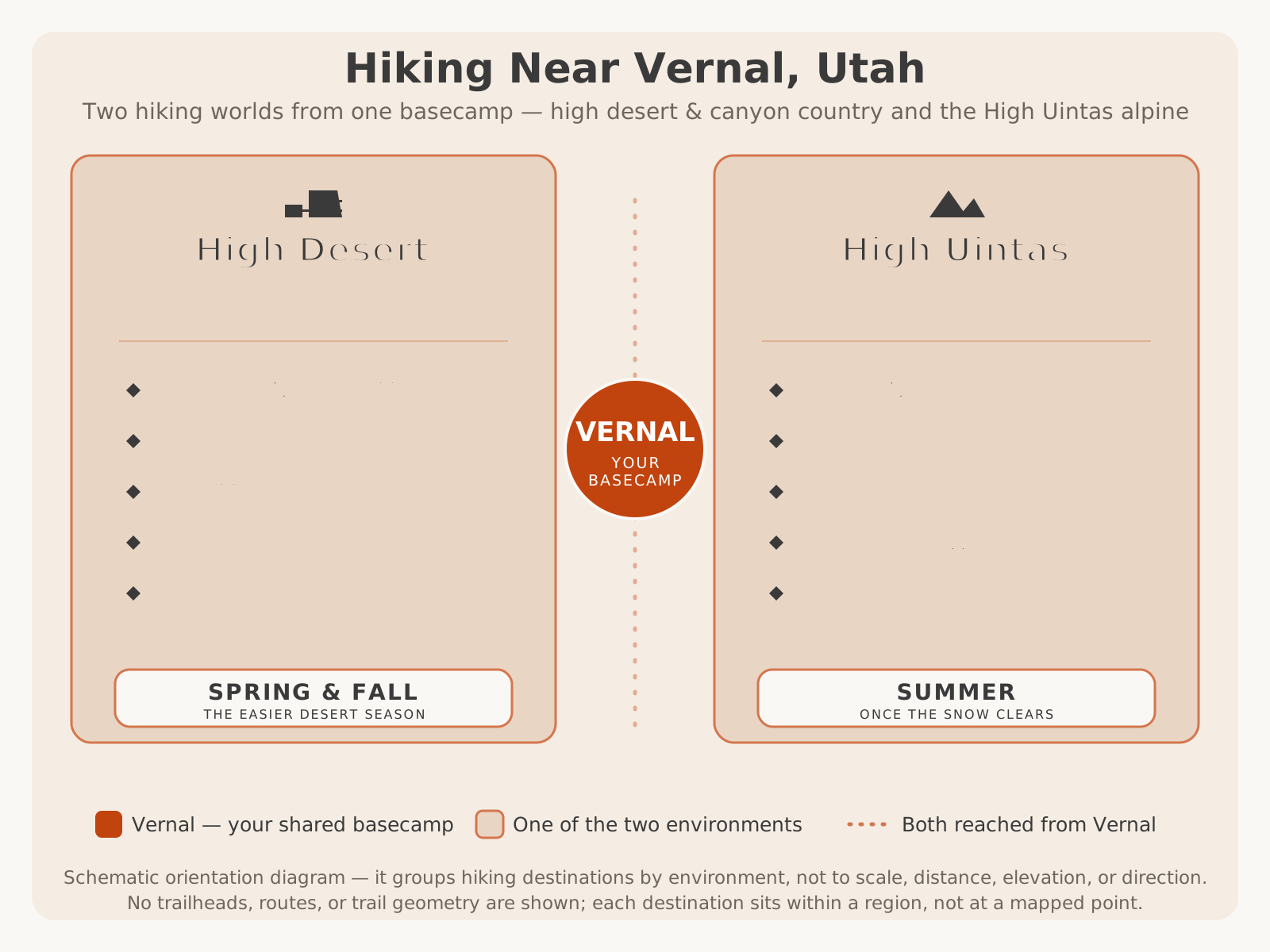
The desert is the low country around Vernal, Dinosaur National Monument, and the nearby reservoirs. It’s the region’s beginner heartland: much of the walking is gentle and close to the road, the trails deliver fossils, rock art, canyons, and water for very little effort, and it’s accessible for much of the year. The desert’s price of admission is heat and sun — for a large part of the year the low country is hot and exposed, with little shade — so the beginner rules here are hike early, carry lots of water, and wear real sun protection.
The mountains are the High Uintas and the surrounding Ashley National Forest, a green, lake-strewn alpine world north and west of town. For beginners, the mountains are the summer answer: cool air, spectacular scenery, and — importantly — some of the loveliest spots reachable on short, gentle walks. The mountains’ price of admission is altitude and weather — the thinner air tires new hikers faster, and afternoon thunderstorms build almost daily in summer — so the rules here are start early, go slow, pack layers, and be heading down as the clouds gather.
For a first-time hiker, the takeaway is simple: the desert is usually the place to begin, especially in spring and fall, and the mountains are a wonderful, cooler option in summer once you’ve got a walk or two under your belt. Many beginners do both on one trip — a desert morning and, another day, a mountain lake — which is one of the great pleasures of hiking here.
| Desert Hiking | Mountain Hiking | |
|---|---|---|
| Where | Around Vernal, Dinosaur National Monument, and the reservoirs | Up in the High Uintas and Ashley National Forest |
| Best seasons for beginners | Spring and fall; summer early mornings only | High summer into early fall |
| The draw | Fossils, rock art, canyons, rivers, red-rock reservoirs | Alpine lakes, wildflowers, cool air, big scenery |
| Main challenge | Heat and sun — hike early, carry water, cover up | Altitude and afternoon storms — start early, go slow, pack layers |
| Typical effort | Mostly short, flat, and gentle near the road | Short walks near the road; more effort for basin lakes |
| Best for beginners who want | A year-round base, dinosaur wonder, easy access | To escape summer heat and see alpine country the easy way |
Best Beginner Hiking Areas
Rather than name exact trails and mileage — which change with conditions, and which the linked destination guides describe best — here are the four areas beginners gravitate to near Vernal, and the character of each, so you can match an area to your comfort, the season, and the day. Conditions vary constantly and access is never guaranteed, so treat these as orientation, not a promise.
Dinosaur National Monument
Dinosaur National Monument is the natural first stop for a beginning hiker, and for good reason: it packs an enormous amount of wonder into short, gentle, well-established walks. Here you’ll find easy interpretive and fossil trails that put real geology and paleontology right at your feet, gentle walks to panels of ancient rock art, and short river- and canyon-bottom strolls with shade, water, and dramatic scenery for very little effort. Because the reward is so close to the trailhead, the monument lets a first-timer feel like a real explorer without a demanding hike. Which trails, sites, and facilities are open — plus any entrance or day-use fees, hours, shuttle arrangements, or reservation requirements — change and are set by the managing agency, so VERIFY WITH OFFICIAL SOURCE (the National Park Service) for current access and conditions before you visit. For the monument’s trails in depth, see our guide to the best hikes in Dinosaur National Monument.
Red Fleet
Red Fleet State Park, just north of Vernal, is a compact, close-to-town option that’s ideal for a first hike — a red-rock reservoir with short, accessible shoreline walking, easy scenery, and the region’s famous dinosaur trackway drawing visitors to the water’s edge. The park’s manageable scale and proximity to town make it forgiving: you’re never far from the car, the facilities, or the trailhead, which is exactly the low-commitment setting a beginner wants. It’s also a natural place to combine a short walk with a picnic or a swim on a warm day. As always, hours, access, fees, and conditions change with the season and are set by the managing agency, so VERIFY WITH OFFICIAL SOURCE (Utah State Parks) before you go.
Ashley National Forest
Ashley National Forest is a study in elevation, which makes it a flexible beginner resource. Its lower margins and developed areas offer accessible walking, picnic spots, and gentle forest trails, while the forest climbs from there into the high country of the High Uintas. For a beginner, the value is the range: on a hot day you can drive up into cooler, shadier forest for an easier, more comfortable walk than the baking desert allows, and much of the forest’s most rewarding scenery near its roads and campgrounds is reachable without a demanding hike. Because the forest spans so much elevation, conditions, road openings, and trail status vary enormously by area and season and are set by the managing agency, so VERIFY WITH OFFICIAL SOURCE (Ashley National Forest) for current access and conditions, and see our camping guide for how the forest’s facilities open seasonally.
High Uintas
The High Uintas are the region’s high, wild heart — home to Kings Peak at 13,528 feet, the highest point in Utah — and while that summit is firmly an advanced objective, the range is far friendlier to beginners than its reputation suggests. The trick is to enjoy it the easy way: short drive-up and roadside lakes where a mountain lake is only a brief walk from the car, gentle lakeside and campground loops, and easy meadow walks that fill with wildflowers in high summer. These give a beginner a genuine alpine experience — cool air, clear water, big scenery — without a hard climb, and they’re the region’s best answer to summer desert heat. Save the longer basin climbs and, certainly, Kings Peak for later in your progression. Because the high country’s roads, trailheads, and lakes open on their own seasonal schedule and conditions change fast, VERIFY WITH OFFICIAL SOURCE (Ashley National Forest) before building a day around a particular spot, and see our High Uintas day hikes and alpine lakes hiking guides for the gentle options in depth.
Family-Friendly Options
Plenty of beginners are hiking as a family, or with children and grandparents in tow, and the good news is that the same qualities that make a trail beginner-friendly make it family-friendly too: short, gentle, forgiving, and close to the car, with a clear reward at the end. Dinosaur Country is unusually good for this, because so much of its wonder — fossils, rock art, reservoir shorelines, cool mountain lakes — sits within reach of small legs and older knees alike.
The one addition for family hiking is to plan around the youngest, slowest, or least confident member of the group, and to lean even harder on a concrete goal to hike toward. Children hike toward things, not distances: a wall of dinosaur bones, a rock-art panel, a lake to skip stones in. Keep the distance short, the pace slow, the snacks frequent, and turning back always on the table, and a family hike here almost always ends in smiles. Multi-generational groups do especially well because the region’s drive-up viewpoints and short, level walks let grandparents and grandkids share the same trail rather than splitting up.
This beginner guide and our family hiking guide are companions: this one teaches the general art of choosing and enjoying a first hike, while the family guide goes deep on hiking with kids of different ages, dinosaur-themed trails, keeping children safe and happy, and multi-generational planning. If you’re hiking with kids, read them together — and for more around-town ideas for families, see things to do in Vernal. Because trail access, fees, and facilities change and are set by the managing agencies, VERIFY WITH OFFICIAL SOURCE before you go.
| Family Beginner Hikes | Adult Beginner Hikes | |
|---|---|---|
| Plan around | The youngest, slowest, least confident child | Your own honest comfort and fitness |
| Ideal length | Very short, with a carrier as backup for little ones | Short to moderate, well within your limit |
| What keeps it fun | A close, concrete reward and constant small discoveries | A clear payoff and a comfortable, unhurried pace |
| Pace | Slow, with frequent snack and rest stops | Steady and relaxed; stop whenever you like |
| Main watch-outs | Heat, sun, water, drop-offs, and overtired melts | Overreaching, heat, and altitude far from the car |
| Best first outings | Fossil walks, rock-art trails, reservoir shorelines | The same, plus easy drive-up mountain lakes in summer |
Seasonal Considerations
The great seasonal advantage of hiking near Vernal — and the single best thing a beginner can learn about timing — is that you can chase comfortable temperatures up and down the mountain, so there’s beginner-friendly hiking somewhere much of the year, as long as you match the season to the elevation.
Spring and fall are the sweet spot for the desert trails around Vernal and the monument: mild temperatures, smaller crowds, and forgiving conditions ideal for first-timers. Spring adds the extra character of a landscape waking up, and fall brings comfortable walking and golden light — both are covered in depth in our spring hiking and fall hiking guides.
Summer bakes the desert, so summer beginner hiking means one of two things: hike the desert early in the morning before the heat, or head up to the cool High Uintas, where the alpine season runs roughly July into September. Summer is prime time for those easy drive-up mountain lakes — just start early to beat the afternoon storms.
Winter turns most trails cold and snowy and shifts realistic beginner hiking to the lower desert only; the high country becomes a deep-snow, out-of-scope world for new hikers. Our winter hiking guide covers hiking safely in the cold season.
Because seasons shift every year with the weather, and road openings and closures at elevation vary, always check current conditions before you plan around a date. VERIFY WITH OFFICIAL SOURCE (the National Park Service, Utah State Parks, and Ashley National Forest), and see our Vernal weather guide for the region’s month-by-month patterns.
| Spring | Summer | Fall | Winter | |
|---|---|---|---|---|
| Best for beginners | Mild desert trails; a landscape waking up | Early desert mornings or cool High Uintas lakes | Comfortable desert hiking and fall color | Lower desert only; short, cold-weather walks |
| Desert conditions | Mild and green; some mud and high water | Hot and exposed — early mornings only | Often the best desert hiking of the year | Cold, sometimes snowy; short days |
| Mountain conditions | Still snowbound; opens late in spring | Prime alpine season; afternoon storms | Cooling fast; high season closing | Deep snow — out of scope for beginners |
| Main watch-out | Mud, cold snowmelt water, swinging weather | Desert heat and mountain afternoon storms | Early snow up high; cold mornings; short days | Cold, ice, snow, and very short daylight |
| Learn more | Spring hiking guide | High Uintas day hikes | Fall hiking guide | Winter hiking guide |
Wildlife Awareness
One of the quiet joys of hiking near Vernal is the chance to see wild animals, and for a beginner that can be the highlight of the whole day — mule deer and lizards and a rich variety of birds in the desert, and marmots, pikas, and, with luck and distance, deer, elk, and moose up in the high country. Learning to share the trail respectfully is part of becoming a hiker, and the etiquette is simple enough to learn on your first walk.
The core rule is keep a respectful distance from every animal, and never approach, follow, feed, or crowd wildlife. We watch; we don’t touch or chase. Give large animals — moose in the mountains especially — a very wide berth, because they’re bigger, faster, and less predictable than they look, and a mother with young is best avoided entirely. Keep your food controlled and pack out every scrap, because an animal that learns to associate people with food ends up in trouble. If an animal notices you or moves away, you’re already too close; back off quietly. And in spring, never approach a young animal that appears to be alone — it’s very often exactly where a parent left it.
The best wildlife viewing rewards the same calm habits as good hiking: go early or late, move quietly, and simply look, ideally with binoculars so you can enjoy animals from a distance. Sightings are never guaranteed, and no honest guide will quote you the odds. For the full art of hiking to see animals responsibly, see our dedicated wildlife hiking guide near Vernal. Because wildlife guidance and any seasonal closures are set by the managing agencies and change, VERIFY WITH OFFICIAL SOURCE (the National Park Service, Utah State Parks, and Ashley National Forest) for current rules before your trip.
Photography Opportunities
You don’t need to be a photographer to want pictures of your first hikes here, and Dinosaur Country makes it easy — dinosaurs, rock art, red-rock canyons, and mountain lakes are photogenic subjects even from a phone. A few simple instincts, easy for any beginner to adopt, make the difference between snapshots and keepers.
- Shoot the light, not the middle of the day. Early morning and late afternoon give warm, soft light that flatters the landscape — and early is when you should be hiking in the desert anyway, to beat the heat.
- Photograph the moment, not just the scenery. A companion’s face at the wall of bones, a first cast at a mountain lake, a hand near a petroglyph — the moments often make better pictures than the views.
- Include something for scale. A person, a trail, or a tree in the frame turns a flat landscape into a sense of place and size.
- Respect the resources. Never touch rock art or fossils for a photo, stay on the trail and durable ground, and leave every site exactly as you found it — the picture matters far less than the place.
The region is full of original-photography opportunities no stock library can match, and photographing your own progression as a hiker — the first easy walk, the first mountain lake — is a lovely record to keep. For the full craft of photographing this country across seasons and subjects, see our dedicated photography hikes near Vernal guide. Because access, road status, and sunrise and sunset times change, VERIFY WITH OFFICIAL SOURCE before building a shoot around a specific spot.
Accessibility
A wonderful thing about beginning to hike near Vernal is that limited mobility or stamina doesn’t have to keep you from the region’s best scenery — because so much of it sits close to the road on short, gentle walks. Fossils, rock art, reservoir shorelines, and even alpine lakes can be reachable with very little walking, which means visitors who are older, less mobile, or simply cautious about a first hike can still share in genuine wonder. The most accessible experiences tend to be the drive-up viewpoints, developed sites, short paved or well-graded paths, and shoreline walks near the parking areas.
By contrast, the longer desert trails and the basin hikes up in the mountains cross uneven, rocky, sometimes steep ground and are not uniformly accessible — those are for later in your hiking life, if you want them. There’s no rule that says a beginner must hike far to hike well, and choosing an accessible, close-to-the-road walk is a completely valid, rewarding way to start.
Because specific accessible facilities, paved surfaces, restrooms, and trail conditions vary and change over time — and because accessibility needs are personal — anyone with particular mobility requirements should VERIFY WITH OFFICIAL SOURCE (the National Park Service, Utah State Parks, and Ashley National Forest) for the current accessible options before you go. This guide does not assert any specific accessibility certification, because those are set and updated by the managing agencies. Pairing an accessible viewpoint or shoreline with one of the region’s scenic drives is often the best way for a beginner or a mixed-ability group to experience the country close to the road.
Common Beginner Mistakes
Almost every rough first hike traces back to the same short list of avoidable mistakes. Knowing them in advance is half of avoiding them, so here are the ones we see most often — and the simple fix for each.
- Choosing too much trail. The number-one mistake: picking a hike that’s too long, too high, or too hot for where you’re starting from. Fix: err easier than you think you need, and finish with energy to spare.
- Underestimating the sun and heat. The high-desert sun is brutal, and the heat sneaks up on people. Fix: hike early, carry far more water than you expect to drink, and wear real sun protection — hat, sunscreen, sunglasses, light long sleeves.
- Bringing too little water. Dehydration comes fast in this dry air, at any elevation. Fix: carry more than seems necessary for every person, and drink steadily rather than waiting until you’re thirsty.
- Ignoring the afternoon storms up high. In the mountains, thunderstorms build almost daily in summer. Fix: start early and be heading down as the clouds gather; don’t get caught high and exposed in the afternoon.
- Rushing the altitude. New hikers often feel headachy and winded up high and don’t know why. Fix: go slow, hydrate hard, snack often, and remember that descending cures it.
- Relying on a phone for navigation. Cell service is unreliable across much of the region. Fix: carry a map or offline navigation, know your route, and don’t count on a signal.
- Wearing the wrong shoes. Brand-new or flimsy footwear causes blisters and slips. Fix: wear sturdy, comfortable, broken-in shoes with good grip.
- Treating turning back as failure. Pushing on past your comfort — for pride or a summit — is how good days go bad. Fix: decide in advance that turning around is always a success.
- Not telling anyone your plan. Fix: always tell someone where you’re going and when you expect to be back, before you leave the trailhead.
None of these is complicated, and choosing short, close-to-town trails while you learn keeps your margin large. Because conditions change constantly and are set by the managing agencies, the biggest safeguard of all is to VERIFY WITH OFFICIAL SOURCE for current conditions before every hike — and never assume a trail is easy, open, or safe just because it sounded that way.
What to Bring
You don’t need expensive gear to start hiking near Vernal — you need a handful of essentials and a little more of them than you’d expect. Packing well is most of the battle, because the two things that end a beginner’s hike early, running out of water and running out of good cheer, are both preventable from your daypack.
- Far more water than you think you’ll need, for every person, plus a little extra. Dehydration comes fast in the dry desert air and at altitude.
- Sun protection for everyone — a hat, sunglasses, sunscreen, and light long sleeves. The high-desert and high-elevation sun is intense even on cool or cloudy days.
- Layers, always. A warm layer and a rain shell even on a hot morning, because the desert cools at the edges of the day and the mountains turn cold and stormy in a hurry.
- Plenty of snacks — more than seems reasonable. Frequent small snacks keep energy and moods up.
- Sturdy, comfortable, broken-in footwear with good grip, and a spare pair of socks.
- Navigation that doesn’t rely on a phone — a map, or offline maps downloaded in advance — because cell service is unreliable across much of the region.
- A small first-aid kit with the basics for scrapes and blisters, plus any personal medications.
- A headlamp or flashlight, even on a short day hike, because plans slip and daylight runs out.
Scale the pack up for a longer or higher hike and down for a short fossil walk, but never skip the water, sun protection, and snacks. This guide keeps gear deliberately simple because it’s a beginner’s choosing guide, not a gear guide — for the full, season-by-season breakdown for the whole region, see our dedicated what to bring guide. And because conditions change, VERIFY WITH OFFICIAL SOURCE for the current forecast and any area-specific requirements before you go.
Building Hiking Confidence
Confidence is the real reward of a good first hike — and the wonderful thing is that it builds itself, one comfortable walk at a time, if you let it. Nobody starts as a strong hiker; every experienced hiker you’ll ever meet began exactly where you are, on a short, easy trail, feeling a little unsure. The path from beginner to confident hiker isn’t a leap, it’s a progression.
The method is simple: step up one variable at a time. Start with short, easy, close-to-town walks until they feel comfortable and routine. Then add a little more distance — but keep the terrain gentle. Or add a bit more elevation — but keep the distance short. Or try a slightly more remote or less-developed trail — but keep it well within your fitness. Change one thing at a time, not all of them at once, and each hike becomes a manageable step rather than a gamble.
| Easy (Beginner) Hiking | Moderate (Next-Step) Hiking | |
|---|---|---|
| Distance | Short — comfortably within your limit | Longer, but still finished with energy to spare |
| Terrain | Flat or gently rolling; good, obvious footing | More elevation change; rougher, steeper stretches |
| Route | Simple, well-established loop or out-and-back | Longer or less-developed; more route awareness needed |
| Commitment | Close to the car; easy to turn back anytime | Farther from the trailhead; more planning and self-reliance |
| What it asks of you | Basic prep, sun and water sense, willingness to turn back | Better fitness, weather judgment, altitude awareness, more gear |
| Good example | A short fossil, rock-art, or reservoir walk | A half-day hike to an alpine lake in the High Uintas |
Along the way, pay attention to how your body handles distance, heat, and altitude — everyone’s different, and learning your own patterns is what builds real, durable confidence. Keep turning back freely; a hike you cut short still counts. Over a season or two of steady progression, the same first-timer who started on a short desert walk can be ready for a genuine half-day hike to an alpine lake — see our High Uintas day hikes and alpine lakes hiking guides for that next step — and, eventually, for the region’s bigger adventures, up to and including Kings Peak when the time is right.
Planning Tips
Pull it all together into a simple, flexible plan for a confident first hike near Vernal:
- Choose for comfort, not for distance. Pick a short, well-established, close-to-town trail well within your limit, with a clear reward to hike toward. When in doubt, choose easier — the best first hike ends with energy to spare.
- Chase the temperature with elevation. Hike the mild desert in spring and fall, go early on summer desert mornings, and head up to the cool High Uintas when the valley bakes. There’s beginner hiking somewhere near Vernal much of the year.
- Start early, every time. An early start beats the desert heat, catches the calm mountain morning before the storms, eases parking, and buys you the margin to go slow and turn back with time to spare.
- Pack simple but real essentials. Overpack water, snacks, and sun protection; bring layers, sturdy shoes, offline navigation, and a headlamp. See our what to bring guide for the full foundation.
- Keep an easier backup, and turn back freely. Have a shorter option ready, and decide before you start that turning around — for weather, heat, or tiredness — is always a success.
- Progress one step at a time. Let a string of easy hikes earn each new challenge, changing one variable at a time. This is how every confident hiker was made.
- Base in Vernal and build a full trip. Vernal is the region’s gateway and nearest full-service town. Pair your first hikes with camping in Dinosaur Country, a scenic drive, and the rest of things to do in Vernal. Coming from out of state? See our Salt Lake City to Vernal guide for the drive in.
- Verify the details that change — every time. Trail access, fees, hours, reservations, closures, and facilities are set by the National Park Service, Utah State Parks, and Ashley National Forest and change constantly. VERIFY WITH OFFICIAL SOURCE before you go, and read the companion guides: our family hiking, best hikes in Dinosaur National Monument, wildlife hiking, and photography hikes guides, our seasonal spring, fall, and winter hiking guides, and the Vernal weather guide.
Approached with the right mindset — short and easy first, comfort over distance, one confident step at a time — beginner hiking near Vernal offers something rare: genuine wonder, from real dinosaurs and ancient art to red-rock canyons and cool mountain lakes, all within reach of gentle walks that a complete first-timer can actually finish and enjoy. Start low, start short, keep an easy backup, and let this remarkable country turn you into a hiker at your own pace. And when you’d like to trade the trail for a guided backcountry adventure into red-rock country you’d never reach on foot, book a UTV tour with Adventure Tours Vernal and let Dave and Trudy show you Dinosaur Country up close.