Key Takeaways
- The Uintas are a lake-hiking mecca. Hundreds of alpine lakes fill the high basins, and reaching one — by short walk or half-day climb — is the signature hike of the range.
- You don’t have to backpack. Many of the loveliest lakes are reachable on day hikes, from drive-up waters to basin climbs; backpacking simply opens up the remoter ones and lets you linger.
- Choose the lake to fit your day. Match the hike to your group, time, and fitness — an easy shoreline stroll, a rewarding basin climb, or a remote wilderness lake for solitude.
- Fishing, photography, and quiet are the rewards. Many lakes hold trout, the dawn reflections are extraordinary, and a still shoreline at altitude is one of the great quiet places in Utah.
- Altitude, weather, and fragile shores set the rules. Start early, respect the elevation and afternoon storms, treat your water, tread lightly on delicate lakeshores, and verify every changing specific with Ashley National Forest.
Why the High Uintas Are a Lake-Hiking Mecca
If you set out to design a perfect range for hiking to alpine lakes, you’d struggle to improve on the High Uintas. The range’s unusual east–west grain — it’s one of the very few major ranges in the Lower 48 that runs that way rather than north–south — gives it broad, high, gently rolling basins rather than the narrow, steep valleys of most alpine ranges. Those open basins caught and held the work of the glaciers, and the result is an astonishing scatter of water: hundreds of alpine lakes, from big, deep waters to tiny tarns, strung across the high country like spilled coins. Few places in the country put so many mountain lakes within reach of so many hikers.
What makes it a hiking mecca, and not just a scenic one, is that the lakes come at every level of effort — from short walks near the high roads to half-day basin climbs to remote waters deep in the High Uintas Wilderness (the Types section below breaks these down). Whatever kind of day you want, there’s a lake to match it.
And then there’s the simple quality of the experience. These are genuine alpine lakes — cold, clear, and cupped in high country of spruce forest, open meadow, and granite, crowned in the distance by Kings Peak at 13,528 feet, the highest point in Utah. Many hold trout, so a lake hike doubles as a fishing trip. The reflections at dawn are extraordinary. And when the desert around Vernal and Dinosaur National Monument is baking in midsummer, a cold lake at altitude is the best air-conditioning in the region.
This guide is the lake-focused companion to our High Uintas day hikes guide; here we zero in on the lakes — how to choose one, reach it, fish it, photograph it, and protect it. For the full destination, pair both with the Ultimate Guide to Ashley National Forest.
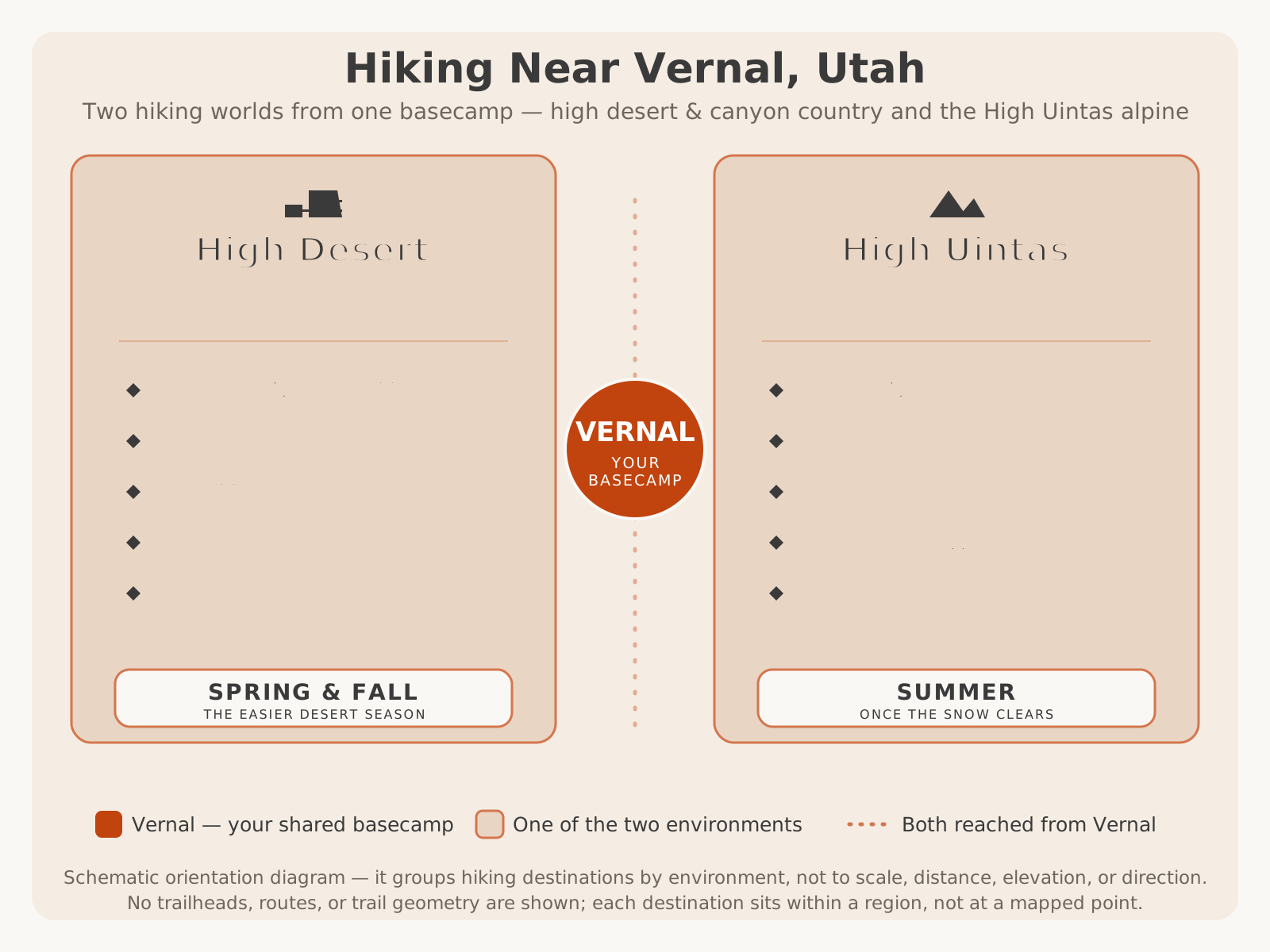
For the wider context, these lakes lie in the alpine half of a two-world hiking region — the high, cool country that balances the warm desert canyons closer to town:
What Makes the High Uintas Unique
Beyond the sheer number of lakes, the High Uintas simply don’t feel like the Utah most visitors expect. Drive up from the red-rock desert around Vernal and within an hour you trade slickrock and sagebrush for a cool, green, water-filled alpine world that feels far more like the northern Rockies than the Colorado Plateau below. That abrupt desert-to-alpine contrast, packed into a single day’s reach, is rare anywhere in the West.
The range’s landform is the reason. Where most mountain ranges rise as a knife-edge spine, the Uintas lift as a broad, high plateau, so their heart is a rolling expanse of open alpine basins, tundra above the treeline, and long views across the peaks rather than a single dramatic wall. That gives lake country here an unusually spacious, walkable character — big skies, gentler grades between the steeper climbs, and room to wander from one basin of water to the next.
And because so much of that high country lies within protected wilderness far from any town, the Uintas hold something increasingly hard to find: genuine quiet and some of the darkest night skies in Utah. Sit at a lake after sunset and the silence is total and the stars overwhelming. It’s the kind of place people mean when they say they want to get away from it all — and it’s the natural high-country counterpart to the deep-time desert of Dinosaur National Monument.
There’s also a reason a lake so often becomes the goal of a hike here, rather than a summit or a viewpoint: a lake gives you somewhere to be, not just somewhere to reach. A summit is a place you touch and leave; a lake is a place you settle into — you find a boulder at the water’s edge, and the day slows down. For a lot of hikers, especially families and anyone who’d rather savor the mountains than conquer them, that’s the whole appeal.
Types of Alpine Lake Hikes
The smartest way to plan is to first decide what kind of lake outing you want, because the range spans everything from a five-minute stroll to a multi-day expedition. Here are the broad types, by character rather than mileage:
- Drive-up and roadside lakes. The gentlest option: lakes reachable with little or no walking from where you park along the high mountain roads. Perfect for young children, limited mobility, a quick fishing stop, or a taste of the high country between other activities.
- Short lakeside walks. Easy loops and out-and-backs around popular lakes and developed campgrounds — gentle footing, a shoreline to circle, and a mountain lake to sit beside. Ideal for families, rest days, and acclimating to the altitude.
- Half-day basin lake hikes. The classic: a trail that climbs from a trailhead into a lake basin, often stringing several lakes together so you can push on to the next or turn back satisfied at the first. The heart of High Uintas lake day-hiking.
- Multi-lake basin loops. For stronger day hikers, routes that link several lakes in a single basin, turning the day into a tour of waters — more distance and climbing, a bigger sense of discovery.
- Remote wilderness lakes. The domain of fit, experienced hikers and backpackers: waters deep in the High Uintas Wilderness that reward real effort with genuine solitude, the best fishing, and dark-sky camping.
| Type | Character | Effort | Best For |
|---|---|---|---|
| Drive-up & roadside lakes | A lake with little or no walking | Minimal | Young kids, limited mobility, quick fishing stops |
| Short lakeside walks | Gentle loops around a lake or campground | Easy | Families, rest days, altitude acclimation |
| Half-day basin lake hikes | Climb into a basin for a lake payoff | Easy to moderate | Most day hikers wanting a real reward |
| Multi-lake basin loops | Link several lakes in one basin | Moderate to strenuous | Stronger day hikers, anglers, explorers |
| Remote wilderness lakes | Deep, quiet waters far from the road | Strenuous / overnight | Fit, experienced hikers and backpackers |
How to Choose Your Lake
With hundreds of lakes to choose from, the skill isn’t finding one — it’s picking the right one for the day you want. Balance your group’s ability, your time, what you want to do at the lake, and current conditions, then match a lake type to your goal:
| If you want… | Choose… | Why |
|---|---|---|
| A lake with almost no walking | A drive-up or roadside lake | Full alpine-lake scenery for minimal effort — ideal with small kids |
| An easy family outing with a payoff | A short lakeside walk | Gentle footing, a shoreline to explore, water to wade |
| A real half-day hike and reward | A basin lake hike | Earn your lake with a satisfying climb, then picnic and turn back |
| Fishing away from the crowds | A basin or remote lake | Quieter water and, often, better fishing the farther you walk |
| Solitude and dark skies | A remote wilderness lake (overnight) | The farther in, the quieter — the domain of prepared backpackers |
| To explore several lakes | A multi-lake basin loop | String waters together for a day of discovery |
Two rules of thumb: effort buys solitude and better fishing (the drive-up lakes are the busiest and most fished), and the season sets what’s reachable (lower lakes clear of snow first; the high basins hold it longest). Altitude and afternoon weather matter too, but those govern every lake here and get their own sections below. Because which lakes, roads, and trailheads are open changes constantly, VERIFY WITH OFFICIAL SOURCE (Ashley National Forest) before you build a day around a particular water.
Scenic Lake Hikes
If your goal is simply to be surrounded by the High Uintas at their most beautiful, the alpine lakes are where the range concentrates its scenery. The signature High Uintas image is a lake: mirror-still water at first light with granite peaks and spruce reflected in it, a wildflower meadow running down to the shore, and the cool blue depth of genuine alpine water. You don’t need to reach a summit for it; the lake is the view.
The most scenic lake hikes trade on a few classic landscapes: the drive-up and short lakeside lakes deliver full alpine beauty a short walk from the car; the basin hikes build the reward as you climb, forest opening to meadow and a lake (often another beyond it); and a bench or rise above a basin stacks lakes, meadows, and peaks into the long, open views the Uintas are known for.
As with all scenic hiking here, timing is everything: the lakes are most photogenic in the calm, low light of early morning and evening — which also keeps you off exposed ground before the afternoon storms. Pair a scenic lake hike with an alpine scenic drive like the Red Cloud Loop to link trailheads and overlooks into a full day.
It helps to see the three broad kinds of lake day side by side — easy family water, scenic middle-distance lake, and remote wilderness lake — because each rewards a different priority.
| Family Lakes | Scenic Lakes | Remote Lakes | |
|---|---|---|---|
| Character | Drive-up and short-walk waters near the roads and campgrounds | Basin lakes a half-day in, chosen for views and reflections | Deep wilderness waters far from any road |
| Effort | Minimal to easy | Easy to moderate | Strenuous, often overnight |
| Best for | Young kids, casual walkers, quick stops, acclimating | Photographers, day hikers wanting a real payoff | Fit, experienced hikers and backpackers |
| Crowds | Busiest and most fished | Moderate; thins with distance | Quietest — often a lake to yourself |
| Main reward | An easy mountain lake with the car close by | Classic Uintas scenery and reflections for a morning’s effort | Solitude, the best fishing, dark-sky camping |
| Main watch-out | Altitude and cold water even on a short walk | Afternoon storms — be down before they build | Remoteness, weather, and being far from help |
Best Lake Hikes for Families
Hiking to a High Uintas lake may be the single best family hike in the region, for one simple reason: the reward is right there at the end, and the end can be close. A lake gives children everything they want out of a hike — water to throw pebbles into, a shoreline to explore, maybe a fish rising, a picnic spot — and because so much of the range’s loveliest water sits near the high roads and campgrounds, kids can reach a genuine mountain lake on a short, gentle walk rather than a long slog.
The winning family formula is to start with the drive-up and short lakeside lakes, where the distance from car to reward is shortest. Let the lake itself be the activity: wading in the shallows (carefully — the water is cold), skipping stones, spotting fish and birds, and eating lunch on a rock. Older, fitter kids can graduate to an easy basin lake hike, but keep it well within their limits, because altitude turns a “short” hike hard fast for little legs.
A few family-specific habits help: watch the water closely with young children, since cold alpine lakes can drop off and chill fast; keep the hike short with the lake as the clear goal, so there’s always something to hike toward; and pack layers and snacks, because little legs tire and chill faster at altitude. The universal rules — start early, beat the afternoon storms, hydrate — matter doubly with kids.
For the region’s other great family hikes — fossils, a dinosaur trackway, and reservoir shorelines — see our guides to the best hikes in Dinosaur National Monument and the broader hiking hub, and for more to do around town, things to do in Vernal.
Fishing the Alpine Lakes
A rod is standard equipment on many High Uintas lake hikes: a great many of these lakes hold trout, and casting into still water with the peaks reflected in it is one of the range’s finest experiences. As a rule, effort is rewarded — walk a basin or two past the busy drive-up lakes and you’ll often find quieter, better fishing — and a lightweight packable rod adds little weight for a big payoff.
One part is non-negotiable: a valid Utah fishing license is required, and species, limits, seasonal rules, and stocking vary by water and change, set by the state and the forest rather than any guidebook. VERIFY WITH OFFICIAL SOURCE (Utah’s wildlife agency and Ashley National Forest) before you cast, and pack out every scrap of line and tackle. This guide only introduces lake fishing; for the region’s waters — and a dedicated Fishing the Uinta Mountain Lakes guide on the way — see our fishing hub.
Photography at the Lakes
Alpine lakes are among the most photogenic subjects in the West, and a lake hike puts you in exactly the right place to capture them — if you plan around the light and the weather. A few local instincts turn snapshots into keepers.
- Shoot the golden hours. Dawn and dusk are everything. Low, warm light rakes across the water, the meadows, and the peaks, while flat midday light does the scene no justice. Because an early start is smart for the weather anyway, morning light works in your favor.
- Chase the reflections. A still lake at first light, with high country mirrored in it, is the signature Uintas image. Get to the shoreline before the wind picks up and breaks the surface — the calm rarely survives past mid-morning.
- Build a foreground. Use rocks, logs, wildflowers, or the lakeshore itself as a foreground to give the reflection depth and lead the eye toward the peaks (see Wildflowers, below, for the summer bloom).
- Stay for the stars. Away from any town, a clear, moonless night at a lake delivers extraordinary star and Milky Way photography, especially mirrored in still water. If you day-hike out for it, carry a good headlamp, layers, and a careful descent plan.
- Mind the weather as a subject. Building thunderheads over a lake make dramatic images — but get off exposed ground before lightning threatens.
The alpine lakes are one of the marquee original-photography opportunities in the entire region — firsthand imagery no stock library can match. Pack thoughtfully, since camera weight adds up at altitude even on a day hike, and always tread lightly on the fragile shoreline to get the shot.
Wildflowers
For a few short weeks each summer, the meadows around the High Uintas lakes put on one of the range’s great shows. Once the snow finally clears from the high basins, the open ground between the forest and the water fills with wildflowers, turning the lakeshores and meadows into drifts of color beneath the peaks. It’s a fleeting, high-payoff window — and one of the best reasons to time a lake hike for the heart of summer.
The bloom follows the melt, so it moves up the mountain as the season progresses: lower meadows and sun-warmed slopes color first, and the highest basins last, often not until deep in summer. That staggered timing means there’s usually flower color somewhere in the high country through the season — a lower lake early on, a high basin weeks later. The exact peak shifts every year with the snowpack, so it’s never a fixed date.
The flowers reward the same care as everything up here: tread lightly. Alpine meadows are fragile and slow to recover, so stay on durable ground and rock, never trample a meadow for a photo, and leave the blooms for the next hiker. Because bloom timing changes year to year, treat any schedule as a rough guide and VERIFY WITH OFFICIAL SOURCE (Ashley National Forest) for current trail and snow conditions.
Wildlife at the Water
Lakes gather wildlife as much as hikers, which makes a quiet lakeshore one of the best places in the range to see animals. Deer and elk come down to drink, moose frequent the willowy margins where lakes drain into meadows, marmots sun on nearby boulders and pikas work the rockslides, and birds hunt the shallows and shorelines. Sit still at dawn or dusk and the wildlife may come to you.
That closeness calls for good manners. Keep a respectful distance, never approach or feed any animal, and give moose in particular a wide berth — they’re far larger, faster, and less predictable than they look, and a cow with a calf is best avoided entirely. Keep food controlled and never leave scraps at the water’s edge; a lake where animals learn to associate people with food is a worse place for both. And watch for wildlife on the mountain roads at dawn and dusk.
Because specific wildlife guidance, food-storage requirements, and any seasonal advisories are set by the managing agency and can change, VERIFY WITH OFFICIAL SOURCE (Ashley National Forest) for the current rules before your trip. For more on the region’s wildlife, see the Ashley National Forest guide.
Preparing for High Elevation
The most underestimated fact about a High Uintas lake hike is that even the easy ones start high. These are genuine alpine lakes, cupped in high basins well above the elevations most visitors live at, so a short walk that would feel trivial at home can leave you winded, tired, and headachy far sooner than the distance suggests. You needn’t go anywhere near Kings Peak’s 13,528-foot summit to be hiking in thin air — the lakes themselves are high country.
Altitude affects people unpredictably, regardless of fitness, and a strong sea-level visitor can feel worse than a modest hiker who lives up high. The reassuring news is that lake day hikes make altitude far easier to manage than a summit or a long backpacking trip, and a few habits go a long way:
- Arrive a little early if you can. A night at a moderate elevation — in Vernal or at a mountain campground — before a bigger lake hike gives your body a head start.
- Go slow and pace yourself, especially on the climbs into a basin. A relaxed pace at altitude is smart, not weak.
- Hydrate hard and eat well. Dehydration worsens altitude symptoms, and the dry mountain air pulls moisture from you faster than you notice.
- Know the warning signs — a worsening headache, nausea, dizziness, and unusual fatigue — and remember the reliable cure is to descend. If mild symptoms don’t ease with rest, or if they worsen, turn around and go down.
Build a little margin into every plan, and altitude becomes a factor you manage rather than a hazard that manages you. For the fuller picture, see our High Uintas day hikes guide.
Weather
Weather shapes a lake hike as much as it shapes any High Uintas outing, and the defining pattern is the afternoon thunderstorm. A typical summer day starts clear and calm, clouds build through midday, and then storms — with lightning, wind, rain, hail, and a sharp temperature drop — sweep the high country in the afternoon. A lakeshore in an open basin offers little shelter, and being caught on exposed ground when lightning is close is the most dangerous situation up here.
That single fact drives the golden rule: be at your lake in the morning and heading down as the clouds build. Set a turnaround time before you go and honor it — the water will be there another day.
Beyond storms, expect genuinely cold conditions even in high summer: chilly mornings, a fast temperature drop whenever the sun goes in or the wind picks up at a shaded shoreline, and cold nights for backpackers. The high-elevation sun is intense — sunburn and dehydration are real even on cool days, amplified by the reflection off the water — and because this is high alpine country, snow can fall in any month.
Check the most current mountain forecast close to your departure, keep the flexibility to swap to a lower, sheltered lake or wait out a bad day, and be ready to turn back. Our Vernal weather guide covers the region’s general patterns, but the high country makes its own weather — VERIFY WITH OFFICIAL SOURCE for current conditions before you go.
Seasonal Advice
The High Uintas lakes have a genuinely short season, so timing matters more here than almost anywhere. The realistic window centers on high summer through early fall — roughly July into September — once the snow has cleared from the high basins and the roads and trailheads are open. Outside that window, deep snow, mud, and closed roads take most of the high lakes off the table.
Within the season, summer and early fall each offer a distinct kind of lake day, and which you prefer comes down to what you value.
| Summer (roughly July–early September) | Early Fall (roughly September) | |
|---|---|---|
| Access | Fullest and most reliable once the snow has cleared | Usually open early on, but closing as snow returns |
| The lakes | Full, warmest window, ringed by wildflower meadows | Quiet shorelines, clear light, cooling water |
| Temperatures | Warmest, but still cold mornings and nights | Cooling fast; cold nights and shorter days |
| Fishing | Active through the long days; busier waters | Can be excellent in cool water; quieter shores |
| Storms & crowds | Near-daily afternoon storms; the busiest window | Fewer daily storms but bigger systems possible; thinner crowds |
| Best for | Families on school break, wildflowers, reliable access | Photographers, anglers, and solitude seekers watching the forecast |
Early summer can still hold dangerous snow and mud on higher trails and shaded basins well after the valleys have greened up, making remote lakes harder and riskier to reach than the calendar suggests. Late fall brings the first serious snows, cold, and short days, closing the high country abruptly. Because the exact window shifts every year with the snowpack, don’t plan around the calendar alone: VERIFY WITH OFFICIAL SOURCE (Ashley National Forest) for the current snow, trail, and road conditions before you lock in dates. For how the high lakes fit the region’s year, see the Ashley National Forest guide.
Day Hikes vs Backpacking to the Lakes
One of the first choices to make is whether to visit the lakes on a day hike or a backpacking trip — and for most visitors the answer is a day hike. Both are wonderful; they simply suit different people and different goals.
| Day Hike to a Lake | Backpacking to a Lake | |
|---|---|---|
| Who it suits | Nearly everyone — families, photographers, anglers, casual hikers | Fit, experienced hikers comfortable in the backcountry |
| Time & commitment | A few hours to a full day; back to a comfortable base by evening | One or more nights out; more planning and gear |
| Gear | A light daypack, layers, water, and the day-hike essentials | A full tested backcountry and alpine kit; food storage; shelter |
| Which lakes | The many lakes reachable within a day | The remoter, quieter waters deep in the wilderness |
| Rewards | Most of the beauty, little of the burden or risk | Solitude, dawn/dusk fishing, dark-sky camping, going deep |
| Main watch-outs | Altitude and afternoon storms — manageable near the trailhead | Altitude, weather, remoteness, and being far from help overnight |
For most visitors, a day hike to a lake delivers the essential experience — the water, the reflections, the fishing, the cool air — without the overnight commitment, the heavy pack, or the added risk of a night out at altitude. Backpacking is the natural next step when you want the remoter lakes, the quiet, and the dawn-and-dusk hours on the water. VERIFY WITH OFFICIAL SOURCE (Ashley National Forest / the ranger district) for the current wilderness rules, group-size limits, and any permits before any overnight trip.
Alpine Lakes vs the Kings Peak Experience
Because the High Uintas are famous for one thing above all — Kings Peak, at 13,528 feet the highest point in Utah — it’s worth being clear about how a lake hike differs from a summit trip, so you can choose the experience that actually fits you. They share a range and little else.
An alpine-lake hike is about arriving somewhere to be: a cold, clear lake to picnic beside, fish, photograph, and settle into, reached on anything from a short walk to a half-day climb, and open to nearly everyone. The Kings Peak experience is about earning a summit: a strenuous, multi-day wilderness expedition to Utah’s rooftop, for fit, experienced, well-prepared hikers only. Most visitors are far better served by the lakes — and the lakes are also the honest training ground for anyone building toward the peak.
| Alpine Lakes Experience | Kings Peak Experience | |
|---|---|---|
| The goal | Reach and enjoy a mountain lake | Stand on the highest point in Utah |
| Who it’s for | Families, photographers, anglers, hikers of all levels | Fit, experienced, well-prepared hikers only |
| Time | A few hours to a full day; back to a base by evening | Typically a multi-day backpacking trip |
| Effort | Your choice — from drive-up strolls to basin climbs | Strenuous and sustained at high altitude with a full pack |
| The payoff | Water, reflections, fishing, meadows, cool air, quiet | A genuine Lower-48 summit, earned over days |
| The mood | Settle in and savor | Commit, endure, and summit |
Leave No Trace at Fragile Shores
Alpine lakeshores are among the most fragile places a hiker visits, and they’re loved to the point of wear. Thin soils and shoreline plants recover slowly at this elevation, so how you behave at a lake matters for the next hiker. A few practices protect them:
- Stay on durable surfaces — rock, gravel, or established trail, never delicate shoreline vegetation.
- Keep the water clean — wash and dispose of waste well away from the lake and its inlet and outlet streams, never in them.
- Pack out everything, including food scraps and every scrap of fishing line and tackle.
Camping setbacks, group sizes, and campfire rules are set by the managing agency and change, so VERIFY WITH OFFICIAL SOURCE (Ashley National Forest) for the current wilderness rules before you go. Overnight ethics get their own depth in our High Uintas backpacking guide.
Accessibility
The alpine lakes are more welcoming to varying abilities than their wild reputation suggests, thanks to the range’s drive-up and roadside lakes. Where a lake sits close to a high mountain road with parking and facilities nearby, real alpine scenery — water, reflections, cool air, often a spot to fish — is within reach of many visitors with little or no walking. You don’t have to hike deep into the wilderness to sit beside a High Uintas lake.
By contrast, the basin and remote lake hikes cross uneven, rocky, sometimes steep ground at altitude and are not uniformly accessible; the high country is remote, its trails unpaved, and conditions change with the weather and season.
Because specific accessible facilities, day-use areas, and lakeside trails vary and change over time, VERIFY WITH OFFICIAL SOURCE (Ashley National Forest) for the current accessible options if you have specific needs. Pairing a drive-up lake with one of the region’s scenic drives — such as the Red Cloud Loop — is often the best way to experience the high lakes from close to the road.
Safety
A safe lake hike comes down to a few disciplines applied consistently — with a couple specific to the water.
- Start early and respect the weather. Afternoon thunderstorms are the defining hazard, and open lake basins offer little shelter. Hike in the morning, be heading down as the clouds build, and set a turnaround time you’ll honor.
- Take altitude seriously. Even easy lake hikes start high. Pace yourself, hydrate and eat well, watch for a worsening headache or nausea, and remember that descending is the cure.
- Treat your water. Never drink straight from a lake or stream; carry a filter or another treatment method, and don’t count on finding water where you expect it.
- Respect the cold water. Alpine lakes are shockingly cold even in summer. If you swim, ease in, never swim alone or when tired, and watch children closely near drop-offs and cold shallows.
- Don’t rely on a phone. Much of the high country has little or no cell service. Carry a map, tell someone your plan and expected return, and consider a beacon for remote lakes.
- Know your limits and turn back freely. The willingness to cut a hike short — for weather, altitude, time, or a gut feeling — is the most important safety skill there is.
Packing
A lake hike doesn’t demand a backpacker’s kit, but it does demand packing for range, plus a few lake-specific extras — the difference between a comfortable day at the water and a cold, sunburned, dehydrated one.
- More water than you think you need, plus a way to treat more — dehydration is common in the dry, high air, and you can’t count on safe water at the lake.
- Layers and a rain shell for the swing from warm sun to a cold, breezy shoreline or a summer squall.
- Real sun protection — hat, sunglasses, sunscreen — doubly important with the sun reflecting off the water.
- Sturdy footwear with grip for rocky, uneven, sometimes wet lakeside trails.
- A packable fishing rod and your license if you plan to fish — little weight for a big added reward.
- Food and snacks beyond what you expect to eat; altitude and cold burn energy fast.
- A map and navigation you don’t have to charge, since cell service is unreliable.
- A small first-aid kit, a headlamp, and emergency essentials — the headlamp matters if a sunset shoot or a slow return runs you into dusk.
Scale the kit up for remote or overnight lakes and down for a short drive-up walk — but never skip the water, layers, and sun protection. For a full, season-by-season breakdown, see our what to bring guide, and time your trip with the Vernal weather guide.
Day Trips
For most visitors, an alpine lake is a day trip — and a wonderful one: a trail after breakfast, a mountain lake by late morning, and back to a hot shower and a real dinner in Vernal by evening. A few ways to shape a lake day, by the kind of day you want:
- The easy family lake day. Drive to a roadside or short-walk lake, spend the day at the water — wading, skipping stones, a picnic, maybe a first cast — and pair it with an alpine scenic drive on the way in and out. Minimal walking, maximum payoff for little legs.
- The basin hike-and-picnic day. Climb from a trailhead into a lake basin in the cool morning, picnic and fish at the lake, and be heading down as the afternoon clouds build. The classic High Uintas day hike.
- The photographer’s lake day. Start before dawn for the mirror-still water and first light, work the reflections and wildflowers, and be off exposed ground by early afternoon — then scout a second, higher lake for a future trip.
- The angler’s lake day. Walk a basin or two past the drive-up crowds to quieter water, fish the morning, and carry a light rod to keep the day mobile. Confirm the current fishing rules first.
Whatever the shape, the rules are the same — start early, respect the altitude and the sky, and VERIFY WITH OFFICIAL SOURCE (Ashley National Forest) for current access.
Weekend Trips
With two or three days you can go deeper — combining lakes, adding an overnight, or pairing the high country with the rest of the region.
- The lake-hopping weekend (day hikes). Base in Vernal or at a mountain campground and hike to a different lake or basin each day — an easy family lake one day, a more ambitious basin the next — without ever carrying an overnight pack. The lowest-commitment way to see a lot of water.
- The first-backpacking weekend. For fit, prepared hikers ready to go deeper, backpack to a remote lake, camp beside it under dark skies, and fish the golden hours at dawn and dusk. It’s the natural next step beyond day hiking — and the honest bridge toward bigger objectives like Kings Peak. VERIFY WITH OFFICIAL SOURCE (Ashley National Forest / the ranger district) for current wilderness rules, group-size limits, and any permits before any overnight.
- The high-and-low weekend. Spend one day at the cool alpine lakes and another down in the red-rock desert at Dinosaur National Monument — the region’s whole range, high and cool to low and red, in a single trip, with Vernal as the comfortable base between them.
Coming from out of state? See our Salt Lake City to Vernal guide for the drive in, and browse camping in Dinosaur Country to turn a weekend into a full high-country adventure.
Planning Tips
Pull it all together into a simple, flexible plan:
- Choose the lake to fit the day — honestly. Match the lake type to your group’s time, fitness, and goal: drive-up and short lakeside lakes for families and casual walkers, basin hikes for a real payoff, remote lakes only for fit, experienced hikers and backpackers.
- Start early, every time. An early start buys calm water and better light, easier parking, better fishing, and — above all — safety, letting you be off exposed ground before the afternoon storms.
- Time it for the summer-to-early-fall window, and verify the snow. The high lakes’ season is short and shifts every year. VERIFY WITH OFFICIAL SOURCE (Ashley National Forest) for current snow, trail, and road conditions before committing to dates.
- Plan for altitude, weather, and water. Pace yourself, hydrate, pack layers and sun protection, treat your water, and keep the flexibility to swap to a lower lake — or turn back — when conditions say so.
- Know the fishing rules before you cast. A Utah license is required and regulations vary by water and change. VERIFY WITH OFFICIAL SOURCE (Utah’s wildlife agency and Ashley National Forest), and see our fishing hub for the region’s fishing.
- Base in Vernal and build a full trip. Vernal is the region’s gateway and nearest full-service town. Pair your lake hikes with camping in Ashley National Forest, an alpine scenic drive, and the rest of things to do in Vernal. Coming from out of state? See our Salt Lake City to Vernal guide.
- Read the companion guides. For the range’s day hiking as a whole, see our High Uintas day hikes guide; for the full destination, the Ultimate Guide to Ashley National Forest; and if a lake trip leaves you hungry for the summit, the Kings Peak guide.
Hiked with a plan, the alpine lakes deliver what the High Uintas do best: genuine mountain beauty — cold clear water, reflected peaks, wildflower meadows, and rising trout — within reach of a single well-timed day, and open to families and casual walkers, not just the hardcore. And when you want to trade the trail for a guided backcountry adventure closer to town, book a UTV tour with Adventure Tours Vernal and let Dave and Trudy show you the country at the foot of the Uintas.