Key Takeaways
- Backpacking is a different experience, not just a longer hike. It’s the difference between visiting the high country and living in it for a night — camping beside remote lakes, catching dawn and dusk on the water, and reaching places a day hike can’t.
- You don’t have to climb Kings Peak. The range’s hundreds of alpine lakes and open basins make wonderful overnights with no summit involved; Utah’s highest peak is one specific expert objective, not the price of entry.
- Preparation is the whole game. This is remote, high-altitude wilderness with cold nights, afternoon storms, and often no cell service. Build up on day hikes, start short and conservative, and carry a complete, tested kit.
- Leave No Trace isn’t optional here. Fragile alpine ground, delicate lakeshores, and heavy use mean your camp craft directly shapes what the next hiker finds. Camp on durable ground, keep water clean, and pack out everything.
- Verify every changing specific. Mileage, camp locations, permits, water, fire restrictions, wildlife rules, and snow are set by Ashley National Forest and change every year — this guide describes the experience by character and never invents the details.
Why Backpack the High Uintas
Most visitors experience the High Uintas as a day trip — drive up from the desert, hike to a lake or a viewpoint, and be back in Vernal for dinner. That’s a wonderful way to see the range, and for a lot of people it’s the right one. But it means turning around just as the mountains get their most beautiful. The magic hours in the high country — the still, mirror-calm dawn, the long gold light of evening, the overwhelming stars of a moonless night — belong almost entirely to those who stay. Backpacking is how you stay.
That’s the honest heart of why people shoulder a heavy pack and walk into the High Uintas Wilderness: not because it’s easier or more comfortable than a day hike, but because it opens a version of the range you simply cannot reach any other way. The Uintas are unusually suited to it. They’re one of the very few major ranges in the Lower 48 that run east–west rather than north–south, and instead of a narrow, knife-edge spine they lift as a broad, high plateau of open alpine basins, tundra, and meadow. Scattered across that high country are hundreds of alpine lakes — one of the densest concentrations of mountain water anywhere in the country — and many of the best ones sit deep enough that they’re really only yours if you camp.
Walk in for a night or two and the range rearranges itself around you. You reach lakes too far for a day trip, where the fishing is quieter and the shoreline is your own. You wake in the cold thin air with the peaks reflected in still water and no one else in sight. You watch the afternoon storms build and clear from the safety of a good camp, and then you get the reward the day-trippers miss: the light going long and gold, the wildlife coming down to drink, and a night sky so dark and crowded with stars it stops conversation. This is the high-country counterpart to the deep-time desert of Dinosaur National Monument — the two poles of what makes this corner of Utah extraordinary.
It’s worth being clear about what this guide isn’t. It won’t give you trail mileage, name specific camps, hand you a route, or tell you where the water is — those things change, they’re set by the forest, and getting them wrong in the backcountry is dangerous. Instead it helps you make the decisions that come before the map: whether backpacking here is right for you, what kind of trip you’re after, and how to prepare so the experience is a great one rather than a hard lesson. For the destination in full — its history, geology, lakes, and logistics — pair this with our Ultimate Guide to Ashley National Forest, and browse the range’s day options at the hiking hub.
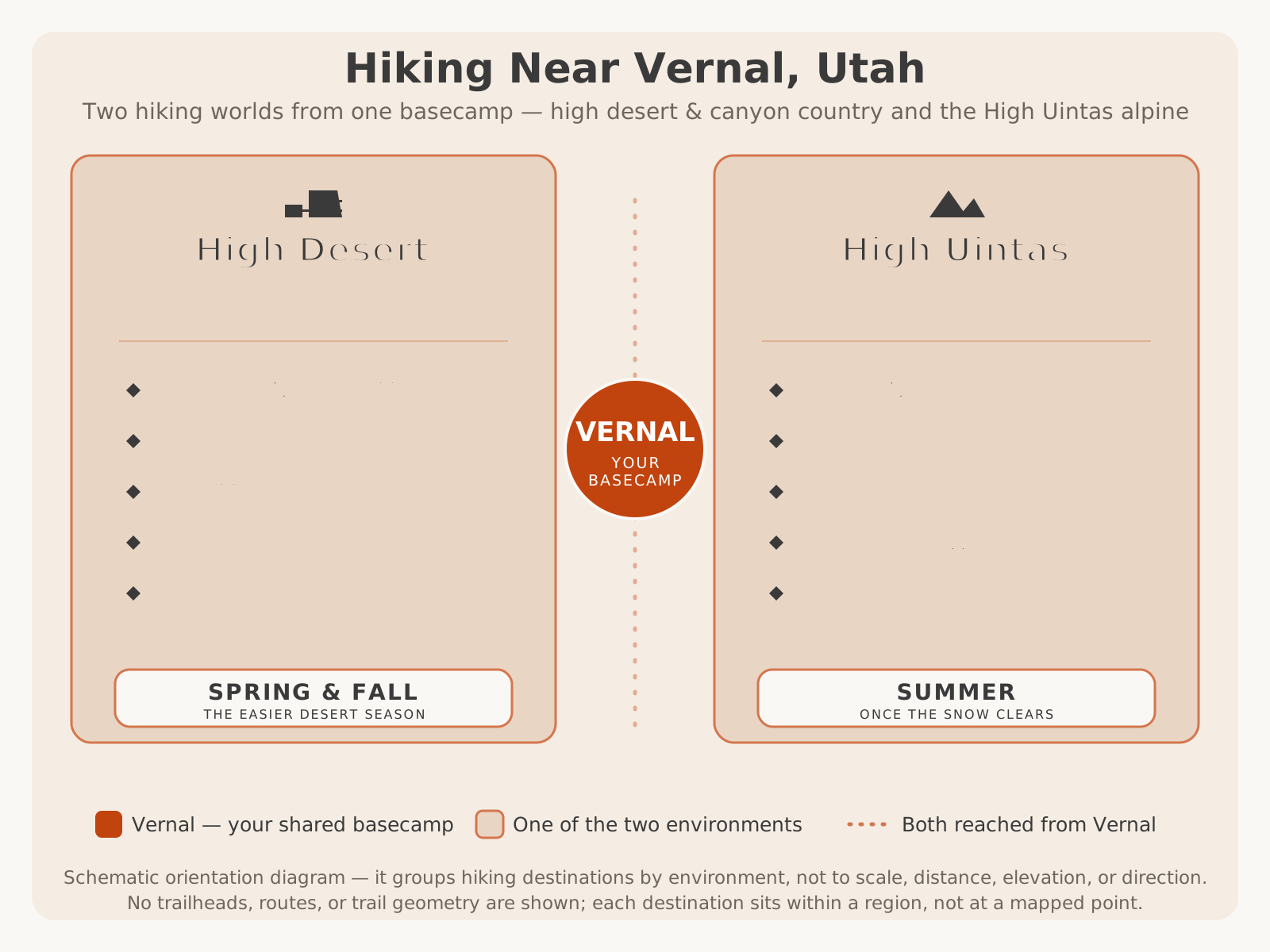
To place it in the region: the backcountry you’ll shoulder a pack into is the alpine half of a two-world hiking region — the high wilderness that stands opposite the deep-time desert near Vernal:
Who Should Consider Backpacking
Backpacking the High Uintas is deeply rewarding, but it isn’t the right next step for everyone, and being honest about that up front is the single most useful thing this guide can do for you. This is genuine high-altitude wilderness travel: remote, physically demanding, weather-exposed, and often beyond cell service. The mountain doesn’t grade on effort or enthusiasm — it rewards preparation and quietly punishes people who underestimate it.
You’re a good candidate for High Uintas backpacking if you’re a fit hiker who has spent real time on the trail, who is comfortable carrying a loaded pack over rough miles, who has some experience at altitude and knows roughly how your body responds to it, and who is willing to do the planning and carry the gear that self-sufficiency demands. Experienced backpackers, adventure travelers, photographers building a serious Uintas trip, anglers chasing remote water, and multi-day visitors extending a national park trip will all find country here worth every ounce of the pack. If you’ve done overnights elsewhere and you’re comfortable being your own safety net, this range will reward you enormously.
It’s probably not your next trip if you’ve never carried an overnight pack, have no experience at altitude, are new to hiking, or are hoping for a marked, amenity-lined path. There’s no shame in that — it just means you build up first, which is genuinely enjoyable in its own right. The region is full of exactly the trips that grow the skills backpacking demands: start with the beginner hiking guide near Vernal, add family-friendly outings and easy drive-up alpine lakes, work up through High Uintas day hikes, and then attempt your first overnight. That progression isn’t a consolation prize; it’s how experienced backpackers were made.
Planning Your First Backpacking Trip
If you’ve decided you’re ready, the goal of a first High Uintas overnight is simple: keep it short, conservative, and forgiving. The mistake first-timers make is treating the first trip as the big one — a long push to a distant lake, a summit, a loop. Do the opposite. Pick a modest objective close to the trailhead, give yourself far more time than you think you need, and build in the option to bail out easily if weather, altitude, or fatigue says so. A successful, low-drama first night teaches you more (and makes you want to come back) than an epic that goes sideways.
A few principles shape a good first plan:
- Choose a close, low-stakes destination. A nearby alpine lake you could reach and retreat from without drama makes the ideal first camp. Save the remote, multi-night objectives for after you know how you and your gear perform.
- Go with experience if you can. A first trip alongside a seasoned backpacker is worth more than any article. If you’re going without one, be extra conservative and tell someone your detailed plan.
- Acclimatize to the altitude. Everything up here happens high. Arrive a day early if you can — a night in Vernal or at a forest campground before you walk in gives your body a head start.
- Test every piece of gear before the trailhead. Set up your shelter, sleep in your bag, cook a meal, and treat some water at home first. The backcountry is a bad place to discover a missing pole or a stove you can’t light.
- Plan around water and weather, not just distance. Know your treatment plan, refill when you can, aim to make camp with margin before the afternoon storms, and keep a flexible turnaround mindset.
Crucially, this guide deliberately stops short of the specifics that a responsible plan requires you to confirm yourself. Trailhead access, road conditions, whether a permit or self-registration is required, group-size limits, campsite and campfire regulations, fire restrictions, water availability, and the current snow situation all change and are all set by the forest — never a guidebook. VERIFY WITH OFFICIAL SOURCE (Ashley National Forest / the ranger district) close to your trip date for every one of them. For a general packing foundation, our what to bring guide is a starting point — but understand that an overnight in alpine wilderness demands considerably more than a day-hike kit, and time your window with the Vernal weather guide.
Backpacking vs Day Hiking
The most useful frame for deciding whether to backpack is to compare it honestly with the day hiking you could do instead — because for a great many visitors, a day hike is the smarter choice, and there’s no failure in that. Both are wonderful; they simply suit different people, goals, and levels of commitment.
| Day Hiking the High Uintas | Backpacking the High Uintas | |
|---|---|---|
| Who it suits | Nearly everyone — families, casual hikers, photographers, anglers, first-timers | Fit, prepared hikers comfortable with multi-day, self-sufficient backcountry travel |
| Time & commitment | A few hours to a full day; back to a comfortable base by evening | One or more nights out; far more planning, and a bigger commitment to conditions |
| Gear | A light daypack, layers, water, and the day-hike essentials | A complete, tested overnight kit — shelter, sleep system, food storage, cook setup, more layers |
| Where you can go | The many lakes, meadows, and basins reachable within a day | Remote lakes and country too far to reach and return in a single day |
| The rewards | Most of the scenery, little of the burden or overnight risk | Dawn and dusk on the water, dark skies, solitude, going deep, staying |
| Main watch-outs | Altitude and afternoon storms — manageable near the trailhead | Altitude, weather, cold nights, remoteness, and being far from help after dark |
For most visitors, a day hike delivers the essential High Uintas — the alpine lakes, the reflections, the meadows, the cool air — without a heavy pack, a night at altitude, or the added risk of being far from help after dark. Backpacking is the natural next step when what you want is precisely the part a day hike can’t give you: to be there when the light goes long, the wind dies, and the stars come out. Decide based on what you’re actually after, not on which sounds more impressive. If you’re not sure, do a day hike first — it’s also the best possible scouting for a future overnight. VERIFY WITH OFFICIAL SOURCE (Ashley National Forest / the ranger district) for current wilderness rules and any permits before any overnight trip.
Popular Backpacking Experiences
There’s no single “High Uintas backpacking trip” — the range offers several distinct kinds of overnight, and knowing which you’re after is the key to planning a trip you’ll love. Rather than chase distance for its own sake, decide what you want the nights to be about. Three experiences draw people back again and again.
Alpine Lakes
For most High Uintas backpackers, an alpine lake is the destination — and often the whole point. With hundreds of lakes scattered across the high basins, a lake makes the ideal camp: somewhere to arrive and settle rather than merely reach, with water to fish, a shoreline to explore, cold air, and a mirror surface that turns to gold at dawn and dusk. Backpacking simply lets you choose the quieter lakes — the ones a day-tripper can’t reach and back in daylight — and lets you stay long enough to catch them at their best hours.
The great advantage of a lake-focused overnight is flexibility: you can plan a gentle first trip to a closer lake or a more ambitious push to a remote one, and either way the reward is the same kind of place. Effort tends to buy solitude and better fishing the deeper you go. This guide is the overnight companion to our dedicated alpine lakes hiking guide, which covers choosing a lake, fishing, and photography in depth — start there to pick the kind of lake you want, then use this guide to decide whether to visit it on a day hike or an overnight. Because which lakes and trailheads are open changes constantly, VERIFY WITH OFFICIAL SOURCE before building a trip around a particular water.
Backcountry Camping
The camping itself — not just the destination — is a huge part of why people backpack here, and the High Uintas reward good camp craft. Camping in designated wilderness means choosing your own site responsibly, cooking and storing food carefully, and leaving your camp so clean the next hiker never knows you were there. Done well, a High Uintas camp is one of the finest experiences in Utah: a small shelter beside cold water, dinner as the peaks go pink, and a night under overwhelming stars, miles from the nearest road or light.
But wilderness camping carries real responsibilities that developed campground camping doesn’t. Where you can camp, how far you must set up from water and trails, whether campfires are allowed (and any current fire restrictions), group-size limits, and how you must store food are all set by the managing agency, vary by area, and change — often season to season, and sharply in a dry year. None of that belongs in a guidebook, because getting it wrong isn’t just a rule violation; it can start a wildfire or teach a bear to raid camps. VERIFY WITH OFFICIAL SOURCE (Ashley National Forest / the ranger district) for the current camping, campfire, fire-restriction, and food-storage rules for your exact area and season before you go. For an easier first taste of sleeping in the forest, a developed campground is a great stepping stone — see camping in Ashley National Forest and the broader camping hub.
Wildlife
Spend a night in the backcountry and you share it with the residents — one of the quiet privileges of backpacking here. The forest and alpine zones hold deer and elk, moose in the willowy margins where lakes drain into meadows, marmots and pikas among the high boulders, and a rich bird life along the shorelines and in the trees. Camp quietly near water and dawn or dusk may bring the wildlife to you; it’s an experience day-trippers rarely get.
That closeness demands good manners and good habits. Keep a respectful distance from every animal, never approach or feed anything, and give moose in particular a wide berth — they’re far larger, faster, and less predictable than they look, and a cow with a calf is best avoided entirely. Store your food and all scented items properly so you don’t draw animals into camp; an animal that learns to associate people with food becomes a danger to itself and to the next camper. Because specific wildlife guidance, food-storage requirements, and any seasonal advisories are set by the managing agency and can change, VERIFY WITH OFFICIAL SOURCE (Ashley National Forest) for the current rules before your trip. To go deeper on what lives here and how to watch it well, see our wildlife hiking guide and bird watching guide.
Weather
Weather governs a backpacking trip even more than a day hike, because you can’t simply drive away from it — you sleep in it. The defining pattern of a Uintas summer is the afternoon thunderstorm: mornings often start clear and calm, clouds build through midday, and then storms with lightning, wind, rain, hail, and a sharp temperature drop sweep the high country in the afternoon. Being caught on exposed ground when lightning is close is the single most dangerous situation up here, which is exactly why backpackers plan their days around it — hiking and reaching camp early, and being settled somewhere sheltered before the storms build.
Beyond storms, the mountains hand out genuinely cold nights even in high summer, and an overnight exposes you to them in a way a day hike never does. Expect chilly evenings, a fast temperature drop whenever the sun goes down or the wind comes up, and the real possibility of snow in any month at this altitude. The high-elevation sun is intense by day — sunburn and dehydration are real even when the air is cool — and the reflection off water and any lingering snow amplifies it. This is why your layering and sleep system aren’t luxuries but core safety gear.
The practical takeaways are simple and non-negotiable: check the most current mountain-specific forecast you can find close to departure, understand that the high country makes its own weather regardless of the valley forecast, build flexibility into your plan so you can wait out or bail on a bad day, and always be prepared to turn back. Our Vernal weather guide covers the region’s general patterns, but for an overnight in the wilderness always seek a specific high-elevation forecast and VERIFY WITH OFFICIAL SOURCE for current conditions before you go.
Leave No Trace
Nowhere is Leave No Trace more important than on a High Uintas backpacking trip, because you’re not just passing through — you’re eating, sleeping, and living in a fragile place overnight, and every one of those activities leaves a mark if you’re careless. Alpine soils, shoreline plants, and meadows recover painfully slowly at this elevation, and the range’s most beautiful spots are loved to the point of wear. How you camp directly determines what the next hiker finds. A handful of practices carry most of the weight:
- Camp on durable ground. Choose rock, gravel, or already-bare, established sites well back from lakes and streams; never clear or trample vegetation for a tent spot, and never camp right on a fragile shoreline.
- Keep the water clean. Wash, cook, and dispose of all waste well away from lakes, inlets, and outlet streams — never in them — and handle human waste according to the current wilderness rules for the area.
- Manage fire with extreme care. Campfires may be restricted or prohibited, especially in a dry year; know and follow current fire restrictions, and treat a stove as the responsible default. A single careless fire can scar the backcountry for decades.
- Pack out everything. All trash, food scraps, and every scrap of fishing line and tackle leaves with you. “Leave no trace” means the site looks untouched when you go.
- Respect wildlife and other visitors. Store food properly, keep noise down, give others space and solitude, and leave what you find — flowers, rocks, and antlers stay for the next person.
The specifics — camping setbacks, group-size limits, campfire and fire-restriction rules, and human-waste requirements — are set by the managing agency and change, sometimes mid-season. VERIFY WITH OFFICIAL SOURCE (Ashley National Forest / the ranger district) for the current wilderness regulations before you go, and treat Leave No Trace not as a set of rules to tolerate but as the price of admission to country this special. For the fragile summer bloom in particular, tread especially lightly — see our wildflower hiking guide.
Photography
For photographers, backpacking is the great unlock: it puts you in the right place at the right time, which for landscape photography is everything. Day-trippers are driving down the mountain exactly when the light turns magic. A backpacker is standing at a remote lakeshore at dawn with the peaks mirrored in still water, or working the long gold light of evening, or set up under a moonless sky for stars and the Milky Way over the high country. The Uintas offer a rare stack of subjects — open alpine tundra, granite basins, hundreds of reflective lakes, summer wildflower meadows, dramatic storm skies, and some of the darkest night skies in Utah — and the best of them belong to those who stay the night.
A few local instincts pay off. Shoot the golden hours at dawn and dusk, when low, warm light rakes across the tundra and rock and turns the lakes to mirrors; flat midday light does the scenery no justice, and you’ll likely be moving or sheltering from storms then anyway. Chase the reflections — a still lake at first light, with high peaks behind it, is the signature Uintas image, so get to the shoreline before the wind breaks the surface. Use rocks, logs, and wildflowers as foreground to give a reflection depth. Watch the weather as a subject — building thunderheads make dramatic images, but get off exposed ground before lightning threatens; no photo is worth that risk. And on a clear night from a remote camp, the stars here are extraordinary.
Two practical notes for the backpacking photographer. First, weight discipline matters — camera gear adds up fast on a multi-day trip at altitude, so pack thoughtfully and prioritize. Second, get the shot without harming the scene: stay on durable ground, keep off delicate tundra and shoreline, and leave every spot exactly as you found it. The remote lakes and alpine camps of the High Uintas are among the marquee original-photography opportunities in the entire region — firsthand imagery no stock library can match. For more on shooting the range, including day-trip options, see our photography hikes guide.
Safety
On a backpacking trip, safety isn’t a section you read and forget — it’s the plan itself, because you’re carrying your margin for error on your back and you’re often far from any help. A handful of disciplines, applied consistently, separate a great trip from a dangerous one:
- Respect the weather and time your days around storms. Afternoon thunderstorms are the defining hazard, and open country offers little shelter. Travel and reach camp early, know where you’ll shelter, and be willing to wait out or bail on a bad day.
- Take altitude seriously. Everything up here is high. Gain elevation gradually, sleep at a moderate elevation before you go deep if you can, stay hydrated and well fed, watch for a worsening headache, nausea, or dizziness, and remember that descending is the cure if symptoms build.
- Treat all your water. Never drink straight from a lake or stream, always carry a reliable filter or treatment method, and don’t count on finding water exactly where you expect it — plan your route around known sources.
- Be genuinely self-sufficient. You are far from help and may have no cell service. Carry a complete first-aid kit and the skills to use it, emergency communication suited to a no-signal area, and enough food, layers, and water treatment to handle a delay or an unplanned night out.
- Navigate for real. Carry a map and compass and know how to use them; don’t rely solely on a phone or GPS, and keep track of where you are.
- Store food and manage wildlife well. Keep a clean camp, store all food and scented items properly, give animals — especially moose — a wide berth, and never feed anything.
- Know your limits and turn back freely. The willingness to cut a trip short — for weather, altitude, injury, time, or a gut feeling — is the most important safety skill there is. The mountains will be there next season.
Seasonal Considerations
The High Uintas have a genuinely short backpacking season, so timing matters more here than almost anywhere. The realistic window centers on high summer through early fall — roughly July into September — once the snow has cleared from the high basins and the roads and trailheads are open. Outside it, deep snow, mud, closed roads, and dangerous cold take most of the high country off the table for all but experienced mountaineers. Within the season, summer and early fall each offer a distinctly different overnight, and which you prefer comes down to what you value.
| Summer Backpacking (roughly July–early September) | Fall Backpacking (roughly September) | |
|---|---|---|
| Access | Fullest and most reliable once the snow has cleared | Usually open early on, but closing as snow returns |
| The nights | Warmest window — but still genuinely cold after dark | Cold and getting colder; longer, chillier nights |
| Scenery | Full lakes, wildflower meadows, lush high country | Quiet shorelines, crisp clear light, early fall color lower down |
| Weather | Near-daily afternoon thunderstorms; warmest days | Fewer daily storms, but bigger, colder systems and early snow possible |
| Crowds & solitude | The busiest window; the most company on the trail | Quieter country and easier solitude, for those watching the forecast |
| Best for | First trips, wildflowers, warmest nights, most reliable access | Experienced backpackers wanting cool air and solitude, prepared for cold |
A few season-specific cautions. Early summer can still hold dangerous snow and mud on higher trails and shaded basins well after the valleys have greened up, making remote objectives harder and riskier than the calendar suggests — a classic trap for the eager. Late fall brings the first serious snows, hard cold, and short days, closing the high country abruptly and pushing trips toward genuine winter mountaineering. And because this is high alpine country, snow can fall in any month of the year. The exact safe window shifts every single year with the snowpack, so don’t plan around the calendar alone: VERIFY WITH OFFICIAL SOURCE (Ashley National Forest) for the current snow, trail, and road conditions before you lock in dates. For how the seasons feel across the region’s trails, see our summer, fall, spring, and winter hiking guides.
Experience Level: Beginner vs Experienced Backpackers
Because “backpacking the High Uintas” spans everything from a short first overnight to a remote multi-night expedition, it helps to see honestly how the range asks different things of a beginning backpacker and a seasoned one — and how a beginner can start here responsibly rather than not at all.
| Beginner Backpacker | Experienced Backpacker | |
|---|---|---|
| Right first trip | A short, close overnight to a nearby lake, with an easy bail-out | Remote lakes and multi-night basins deeper in the wilderness |
| Ideal company | Go with an experienced partner if at all possible | Comfortable solo or leading a group, with the judgment to match |
| Altitude & fitness | Acclimatize deliberately; keep distances and gain modest | Knows their altitude response; can carry a pack over long, rough miles |
| Skills | Building navigation, camp craft, and weather-reading — lean conservative | Confident with map and compass, campsite selection, and self-rescue basics |
| Margin | Build in lots of extra time, daylight, and food; plan to bail easily | Carries margin by habit; adapts to weather and conditions on the fly |
| Biggest risk | Taking on too much too soon — distance, altitude, or remoteness | Complacency — underestimating a range that still makes its own weather |
The encouraging news for beginners is that starting small in the High Uintas is entirely reasonable — a short overnight to a close lake is a legitimate first backpacking trip for a fit, prepared person. The trap isn’t backpacking here as a beginner; it’s backpacking ambitiously here as a beginner. Keep the first trips short and forgiving, build up deliberately, and let experience — not enthusiasm — set the pace. If you’re not there yet, our beginner hiking guide and day hikes guide are the right rungs below this one. And whatever your level, VERIFY WITH OFFICIAL SOURCE for the conditions and rules of your specific trip.
Kings Peak vs General High Uintas Backpacking
Because the Uintas are famous above all for Kings Peak — at 13,528 feet the highest point in Utah — many people assume that backpacking here means climbing it. It doesn’t, and conflating the two leads beginners toward a trip far beyond their next step. Kings Peak is one specific, strenuous, expert objective within the range; general High Uintas backpacking is a whole spectrum of overnight experiences, most of which involve no summit at all.
| General High Uintas Backpacking | The Kings Peak Trip | |
|---|---|---|
| The goal | Reach and camp in beautiful high country — usually a lake | Stand on the highest point in Utah |
| Who it’s for | A wide range, from prepared first-timers to seasoned backpackers | Fit, experienced, well-prepared hikers only |
| Effort | Your choice — from a short overnight to a remote multi-night trip | Strenuous and sustained at high altitude with a full pack |
| Difficulty ceiling | Scalable — pick a trip that matches your ability | Fixed and high — a boulder-strewn summit ridge above 13,000 feet |
| The payoff | Lakes, camps, fishing, dark skies, solitude, staying the night | A genuine Lower-48 summit, earned over days |
| Where it fits | The place most people should start and spend most of their trips | The expert endpoint, after you’ve built the skills below it |
The takeaway: general High Uintas backpacking is where nearly everyone should start and spend most of their nights, and it’s also the honest training ground for anyone building toward the peak. Fall in love with the range on lake overnights and remote basins first; learn how you handle altitude, cold nights, and multi-day travel with a full pack; and then, if the summit still calls, graduate to it with the skills it demands. For that endpoint in full — difficulty, altitude, seasons, and preparation — see our dedicated Kings Peak guide.
Accessibility
Backpacking, by its nature, is one of the least accessible ways to experience the High Uintas — it requires carrying a heavy pack over rough, unpaved, high-altitude ground for miles, often far from any road or help. That’s part of what protects the wilderness, and it means a multi-day overnight simply isn’t within reach for every visitor. It would be dishonest to suggest otherwise.
The genuinely good news is that the rewards backpackers chase — alpine lakes, cool high air, mountain scenery, wildlife, and dark skies — are far more accessible than backpacking itself. Elsewhere in Ashley National Forest, paved scenic byways, developed overlooks reachable with little walking, drive-up alpine lakes, and developed campgrounds put real high-country experience within reach of many visitors regardless of hiking ability. You don’t have to shoulder a pack to sit beside a High Uintas lake or sleep under its stars — a drive-up lake and a developed campground can deliver a version of it from close to the road. Our alpine lakes guide covers the drive-up and short-walk waters, and the scenic drives hub — including the Red Cloud Loop — points toward the low-effort ways into the high country.
Because specific accessible facilities, campgrounds, day-use areas, and lakeside options vary and change over time, VERIFY WITH OFFICIAL SOURCE (Ashley National Forest) for the current accessible options if you have specific needs.
Planning Tips
Pull it all together into a plan built on honesty, preparation, and flexibility:
- Decide honestly whether backpacking is your next step. The High Uintas reward prepared, self-sufficient hikers and quietly punish everyone who underestimates them. If you’re not there yet, build up on the region’s day hikes and beginner trails — that’s the smart path, not a detour.
- Start short, close, and conservative. Make your first overnight a modest trip to a nearby lake with an easy bail-out. A calm, successful first night teaches more than an ambitious one that unravels.
- Skip the summit pressure. You don’t need Kings Peak to backpack here. Let the range’s hundreds of alpine lakes be your destinations, and save Utah’s rooftop for when you’ve earned it.
- Time it for the summer-to-early-fall window — and verify the snow. The season is short and shifts every year with the snowpack. VERIFY WITH OFFICIAL SOURCE (Ashley National Forest) for current snow, trail, road, permit, and fire conditions before you commit dates.
- Plan for altitude, weather, water, and cold nights. Acclimatize, travel and camp early to beat the storms, treat all your water, carry a sleep system and layers for genuine cold, and keep the flexibility to wait out a bad day or turn back.
- Prepare and test everything. Build fitness over weeks, sharpen your navigation and camp craft, and test your full kit at home before the trailhead. An overnight in alpine wilderness demands far more than a day-hike kit — see our what to bring guide as a foundation.
- Leave no trace, and confirm the rules. Camp on durable ground, keep water clean, follow current fire restrictions and food-storage rules, and pack out everything. These specifics are set by the forest and change — VERIFY WITH OFFICIAL SOURCE for your exact area and season.
- Base your trip in Vernal and build it out. Vernal is the region’s gateway and nearest full-service town for supplies, lodging, and a comfortable night before and after the wilderness. Pair the backcountry with camping in Ashley National Forest, an alpine scenic drive, and the rest of things to do in Vernal. Coming from out of state? See our Salt Lake City to Vernal guide.
Planned with humility, preparation, and a flexible mind, a High Uintas backpacking trip delivers what few experiences anywhere can: a night — or several — inside one of the wildest, most beautiful high-country landscapes in Utah, with alpine lakes for company, dawn and dusk on the water, and a sky full of stars far from any town. Build up to it honestly, keep your first trips short and forgiving, time it for the clear window, tread lightly on country this fragile, and turn back without ego when the mountains say so. And when you want to trade the long approach for a guided backcountry adventure closer to town, book a UTV tour with Adventure Tours Vernal and let Dave and Trudy show you the country at the foot of the Uintas.