Key Takeaways
- In summer, climb the mountain. The high country — the High Uintas and upper Ashley National Forest — is finally open, cool, and at its best. Go up for the day’s main hike; this is the one season the alpine is reliably reachable on foot.
- Save the desert for the cool ends of the day. Dinosaur National Monument, Red Fleet, and the lower gorge are beautiful in summer at dawn and dusk, but midday heat on hot, exposed trails is something to plan around — hike them early, short, and well-watered.
- Long daylight is a gift; use it wisely. Summer reverses winter’s tight windows, giving room for early starts and long outings — but pair early starts with early finishes up high to beat the afternoon storms.
- Respect heat, sun, altitude, and afternoon thunderstorms. These are summer’s real hazards, and they differ by elevation. Carry far more water than you expect to need, plus sun protection, and a warm, rainproof layer for the high country no matter how hot the trailhead feels.
- Verify the details that change. Temperatures, UV, trail and road conditions, stream levels, lingering snow on high passes, and storm timing shift every year and are set by the managing agencies — VERIFY WITH OFFICIAL SOURCE before every summer hike.
Why Summer Hiking is Different
Summer flips the whole logic of hiking around Vernal. Where winter keeps you down in the mild desert and spring has you following the thaw slowly up the mountain, summer is the season the high country is finally, fully open — and the season you go up to find it. If there’s one idea that organizes a summer trip, it’s this: in summer, hikers climb the mountain. A few things make the season its own animal.
First, the high country is open, and it’s the point. For most of the year the High Uintas and the upper Ashley National Forest are locked in snow — off the table for ordinary hiking through winter and much of spring. Summer is their brief window: the passes clear, the trailheads open, the alpine lakes thaw, the meadows flower, and the region’s finest mountain trails come into season all at once. This is the only time of year the roof of Utah — crowned by Kings Peak — is reliably reachable on foot, and that alone reshapes where a summer hiker points the car.
Second, elevation becomes your air conditioning. The defining summer fact here is the enormous temperature spread between the hot desert floor and the cool high peaks. A day that’s baking down in Vernal can be crisp and comfortable at a high trailhead an hour and a half away. That spread is a gift: it means there’s excellent, cool hiking within reach all summer, as long as you’re willing to gain elevation for it. Climbing isn’t just about reaching pretty places in summer — it’s how you stay comfortable.
Third, the days are long. Summer reverses winter’s cramped, dark windows completely: sunrise comes early and light lingers late into the evening, taking the time pressure off and opening room for early starts, long outings, and beautiful, mild dawn and dusk hours down in the desert. Used well, that long daylight is one of the season’s best tools.
Fourth, the honest ones — heat, crowds, and storms. The low desert gets genuinely hot, and midday hiking on exposed low trails is something to plan around rather than push through. Summer is also the region’s busy season, so the popular spots see their biggest crowds. And through much of the summer, afternoon thunderstorms build over the mountains, bringing lightning, rain, and fast weather changes that make an early finish up high non-negotiable. None of these should scare you off — they just shape the plan.
Put together, summer offers the region at its most fully open: cool alpine trails and blue lakes up high, long golden mornings and evenings down in the desert, and the freedom of long days to enjoy both. This is the seasonal companion to our broader hiking hub: where our winter guide owns staying low and still, this one owns climbing high — and it’s the seasonal opposite that completes the four-season picture alongside spring and fall.
How Elevation Changes Summer
More than any other season, summer here is a story of elevation — and understanding it turns a hot, crowded trip into a cool, spacious one. The same region that is a hot desert at its base is a cool alpine world a few thousand feet up, and the summer hiker’s whole art is choosing the right height for the day, the hour, and the weather.
That elevation story is really a choice between the region’s two hiking worlds — hot desert low, cool alpine high — and this is how the destinations divide between them:
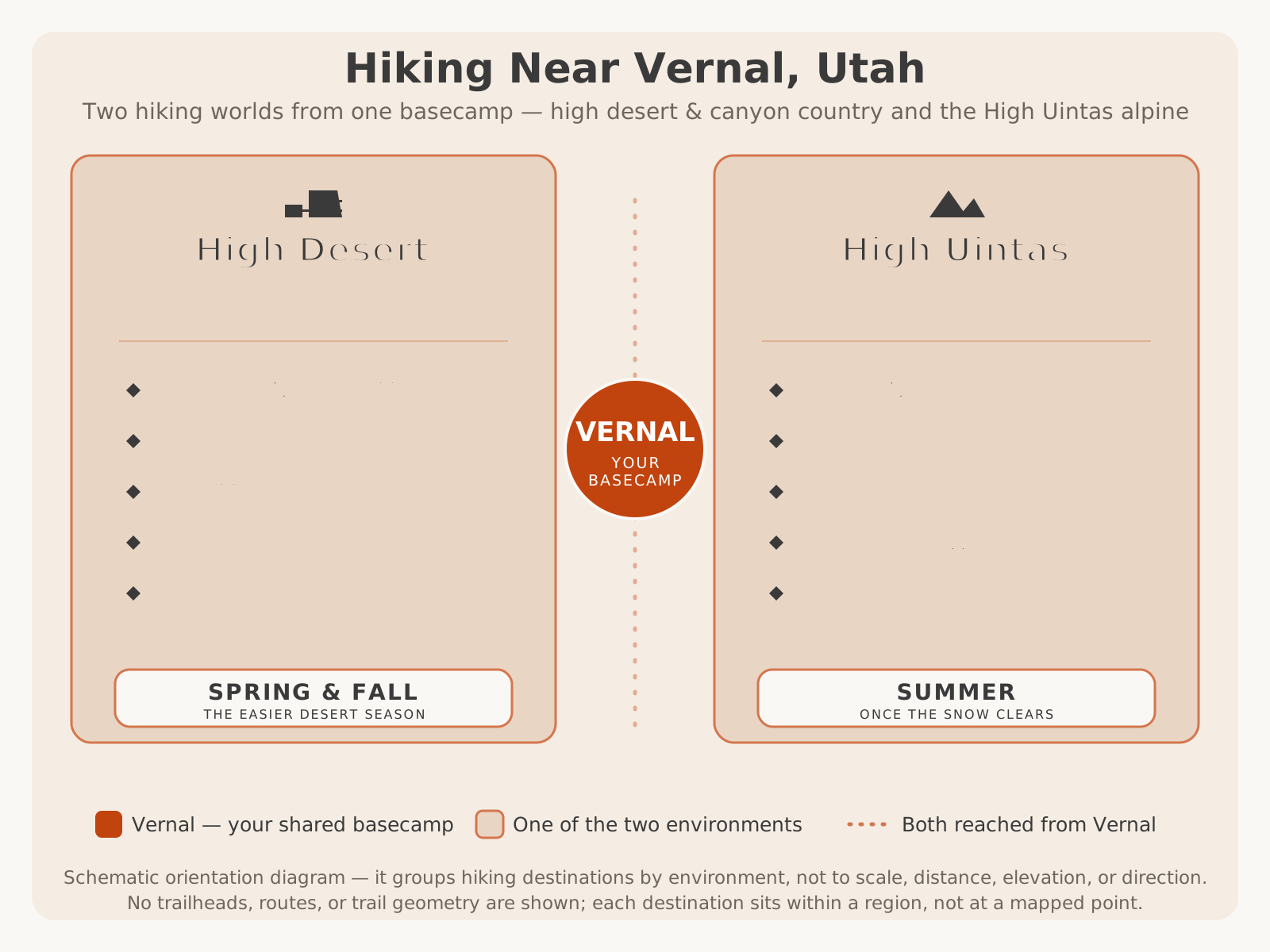
Down low, the desert is hot and best hiked at the edges of the day. The valleys and canyon country around Vernal, Dinosaur National Monument, Red Fleet, and lower Flaming Gorge can be intensely hot at midday in peak summer, on trails that are often exposed with little shade. But these same trails are lovely in the cool of early morning and evening — so the desert stays very much in play all summer, just at dawn and dusk rather than noon.
Up high, the mountains are cool, open, and at their best. Climb into the upper Ashley National Forest and the High Uintas and the temperature drops, the air freshens, and the country transforms into cool forest, wildflower meadow, and alpine lake. This is where the comfortable midday summer hiking lives, and where the season’s marquee trails — the ones snowbound the rest of the year — finally open. The higher you go, the cooler it gets, but also the more the summer thunderstorm and altitude cautions apply.
The middle elevations bridge the two. The foothills and mid-elevation forest offer a comfortable in-between — cooler than the desert, more accessible and often less committing than the high peaks — and are a fine choice when the highest country is crowded, stormy, or still holding late snow on its passes early in the season.
The strategy that falls out of this is the heart of summer hiking here: climb for comfort. Point your main hike at higher, cooler ground, and let the desert be a dawn-and-dusk pleasure. Early in the summer, remember that the highest passes and shaded north-facing slopes can still hold lingering snow well after the valleys are hot, so verify high routes before committing; by mid and late summer the high country is generally at its most open. Because where the snow has cleared, how hot the desert runs, and what the high country is doing all change every year and are set by the managing agencies, VERIFY WITH OFFICIAL SOURCE for current conditions at your target elevation before you go.
| Desert Summer Hiking | Mountain Summer Hiking | |
|---|---|---|
| Where | Vernal, Dinosaur National Monument, Red Fleet, lower Flaming Gorge | High Uintas, upper Ashley National Forest, higher gorge country |
| Best time of day | Early morning and evening — beat the midday heat | Morning through early afternoon — then off high ground before storms |
| Temperature | Hot, often intense at midday; mild at dawn and dusk | Cool and comfortable — the escape from the heat |
| Signature hazards | Heat, strong sun, dehydration, flash floods in washes | Afternoon thunderstorms, lightning, altitude, lingering early snow |
| What it takes | Early start, lots of water, sun protection, shade sense | The above plus a warm rain layer, an early finish, altitude awareness |
| Best for | Cool-hour walks, photography, families early and late in the day | The main hike of a summer day for nearly every visitor |
Best Summer Hiking Areas
Summer’s hiking sorts into a handful of areas, and because this is the season to climb, we run them high to low — the reverse of our spring guide — starting with the high country that summer finally opens and ending with the desert that’s best enjoyed at the cool ends of the day. Rather than name exact trails, mileage, and elevation gain — which the linked destination guides describe best and which change with conditions — here’s the summer character of each, so you can match the area to the day. Conditions vary daily and nothing is guaranteed.
High Uintas
The High Uintas are the crown of summer hiking near Vernal, and summer is the one season they truly belong to hikers. This high, wild range — topped by Kings Peak at 13,528 feet, the highest point in Utah — spends most of the year under snow, and only in summer do its passes, trailheads, and basins open for day hikes and, for the prepared, longer trips. The reward is extraordinary: cool alpine air, meadows of wildflowers, and some of the most beautiful alpine lakes in the West, all a world away from the summer heat below. The cautions are equally real — this is high, remote country where afternoon thunderstorms and lightning are a serious hazard, where altitude tires and dehydrates you faster than you expect, where early-summer snow can linger on high passes, and where weather turns fast. Start early, be off the high, exposed ground by early afternoon, carry warmth and rain protection, and take the altitude seriously. VERIFY WITH OFFICIAL SOURCE (Ashley National Forest) for current trailhead access, snow on the passes, and conditions before you go, and never count on the weather holding.
Ashley National Forest
Ashley National Forest is the great middle and upper ground of summer hiking, spanning everything from accessible mid-elevation forest to the high Uinta country itself. In summer it comes fully into its own: cool, shaded forest trails, meadows, streams, and lakes offer relief from the desert heat across a huge range of difficulty, from gentle family walks near campgrounds and byways to serious climbs into the high basins. This is often the sweet spot of a summer hiking day — cooler than the desert, more accessible and often less exposed than the highest peaks, and threaded with the roads and campgrounds that make a full day (or a base camp) easy. The same summer cautions apply as you climb: afternoon storms, altitude, and — early in the season — lingering snow and high, cold runoff in the creeks. Because forest road, trail, and campground status and snowmelt change every year, VERIFY WITH OFFICIAL SOURCE (Ashley National Forest) for current access and conditions, and see our camping guide for how the forest’s facilities open and fill through the summer.
Dinosaur National Monument
Dinosaur National Monument is a summer desert destination best taken at the cool ends of the day. Its canyons, river corridors, desert trails, fossils, and ancient rock art are as compelling in summer as ever — but summer heat on the monument’s often-exposed trails is significant, so the local move is to hike here in the cool of early morning or evening and to save the middle of a hot day for shade, the visitor facilities, the river, or higher ground. Early light and late light are also when the desert is most beautiful and most alive with wildlife, making dawn and dusk doubly rewarding. Be aware that summer thunderstorms can send flash floods through canyons and normally dry washes, sometimes from storms miles away — stay out of narrow drainages when storms are possible. VERIFY WITH OFFICIAL SOURCE (the National Park Service) for current summer hours, trail and road access, heat and water conditions, and any flash-flood warnings before you visit.
Red Fleet
Red Fleet State Park, just north of Vernal, is a compact, close-to-town summer favorite built around a red-rock reservoir — and in summer it doubles as a place to hike and cool off. Its short, accessible shoreline trails and striking red-rock-and-water scenery are ideal for an early-morning or evening walk, and the reservoir itself makes it a natural family day when the heat builds. Like all the low country, it’s best hiked at the cool ends of the day in peak summer, and it’s at its busiest in the warm season, so early starts beat both the heat and the crowds. Expect strong sun, little shade on the open trails, and full summer services. VERIFY WITH OFFICIAL SOURCE (Utah State Parks) for current summer hours, access, and conditions before you go.
Flaming Gorge
Flaming Gorge spans a wide range of elevations, which makes it a summer hiking destination for every hour of the day. The higher, forested country around and above the gorge stays comfortably cool and offers shaded summer trails with big water-and-rock views — excellent for a midday hike. The lower canyon-and-shoreline country is hotter and, like the rest of the desert, best walked early and late, when the light on the red rock and blue water is finest. Between the two, plus the reservoir itself for cooling off, the gorge can fill a whole summer day if you follow the temperature up and down with the hours. It’s also among the busiest summer areas, so early starts help. VERIFY WITH OFFICIAL SOURCE (the U.S. Forest Service and Utah State Parks) for current road, trail, and facility status before you go.
Early Morning vs Afternoon Hiking
If elevation is summer’s first tool, timing is its second, and no habit pays off more in the warm season than getting an early start. The summer day here has a rhythm, and hiking with it rather than against it is the difference between a comfortable outing and a hot, exposed slog — or, up high, a dangerous one.
Early morning is the golden window. The air is coolest, the low desert is at its most comfortable and beautiful, wildlife is most active, the light is soft, the popular trailheads are quietest, and — critically for the high country — the sky is most likely to be clear of storms. An early start lets you hike a hot desert trail before the heat builds, or reach a high summit or lake and be heading down before the afternoon weather develops. In summer, “start early” is close to a universal rule.
Afternoons split by elevation. Down in the desert, the afternoon is the heat of the day — the time to seek shade, water, air conditioning, or higher ground rather than push a long, exposed trail. Up high, the afternoon is when thunderstorms tend to build, so it’s the time to be off the exposed peaks and ridges, not heading up them. A shaded mid-elevation forest trail or a cooling swim can be a fine afternoon; an exposed summit push at 2 p.m. is exactly what summer planning exists to avoid.
Evening reopens the desert. As the heat breaks, the low country becomes lovely again — a cooler, quieter, golden-lit window for a desert walk, with wildlife stirring and the long summer daylight giving you plenty of time. Evening is the desert’s second golden hour.
The summer discipline, then, is to front-load the day and mind the afternoon. Start early wherever you’re going; get your high, exposed objectives done in the morning; treat the desert as a dawn-and-dusk pleasure; and use the middle of a hot day for shade, water, or a scenic drive. Because heat, storm timing, and daylight all shift through the season and are set by conditions on the day, VERIFY WITH OFFICIAL SOURCE for the current forecast — and never let a summit or a schedule talk you into ignoring a building afternoon sky.
| Early Morning Hiking | Afternoon Hiking | |
|---|---|---|
| Temperature | Coolest, most comfortable hours — best of the day down low | Hottest down low; cooler but stormier up high |
| Desert trails | Prime time — mild, quiet, beautiful light, active wildlife | Plan around the heat — shade, water, or higher ground |
| Mountain trails | Best time to reach high, exposed points — clearest skies | Be heading down and off exposed ground before storms build |
| Storm risk | Lowest — mornings are usually clearest | Highest — afternoon thunderstorms are the summer pattern up high |
| Crowds | Lightest at the popular trailheads | Busiest at the marquee spots |
| The local move | Start early — hike the desert or reach the high points in the cool, clear morning, then use the afternoon for shade, water, a swim, or a scenic drive, and enjoy the desert again in the evening | |
Wildlife During Summer
Summer is a rich, active season for wildlife across Dinosaur Country, and hiking with the day’s rhythm puts you in the best position to see it — from a respectful distance. In the heat of summer, many animals follow the same logic hikers do: they’re most active in the cool of early morning and evening, and they seek shade, water, and higher, cooler ground in the heat of the day. So the early starts and evening walks that beat the heat also happen to be the best wildlife hours, and the high country you climb for cool air is alive with its own summer residents.
Down in the desert at dawn and dusk, a quiet hiker may see deer, smaller mammals, reptiles out in the warmth, and a great variety of birds; up in the meadows, forests, and lake basins of the high country, summer brings its own wildlife to cool, green surroundings. Summer is also a superb season for birds, with resident and breeding species active across every elevation — a natural entry point into the region’s rich birding, and a subject worth its own dedicated guide.
Summer’s abundance comes with the same firm responsibilities as every season, and a few heat-specific ones. Keep a wide distance from all wildlife, never approach, follow, feed, or crowd animals, and give young animals a wide berth — many species are still raising this year’s young in early summer. Because animals are heat-stressed and water-focused in summer, be especially careful not to disturb wildlife at water sources, which they depend on in the dry heat; give springs, streams, and shorelines space, and don’t linger where you’re keeping animals from drinking. Watch from a distance with binoculars or a long lens, move slowly and quietly, and be content to observe without being registered as a threat. Keep dogs, where permitted, under strict control. And remember that this is high-desert and mountain country with the full range of wildlife — store food properly, especially when camping, and never approach or feed anything.
Sightings are never guaranteed, and we never promise them. For the full art of hiking to see animals responsibly across the seasons, see our dedicated wildlife hiking guide near Vernal. Because wildlife regulations and any seasonal closures change and are set by the managing agencies, VERIFY WITH OFFICIAL SOURCE (the National Park Service, Utah State Parks, Ashley National Forest, and Utah’s wildlife agency) before you go, and respect any closures absolutely.
Photography Opportunities
For photographers, summer opens the one door that’s closed the rest of the year — the high country — while asking you to work around the harsh midday light of the low desert. The season’s signature images live up high: cool alpine lakes mirroring the peaks, wildflower meadows in full bloom, and the green, open Uinta high country that’s snowbound and unreachable for most of the calendar. Summer is the time to photograph the roof of Utah, and that alone makes it a landmark season.
Down low, summer is a light-discipline season. The high summer sun is harsh and unflattering at midday, so the desert’s best photography happens at the ends of the day, when the early and late light rakes warmly across the red rock and the long daylight gives you generous, unhurried golden and blue hours at both dawn and dusk. Summer’s other visual gifts are the dramatic afternoon thunderstorms, which — photographed safely, from shelter and a distance, never from an exposed high point — throw spectacular light, cloud, and even rainbows across the landscape; the deep blue water of the reservoirs and alpine lakes; and the abundant wildlife and wildflowers for foreground and subject.
A few summer instincts help. Shoot the edges of the day, especially in the desert, and let midday be for travel, shade, or the diffusely-lit forest and canyon interiors. Go high for the midday and the marquee shots, where the light is kinder and the scenery is at its once-a-year best. Respect the storms — no photograph is worth standing on an exposed ridge under a building thunderhead; shoot weather from safety. And protect what you shoot — stay on trails, keep off fragile meadows and biological soil crusts, and give wildlife a wide berth. For the full craft of photographing this country across all seasons, see our dedicated photography hikes near Vernal guide. Because access, road status, water levels, and sunrise and sunset times change, VERIFY WITH OFFICIAL SOURCE before building a summer shoot around a specific spot.
Family Summer Hiking
Summer is a marquee family hiking season in Dinosaur Country — long daylight, warm evenings, open high country, and swimming, camping, and around-town fun to round out a trip — and the same climb-and-time-it strategy that serves every summer hiker makes it comfortable and safe for children. The family formula is simple: match the outing to the heat and the group — go high or go early, keep it short and shaded, and drink constantly.
On hot days, take the family up — the cool meadows, lakeshores, and forest trails of the Ashley National Forest and the High Uintas give kids comfortable temperatures and spectacular, memorable scenery on a summer afternoon. Or take the desert early — the shoreline of Red Fleet, the gentle canyon and river walks and easy interpretive paths near Dinosaur National Monument, and other short desert trails are lovely in the cool of morning and evening. Summer’s long daylight takes the time pressure off; just keep hikes short, shaded, and well-supplied for young legs, and build in water and snack breaks.
Teach the season’s cautions as you go. Heat and sun are the big ones — have kids drink constantly (before they’re thirsty), watch for overheating, and cover up with hats, sunglasses, light long sleeves, and sunscreen, because the high-desert and high-altitude sun is intense. Afternoon storms mean staying off exposed high ground when the sky builds — a good lesson in reading weather. Altitude up high tires and dehydrates children faster, so ease into elevation, keep it mellow, and hydrate. And summer wildlife deserves a wide distance, especially young animals and anything at water. Turn the season into the adventure — alpine lakes to picnic beside, wildflowers to spot, a swim to cap the day — while keeping everyone cool, covered, and hydrated. For gentle, family-friendly trails and the full art of hiking here with children, see our dedicated family hiking near Vernal guide; for those just starting out, our beginner hiking guide; and for around-town ideas in the heat of the day, things to do in Vernal. Because heat, storms, and trail conditions change constantly in summer, VERIFY WITH OFFICIAL SOURCE before you go.
Family vs Experienced Summer Hikes
Summer hiking here spans a wide range, from cool-hour desert strolls and gentle mid-elevation forest walks that families and beginners can enjoy to long, high alpine days for experienced, well-equipped hikers. Choosing the right end of that range — for your group, the heat, and the weather — is the key to a good summer day.
| Family / Beginner Summer Hikes | Experienced Summer Hikes | |
|---|---|---|
| Where & when | Cool high meadows midday, or the desert early and late | High peaks, passes, and long alpine days — reached early |
| Length & terrain | Short, gentle, shaded; near the car and water | Long, high, remote; big elevation gain and exposure |
| Heat & altitude | Beat heat by timing and shade; ease gently into elevation | Manage real altitude and long exposure; strong fitness assumed |
| Storm exposure | Stay low or sheltered when afternoon storms build | Summit early, off exposed ground before the afternoon |
| Skills & gear | Sun protection, lots of water, snacks; short and flexible | Navigation, self-reliance, warm rain layer, water treatment |
| Best for | Families, children, beginners, casual summer visitors | Fit, experienced, well-prepared hikers going high and far |
Accessibility
Summer’s long daylight and the region’s range of elevation make it a rewarding season for visitors who want to experience Dinosaur Country with limited mobility or stamina — with the important caveat that the low desert’s heat is best avoided at midday. Many of the most striking summer scenes are available close to the road: drive-up viewpoints, developed day-use areas, reservoir overlooks, cool high-country pullouts, and short paved or well-graded paths can put a visitor near red rock, blue water, alpine meadows, and mountain vistas with little walking. Crucially, in summer the higher, cooler sites are often the most comfortable accessible options in the heat — a shaded forest picnic area or a high overlook can be far more pleasant than an exposed desert path at noon.
The summer cautions are heat, sun, and altitude rather than the mud and snow of other seasons. Down low, an accessible path, overlook, or parking area can be very hot and exposed in the middle of the day, so favor the cool morning and evening hours or head for higher ground; up high, take it easy on those less acclimated to elevation. Summer is peak season, so the popular accessible sites and their parking are also at their busiest — earlier is easier. A car remains an excellent, low-impact way to experience a Dinosaur Country summer, and in the heat it doubles as cool, comfortable shelter: the region’s scenic drives, several of which climb into cool high country in summer, deliver miles of scenery with accessible pullouts to stop (see Combining Scenic Drives & Hiking below).
Because accessible facilities, surface conditions, summer hours, and heat vary by site and change through the season, anyone with particular mobility requirements should VERIFY WITH OFFICIAL SOURCE (the National Park Service, Utah State Parks, and Ashley National Forest) for current accessible options before you go. Pairing an accessible viewpoint — ideally a cool, higher one — with a maintained scenic drive is often the best way for a mixed-ability group to share a Dinosaur Country summer.
Heat & Weather Awareness
Summer’s hazards are real, specific, and — handled with respect — entirely manageable. This is a planning guide, not a heat-safety or weather manual, but a few summer awarenesses are essential, and they sort by elevation.
Down low, respect the heat and the sun. The high-desert summer is hot, dry, and deceptively draining: the low humidity hides how much you’re sweating, and dehydration and heat illness sneak up fast. The defenses are simple and non-negotiable — carry far more water than you think you need and drink it steadily, hike the hot country in the cool early morning and evening rather than midday, seek shade, cover up against a sun that’s intense at this elevation, and turn back or find shade if anyone shows signs of overheating. We never promise water on the trail, so carry your own and never count on finding or drinking untreated backcountry water without a way to treat it.
Up high, respect afternoon thunderstorms, lightning, and altitude. Through much of the summer, storms build over the mountains in the afternoon, bringing lightning, heavy rain, hail, sudden cold, and fast-rising water — and lightning above treeline or on an exposed ridge or peak is genuinely dangerous. The rule is firm: start early, reach your high point early, and be heading down and off exposed ground by early afternoon, watching the sky the whole time and turning around when it builds. Altitude, too, is a real factor up high — it tires, dehydrates, and can sicken those not used to it, so ascend gradually, hydrate, and don’t push through worsening symptoms.
Everywhere, respect flash floods and fast changes. Summer storms can send flash floods roaring through slot canyons and normally dry washes, sometimes from a storm miles away that you can’t even see — so stay out of narrow drainages when thunderstorms are possible anywhere upstream. And know that summer weather can flip from hot sun to cold, wet storm in an hour, especially up high; that’s why a warm, waterproof layer belongs in every mountain pack no matter how warm the trailhead is.
The overriding rule is every season’s: no hike is worth pushing into danger. Turn back for heat, an approaching storm, a flooding wash, altitude sickness, or a bad feeling without hesitation. Because temperatures, UV, storm timing, and water conditions change constantly and every year, this guide gives you the patterns, not numbers to bank on. VERIFY WITH OFFICIAL SOURCE (the National Weather Service and the managing agencies) for the current forecast and any warnings before every summer hike, and read our Vernal weather guide for the region’s month-by-month patterns. We never promise cool temperatures and we never promise a storm-free day.
What to Wear
Summer clothing is a balancing act: dress for sun, heat, and dryness down low, but always carry warmth and rain protection for the high country and the afternoon storms. The mistake summer visitors make is packing only for heat; the mountains and the sky have other ideas. The principle is still to layer so you can adjust — you just start lighter and add for elevation and weather.
- Light, breathable, quick-drying, non-cotton clothing — the base of a hot-weather kit, wicking sweat and drying fast in the dry air.
- Strong, physical sun protection — a wide-brim hat, sunglasses, and light long sleeves and pants shield you from the intense high-desert and high-altitude sun better than sunscreen alone; bring sunscreen too, and reapply.
- A wind- and water-resistant shell — essential on any mountain hike, no matter how warm the trailhead feels, to handle the afternoon storms and sudden cold up high.
- A warm layer — a fleece or light puffy packed for the high country, where mornings, summits, and storms can be genuinely cold even in July.
- Sturdy footwear with good grip for rocky, rooty, and sometimes wet high-country trails and hot desert paths, plus good socks (and, early in the season up high, be ready for lingering snow on shaded passes).
- A warm hat and light gloves tucked in the pack for high summits and cold mornings — small, and welcome when you need them.
Beyond what you wear, the summer pack is built around water — more than you think you need — plus a way to treat backcountry water on longer outings, salty snacks and extra food, navigation that doesn’t rely on a phone battery, a first-aid kit, and, because summer’s long days tempt long outings, a headlamp in case you’re out later than planned. Dress and supply children for both the heat down low and the cool, sun, and altitude up high, and check the current local forecast for your destination’s elevation close to departure. Our what to bring guide lays out the full season-by-season packing foundation, and our Vernal weather guide details the region’s summer patterns. Because conditions swing by elevation and hour, VERIFY WITH OFFICIAL SOURCE for current weather before you go.
Combining Scenic Drives & Hiking
Summer is a superb season to pair a scenic drive with hikes, and the combination suits the season’s heat, distances, and elevation range beautifully. A drive lets you cover a lot of country in cool, air-conditioned comfort during the heat of the day, climb quickly from the hot desert into cool high country, reach high trailheads for a cool hike, and give everyone in a mixed-ability group miles of scenery with easy stops. On a hot summer afternoon, a scenic drive into the mountains is one of the most comfortable plans there is — and it opens the high country to those who can’t hike into it.
The summer bonus is that more roads are open than in any other season, including the high mountain routes that stay snow-blocked the rest of the year. The region’s scenic drives come fully into their own: the Red Cloud Loop and the Flaming Gorge–Uintas Scenic Byway climb from the desert into cool, forested high country, linking overlooks, picnic areas, and trailheads along the way — so you can drive up out of the heat, take a cool hike or a short walk to a viewpoint, and drive back down in the evening. The approach is the natural summer one: use the drive to climb into cool country and reach high trailheads, hike in the comfortable morning, and mind the same afternoon storms up high — a high, exposed pullout is no place to be under a building thunderhead. Because seasonal road openings, construction, and conditions change every year, VERIFY WITH OFFICIAL SOURCE (Ashley National Forest, the U.S. Forest Service, and Utah State Parks) for current road and byway status before you set out.
Hiking vs Scenic Drives During Summer
Both are excellent ways to experience a Dinosaur Country summer, and in a season of heat and big elevation range they work beautifully together. Here’s how they compare.
| Summer Hiking | Summer Scenic Drives | |
|---|---|---|
| Best for | Getting up into the cool high country and out on the land on foot | Covering the most scenery in cool comfort, and climbing out of the heat fast |
| Heat & effort | Requires timing, water, and sun sense — and effort to climb | Low-effort, air-conditioned; open to all abilities from the car |
| Reaching cool air | You climb to it on foot — the reward is being in it | Drives you up into it quickly, high routes open in summer |
| Weather exposure | Full exposure to heat, sun, and afternoon storms — prepare for all | Sheltered, with cool refuge — but mind high, exposed pullouts in storms |
| Flexibility | More committing once you’re on a trail | Very flexible — reroute around heat, crowds, and afternoon storms |
| The local move | Combine them — drive up out of the heat into the cool high country, hike in the comfortable morning, take short walks to viewpoints in the afternoon, and enjoy the desert on foot at dawn and dusk | |
Planning Tips
Pull it all together into a simple, flexible plan for a safe and rewarding Dinosaur Country summer:
- Climb the mountain for the main hike. Summer opens the high country, and elevation is your air conditioning. Point the day’s main hike at the cool, finally-open High Uintas and upper Ashley National Forest — this is the one season the alpine is reliably reachable, and it’s where the comfortable midday hiking lives.
- Save the desert for the cool ends of the day. Hike Dinosaur National Monument, Red Fleet, and the lower gorge early in the morning and in the evening, when they’re mild and beautiful; plan around the midday heat rather than pushing through it.
- Start early — always. Early mornings are cooler, quieter, clearer of storms, and richer in wildlife. Get hot desert trails and high, exposed objectives done in the morning, and use the long summer daylight for the room it gives you, not an excuse to start late.
- Beat the afternoon thunderstorms. Through much of summer, storms build over the mountains in the afternoon. Reach your high point early and be heading down and off exposed ground by early afternoon, watch the sky, and never gamble a summit against a building storm. Stay out of narrow washes and canyons when storms are possible upstream.
- Respect heat, sun, and altitude. Carry far more water than you think you need and drink steadily, cover up against the intense sun, and ease into elevation up high. Never count on finding or safely drinking backcountry water — we never promise water.
- Pack for both worlds. Dress light for the heat down low, but always carry a warm layer and a rain shell for the high country and the storms, plus sun protection, navigation, food, and a headlamp for long days.
- Protect summer wildlife. Keep a wide distance from all animals, give young ones and water sources extra space, never feed or approach wildlife, and store food properly — especially when camping.
- Plan for crowds. Summer is the busy season, so start early at the popular spots, have a backup, and consider midweek or less-traveled trails for solitude.
- Base in Vernal and build a full summer trip. Vernal is the region’s gateway and nearest full-service town. Pair your summer hikes with a scenic drive up into the cool high country, the rest of things to do in Vernal, and the season’s camping at its best. Coming from out of state? See our Salt Lake City to Vernal guide.
- Verify the details that change — every time. Temperatures, UV, trail and road conditions, stream levels, lingering snow on high passes, storm timing, and facility hours are set by Ashley National Forest, the National Park Service, and Utah State Parks and change constantly. VERIFY WITH OFFICIAL SOURCE before you go, and read the companion guides: our spring hiking, fall hiking, and winter hiking guides for the rest of the year, our photography hikes, wildlife hiking, family hiking, and beginner hiking guides, our high-country alpine lakes, High Uintas day hikes, Kings Peak, and Dinosaur National Monument guides, and the Vernal weather guide and what to bring guide.
Approached with the right elevation strategy — climb for the cool, and take the desert at the edges of the day — an early start, serious water and sun protection, and a warm rain layer for the high country, summer hiking near Vernal offers something no other season can: the high country wide open and at its brief best, cool alpine lakes and wildflower meadows a drive above the heat, and long golden mornings and evenings on quiet desert trails. Climb the mountain, respect the heat and the storms, protect the summer wildlife, and verify what changes. For the alpine lakes, wildflowers, and high peaks that define the season, our High Uintas day hikes and alpine lakes hiking guides are the natural next step; for the season’s active wildlife and long-lit landscapes, the wildlife hiking and photography hikes guides lead the way. And when you want to trade the trail for a guided backcountry adventure into red-rock country you’d never reach on foot, book a UTV tour with Adventure Tours Vernal and let Dave and Trudy show you Dinosaur Country in the full swing of summer.