Key Takeaways
- Wildflowers bloom in waves that climb the mountain. Spring starts the bloom low in the desert; summer carries it to the alpine. Match your elevation to the season and follow the flowering front uphill rather than expecting it everywhere at once.
- The desert leads; the High Uintas flower last. The low country around Vernal, Dinosaur National Monument, Red Fleet, and the lower gorge blooms first, while the high meadows stay snowbound for weeks longer and only flower in the short mountain summer.
- We never promise a bloom. Whether it’s a good flower year, how intense the display is, and when any elevation peaks depend on winter moisture, spring temperatures, and the weather — they vary enormously year to year. Come for the whole experience and treat great color as a gift.
- Leave the flowers as you found them. Stay on the trail, never pick, give fragile desert soil crust a wide berth, and don’t publicize sensitive spots — a popular meadow can be loved to death by many small trespasses.
- Verify the details that change. Bloom timing, snowmelt, trail and road openings, and seasonal closures shift every year and are set by the managing agencies — VERIFY WITH OFFICIAL SOURCE before every wildflower hike, and never build a trip around catching peak bloom.
Why Wildflower Hiking is Special
Wildflower hiking is a different way of moving through Dinosaur Country. Where most hiking is about the destination — a summit, a lake, an overlook — wildflower hiking is about timing, and about paying a slower, closer kind of attention to a landscape that most visitors blow past. It asks a different question than “how far?” or “how high?” It asks “where is the bloom right now, and how do I meet it?” That question changes how you plan, where you go, and even how fast you walk.
A few things make it special here.
First, the region hands you a moving target in the best possible way. Because Dinosaur Country stacks a huge range of elevations close together — from low desert near Vernal to the alpine crest of the High Uintas — the wildflower season doesn’t happen all at once and then end. It unspools over months, climbing from the desert floor to the peaks, so a patient visitor can follow flowers for a remarkably long stretch of the year by simply changing elevation. Few regions offer that.
Second, flowers reward the unhurried. A wildflower hike is an invitation to slow down, look closely, and notice the small things — the color at your feet, the way a bloom follows the sun and water, the insects and birds the flowers draw in. It’s some of the most contemplative hiking there is, and it’s wonderful for children, photographers, couples, and anyone who wants the trail to be about wonder rather than mileage. It pairs naturally with our wildlife hiking and bird watching guides, because the same slow, quiet attention that finds flowers also finds animals and birds.
Third, the settings are extraordinary. Wildflowers here don’t appear against a plain backdrop — they open against red-rock canyons, along running desert washes, beneath snow-capped peaks, and across high mountain meadows ringed by alpine lakes. The combination of delicate color and dramatic country is what makes this such rich ground for photography.
Fourth, the honest one: it can’t be scheduled. Wildflowers are a living, weather-driven event, and that unpredictability is part of what makes finding them feel like a genuine discovery rather than a purchased experience. The flip side is that you can’t guarantee a bloom, so the whole craft of wildflower hiking is about improving your odds and coming for the whole season, not banking a trip on a peak.
Put together, wildflower hiking offers a long, elevation-climbing season, a slower and more attentive way to hike, unforgettable settings, and the quiet thrill of chasing something you can’t control. This is the nature-focused companion to our broader hiking hub: where our seasonal guides own the calendar and our wildlife and bird guides own the animals, this one owns the flowers.
How Bloom Season Climbs the Mountains
If there’s one idea that organizes an entire wildflower trip, it’s this: the bloom climbs the mountain. Wildflowers open in waves that rise with the elevation as the season warms, so the flowering front is always somewhere on the slope — low in spring, high in summer — and you can follow it uphill.
The physics behind it is simple. Spring warmth, snowmelt, and the growing season all begin at the bottom and work their way up. The low desert warms first, so its flowers come first, early in spring, while the high country is still deep in winter. As the weeks pass and the snow line retreats up the mountain, the warmth and the growing season climb with it, and the bloom follows — from the desert to the foothills, from the foothills into the forest, and finally, in the brief window of the mountain summer, up into the alpine meadows that flower last of all. By late summer, what’s blooming up high is really the tail end of a wave that started months earlier and thousands of feet below.
This is the exact mirror of how autumn color works, which our fall hiking guide describes: in fall, color starts high and descends; in spring and summer, the bloom starts low and ascends. The same elevation ladder, run in opposite directions.
The strategy that falls out of this is elegant and powerful: start low and early, then follow the bloom up. Hike the desert when it’s flowering in spring, then move to progressively higher ground as the weeks pass and each elevation comes into its own — rather than driving straight up to a high meadow that winter hasn’t finished with, or writing off the season because one elevation has already faded. There is almost always a bloom somewhere on the mountain; the skill is meeting it at the right height.
Two honest caveats keep this from being a promise. First, the whole schedule slides every year. A heavy-snow winter pushes the high-country bloom later; a warm, dry spring can rush the desert bloom and end it early. The sequence — low to high — is reliable; the timing is not. Second, the high country isn’t hikeable until it melts out. For much of spring, the roads, trailheads, and passes that reach the alpine meadows are still snow-blocked, so the mountain bloom only becomes reachable late in the season, as our spring hiking and summer hiking guides explain in detail. Because where the bloom has climbed to — and whether the high country has opened — changes every year, VERIFY WITH OFFICIAL SOURCE for current conditions and access at your target elevation before you go.
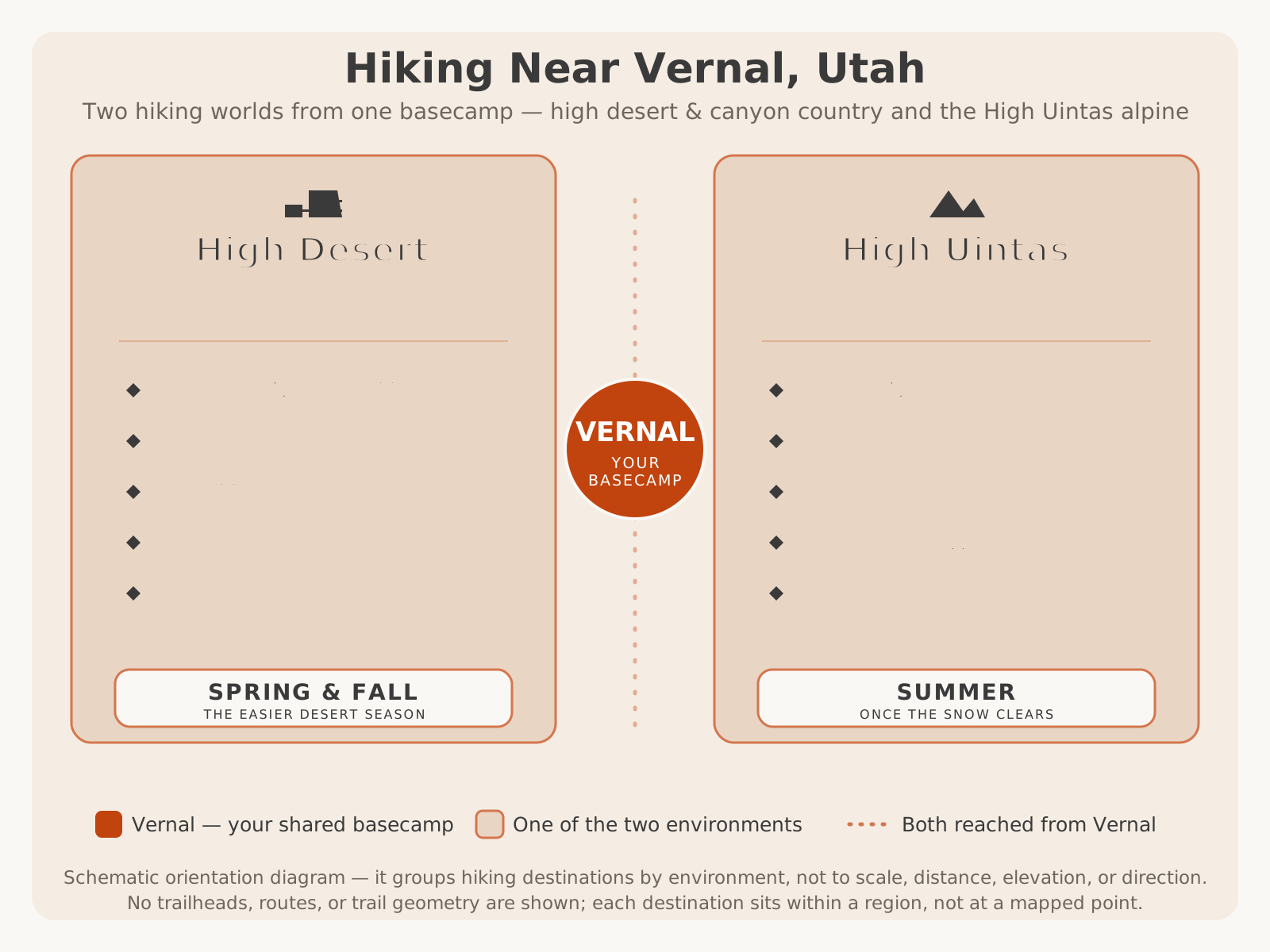
The bloom climbs between the region’s two hiking worlds, opening in the low desert and finishing in the alpine meadows — so it helps to see the two ends of that ladder before the sections below walk up it:
Low Desert Wildflowers
The low desert is where the wildflower year begins. As winter loosens its grip, the desert country around Vernal, the canyons and river corridors of Dinosaur National Monument, the red-rock shores of Red Fleet, and the lower reaches of Flaming Gorge warm and green while the high country is still buried in snow — and the first flowers of the year appear here, weeks or months before anything blooms up high.
Desert wildflower hiking has a character all its own. The flowers tend to favor the warm, sun-exposed, sandy and rocky ground of the open desert, and the greener, wetter ribbons along the washes and rivers, where the extra moisture supports a richer show. Early in the season, the country trades winter’s starkness for fresh green growth, running snowmelt, birdsong, and — in a good year, at the right time — the season’s first color low against the red rock. It’s a subtle, delicate kind of bloom compared to a mountain meadow, and finding it rewards a close eye.
The appeal of the desert as wildflower country is specific. It comes into flower first, so it’s where the earliest reliable wildflower hiking is found. The temperatures are mild in spring — warm enough for pleasant midday hiking before the summer heat that will make these same trails punishing in a couple of months. The trails are gentle and close to town, which makes desert wildflower hiking ideal for families, beginners, and casual visitors. And the settings are unmatched — flowers against red-rock canyons, running washes, and the singular backdrop of green desert with snow-capped peaks still white on the horizon.
The desert asks a little care in return. Desert ground is fragile, especially the dark, crusty biological soil crust that holds the desert together and takes years to recover from a footprint — so staying on the trail matters more here than almost anywhere. In spring, snowmelt can send cold water down the normally dry washes, and storms can leave trails muddy, so low canyon bottoms deserve respect and mud deserves care. And the desert bloom is brief and weather-dependent — a warm, dry spell can end it quickly.
Crucially, this guide won’t name specific desert species, peak dates, or the exact spots for rare flowers. Which flowers appear, and when, shifts with every year’s moisture and temperature, and some sensitive plants are best protected by not publicizing where they grow. Instead, hike the right habitat — the open desert and the wetter washes — at the right time in spring, and let the country show you what it holds. For an accurate read on what’s actually blooming, a regional field guide, a plant-ID app, or a local visitor center is your best source. Because desert trail and bloom conditions change with every storm and warm spell, VERIFY WITH OFFICIAL SOURCE (the National Park Service and Utah State Parks) for current conditions before you go.
Foothills
Between the low desert and the mountain forest lies the foothill and sagebrush country — the transition zone where the bloom pauses on its climb, and where wildflower hiking hands off from the desert to the high country. As the desert flowers begin to fade with the warming season, the foothills come into their own, flowering later than the desert floor but earlier than the forest and the peaks.
This middle band is a distinctive world of its own: rolling sagebrush country, open slopes, brushy draws, and the lower margins of the forest, spread across a range of elevations that each flower a little later than the last. Because it spans that range, the foothills stretch the wildflower season — as one slope fades, a slightly higher one is coming on. It’s the connective tissue of the “follow the bloom uphill” strategy, the country you move through as you climb from the desert bloom toward the mountain bloom.
The foothills are also, honestly, the region’s least-appreciated wildflower ground — overshadowed by the drama of the desert canyons below and the alpine meadows above. But sagebrush and foothill country has its own quiet, spread-out beauty, and because it flowers in the shoulder between the desert and the mountains, it can offer a bloom when the desert is done and the high country isn’t ready. For a hiker paying attention to the elevation ladder, the foothills are the bridge that keeps the season going.
The cautions are the region’s usual ones, in transition form. This zone moves through mud season as it melts out and dries, so footing and trail care matter. Weather swings are common in the open country. And access varies — some foothill roads and trails open earlier than the high country, but never assume. As everywhere in this guide, the foothills are described as habitat and season, not as a species list or a set of promised spots; which flowers appear and when changes every year. Because conditions and access in this transitional country change constantly, VERIFY WITH OFFICIAL SOURCE (Ashley National Forest, the National Park Service, and Utah State Parks) for current conditions before you go.
Ashley National Forest
As the bloom climbs out of the foothills, it enters the Ashley National Forest — the vast, elevation-spanning middle of the region’s wildflower story, and the country that carries the bloom from late spring into the heart of summer. The forest is a study in elevation, and its flowers melt out and bloom from the bottom up, just like everything else here.
The forest’s wildflower hiking unfolds in stages that track its elevations. Its lower margins and open, sun-warmed slopes flower earlier, as roads open and the ground dries. Its meadows, open parks, aspen groves, and streamsides are classic mid-elevation wildflower ground — the greener, wetter, more open spots that support a richer bloom through early and mid summer. And its higher reaches climb toward the alpine, flowering later still and handing the bloom off to the High Uintas above.
What makes the forest special for wildflower hiking is that it offers the mountain-flower experience — meadows and green country in bloom, beneath forest and peaks — often with far more accessible trails and gentler terrain than the high alpine demands. The open meadows and parks can be spectacular in a good year, and many are reachable by easier walks or even from the region’s scenic drives, which climb through the forest as the roads open for the season. It’s a wonderful middle ground: more dramatic than the desert bloom, less demanding than the alpine.
The forest’s cautions are those of mid-elevation mountain country. Early in the season it moves through a muddy, high-water melt-out, and many of its roads, byways, and trailheads open only late in spring, on the managing agency’s schedule. Weather can turn quickly as you gain elevation, and afternoon thunderstorms build over the mountains in summer. As always, this guide describes the forest’s flowering habitats and seasonal pattern, not specific species, peak dates, or sensitive locations, which change every year and are best protected. Because forest road openings, trail status, snowmelt, and bloom timing change every year, VERIFY WITH OFFICIAL SOURCE (Ashley National Forest) for current access and conditions before you go, and see our camping guide for how the forest’s facilities open seasonally.
High Uintas Wildflowers
The High Uintas are the crown of the region’s wildflower season — the highest, last, and most famous bloom of all, and the top rung of the elevation ladder. Crowned by Kings Peak at 13,528 feet, the highest point in Utah, this high, wild range holds its snow long after the valleys are green, and its meadows only flower in the short, intense window of the true mountain summer, after the melt-out — commonly late spring into summer, and later still in a heavy-snow year.
When it comes, the alpine bloom is worth the wait and the climb. The high meadows, basins, and lake-dotted parks of the Uintas can fill with mountain wildflowers in a brief, concentrated show, set against granite, snowfields, and the region’s beautiful alpine lakes. It’s the classic image of high-country wildflowers — green meadows and color beneath the peaks — and it’s the reward at the end of the season-long climb the bloom makes up the mountain. Because the alpine growing season is so short, the flowers seem to arrive all at once, making a good year up high genuinely spectacular.
But the high country demands honesty and preparation, and it’s where this guide’s cautions matter most. For much of spring the Uintas are simply not reachable — the roads, trailheads, and passes remain snow-blocked, the basins stay deep in snow, and travel there is early-season mountaineering, beyond the scope of this guide. Even once the range opens, snow lingers high, water runs cold and fast, weather turns severe quickly, and afternoon thunderstorms are a serious hazard at exposed elevation. The alpine bloom is a summer objective for prepared, fit, well-equipped hikers, following the season up — not a spring one, and not a casual one.
The alpine meadows are also the region’s most fragile wildflower ground. High-elevation plants live on a razor-thin growing season, and a footprint off-trail into an alpine meadow can take many years to heal. Staying on durable ground and established trail is not optional up here. As everywhere, this guide describes the alpine flowering habitat and its short summer season, not specific species, peak weeks, or sensitive spots. Because high-country snowmelt, trail and road openings, weather, and bloom timing change every year, VERIFY WITH OFFICIAL SOURCE (Ashley National Forest and, for any early-season or high mountain travel, the regional avalanche and weather sources) before you drive up. For the high country at its hikeable best, our High Uintas day hikes and alpine lakes hiking guides are the natural next step.
| Desert Wildflowers | Alpine Wildflowers | |
|---|---|---|
| Where | Vernal, Dinosaur National Monument, Red Fleet, lower Flaming Gorge | High Uintas meadows and basins, upper Ashley National Forest |
| When it blooms | First — early in spring, while the high country is still snowbound | Last — the short mountain summer, after the melt-out |
| Character of the bloom | Subtle, delicate, spread out; along washes and open desert | Brief, intense, concentrated; whole meadows in a short window |
| Setting | Red rock, canyons, running washes, green desert below snowy peaks | Green meadows, granite, snowfields, alpine lakes |
| Access & effort | Gentle, close-to-town trails; open much of the year | Reachable only after the high country melts out; often longer, higher, harder |
| Fragility | Biological soil crust — stay on trail, tread lightly | Extremely fragile short-season plants — a footprint can take years to heal |
| Best for | Early-season visitors, families, beginners, casual wildflower hikers | Prepared summer hikers following the bloom up |
Best Seasons
Because the bloom climbs the mountain, the best season for wildflower hiking near Vernal is not a season at all — it’s a season paired with an elevation. There’s no single best month; there’s a best elevation for each part of the year. Understanding that turns a short, hit-or-miss window into a long, followable season.
Spring is the desert’s season. Early and through much of spring, the bloom is down low — the desert, canyons, river corridors, and reservoir shores around Vernal, Dinosaur National Monument, Red Fleet, and lower Flaming Gorge. This is the earliest reliable wildflower hiking of the year, in mild temperatures before the summer heat, on gentle, close-to-town trails. If you’re coming in spring, plan low, and read our spring hiking guide for the full picture of the thaw and its cautions — mud, cold snowmelt water, and swinging weather.
Late spring into early summer is the transition. As the desert bloom fades with the warming season, the flowering front is climbing through the foothills and into the lower and middle forest, and the high country is beginning its melt-out. This is the shoulder where the bloom is moving up the mountain, and where following it means gaining elevation week by week.
Summer is the mountain’s season. Once the high country has melted out, the bloom reaches the forest meadows and, highest and last, the alpine basins of the High Uintas — the region’s most famous show, in the short, intense mountain summer. If you’re coming in summer for flowers, plan high, and read our summer hiking guide for the high country’s realities — thin air, afternoon thunderstorms, and the need to start early.
The through-line is the strategy this guide keeps returning to: match your elevation to the season, and follow the bloom up. Spring low, summer high, and the transition in between. Two honest reminders keep it real: the whole schedule slides every year with the winter’s snow and the spring’s weather, so the sequence is reliable but the dates are not; and the flowers are never guaranteed in any season. Because bloom timing and access change every year and are set by the managing agencies, VERIFY WITH OFFICIAL SOURCE for current conditions at your target elevation before you go.
Spring vs Summer Bloom
Spring and summer are the two great wildflower seasons here, and they’re not competitors — they’re two ends of the same climbing bloom. Knowing which one you’re planning for tells you where to go.
| Spring Bloom | Summer Bloom | |
|---|---|---|
| Where the flowers are | Low desert — valleys, canyons, washes, reservoir shores | High country — forest meadows and, highest, the alpine basins |
| Elevation to hike | Low; the high country is still snowbound | High; the desert is fading into summer heat |
| Temperatures | Mild and pleasant before the summer heat; cool mornings | Warm valleys, cool mountains; thin air and strong sun up high |
| Character | Subtle, early, delicate desert color against red rock | Brief, intense alpine and meadow show beneath the peaks |
| Main cautions | Mud, cold high snowmelt water, swinging weather | Afternoon thunderstorms, altitude, strong sun; start early |
| Companion guide | Spring hiking near Vernal | Summer hiking near Vernal |
Photography Tips
Wildflowers and photography go hand in hand, and for photographers the climbing bloom is a gift: it offers a long, moving season of subjects, from delicate desert color against red rock in spring to whole alpine meadows beneath the peaks in summer. This section is a wildflower-photographer’s field companion; for the full craft of shooting this country across all seasons and subjects, see our dedicated photography hikes near Vernal guide.
A few instincts serve wildflower photography especially well here.
- Shoot the edges of the day. Soft early and late light flatters flowers and their settings far more than harsh midday sun, which flattens color and blows out delicate petals. The light at dawn and in the golden hour also brings out the texture of red rock and the glow of green meadows behind your flowers.
- Use the setting, not just the flower. The region’s signature wildflower images aren’t isolated blooms — they’re flowers in place: desert color against red canyon walls, a foreground of meadow flowers beneath the snow-streaked High Uintas, blooms along a running wash or an alpine lake. Compose the flower with its country.
- Get low and close — from the trail. A low angle brings the viewer into the flowers’ world and lets you play foreground blooms against a distant landscape. The catch, and it’s the important one: do it without stepping off the trail or into the bloom. Shoot from the edge, use a longer lens, and never trample a meadow for a shot — see Leave No Trace below.
- Work with the weather. Overcast days are excellent for flower close-ups, giving even, saturated color without harsh shadows. A light breeze is the flower photographer’s nemesis — be patient for a lull, or embrace a little motion. Clearing weather after a storm throws dramatic light across the high country.
- Mind the wind and the fragility. Beyond protecting the plants, remember that the same delicate blooms move in the slightest breeze and bruise easily — patience, not manipulation, gets the shot.
As with the flowers themselves, this guide describes approaches, not guaranteed spots or peak dates. Because access, road status, and sunrise and sunset times change, VERIFY WITH OFFICIAL SOURCE before building a wildflower shoot around a specific location, and never sacrifice a meadow — or the next photographer’s shot — for your own.
Photography vs Casual Hiking
Wildflower hiking spans a wide range, from a relaxed walk to enjoy the color to a dedicated photographic outing built entirely around the light and the bloom. Neither is better; they’re just different days, with different rhythms. Knowing which you’re planning helps you pack, time, and pace the hike.
| Photography Wildflower Hike | Casual Wildflower Hike | |
|---|---|---|
| Goal | Capturing the bloom and its setting in the best light | Enjoying the flowers, the walk, and the country |
| Timing | Built around dawn, golden hour, and weather; patient, slow | Flexible; any comfortable time of day |
| Pace | Very slow — long stops, low angles, waiting on light and wind | Relaxed but steady; stop to look, then move on |
| Gear | Camera, lenses, low-light and close-up kit; heavier pack | Just good hiking gear, water, and maybe binoculars |
| Best for | Photographers, serious hobbyists, patient early risers | Families, beginners, couples, anyone wanting a scenic walk |
| Shared rule | Both stay on the trail, never pick, and protect the bloom and the ground — the flowers come first | |
Family Wildflower Walks
Wildflower hiking is some of the best hiking there is to share with children. Flowers are a natural source of wonder for young kids, they turn a walk into a treasure hunt, and — because the earliest, easiest wildflower hiking is on short, gentle, low-desert trails — the season lines up beautifully with the kind of hiking families can actually do. The family wildflower formula is simple: stay low and easy early in the season, keep it short, make “look, don’t pick” the rule, and let the flowers lead.
Favor the lower-elevation, close-to-town options that come into flower first — the shoreline of Red Fleet, the gentle canyon and river walks and easy interpretive paths near Dinosaur National Monument, and other short desert trails. These bloom early, stay comfortable before the summer heat, and keep you well away from the snowbound, muddy high country in spring. Later in summer, once the mountain roads and trails have opened, easy meadow walks in the forest can give families the mountain bloom with far less effort than a big alpine hike — a wonderful way to show kids the high-country flowers.
Turn the flowers into the adventure. Wildflower hiking is made for kids: counting colors, looking closely at petals and the insects they draw, noticing how flowers follow the water and the sun. It’s slow, wonder-filled hiking that rewards a child’s natural curiosity, and it pairs beautifully with spotting birds and wildlife along the way.
Teach the season’s cautions as you go, gently and as part of the fun. “Look, don’t pick” is the first rule — a picked flower can’t make seeds for next year, and staying on the trail keeps small feet from trampling the bloom and the fragile ground. Sun and water: the desert sun is strong, so hats, sunscreen, and far more water than you expect are essential. In spring, mud and cold, high snowmelt water in the washes call for care — keep children back from fast water, and never let anyone wade or cross. And wildlife: teach kids to keep a wide distance and never approach animals, especially young ones. Keep outings short and forgiving for young legs, and celebrate whatever the country shows you — some days it’s a carpet of color, some days it’s one perfect flower and a lizard, and both are a good day. For gentle, family-friendly trails and the full art of hiking here with children, see our dedicated family hiking near Vernal guide, and our beginner hiking guide for building confidence on easy trails. For around-town ideas when the weather turns, see things to do in Vernal. Because trail, water, and weather conditions change constantly, VERIFY WITH OFFICIAL SOURCE before you go.
Family vs Experienced Wildflower Hikes
Wildflower hiking here ranges from gentle low-desert flower walks that families and beginners can enjoy early in the season to longer, higher outings for experienced hikers following the bloom into the summer high country. Choosing the right end of that range for your group and the moment in the season is the key to a good day.
| Family / Beginner Wildflower Hikes | Experienced Wildflower Hikes | |
|---|---|---|
| Where & when | Low desert and easy forest meadows; spring, and easy summer walks | Higher ground as it melts out — forest and alpine meadows in summer |
| Length & terrain | Short, gentle, forgiving; near the car | Longer, higher, more remote; thin air, snow patches, real elevation |
| Following the bloom | Enjoy the low and mid-elevation waves; save the alpine for later | Chase the bloom all the way up to the alpine meadows |
| Skills & gear | Layers, sun protection, water; turn back at any hazard | Mountain fitness, weather and storm judgment, self-reliance |
| Main cautions | Sun, water, spring mud and cold water; keep it short | Afternoon thunderstorms, altitude, lingering snow, remoteness |
| Best for | Families, children, beginners, couples, casual visitors | Fit, experienced hikers following the bloom to the high country |
Accessibility
Wildflowers are one of the more accessible natural wonders in Dinosaur Country, because so much of the bloom can be enjoyed with little or no hiking at all. Some of the finest wildflower viewing is available close to the road: drive-up viewpoints, developed day-use areas, reservoir overlooks, roadside meadows, and short paved or well-graded paths can put a visitor near desert color, riverside blooms, or a mountain meadow in flower with minimal walking — which makes wildflower season a welcoming time for visitors with limited mobility or stamina, and for mixed-ability groups.
The elevation-climbing bloom actually helps here. Because the flowers move up the mountain over the season, there’s often accessible wildflower viewing at whatever elevation is currently blooming — the lower, easier, more developed sites in spring, and, as summer opens the mountain roads, roadside meadows and easy paths higher up. The region’s scenic drives, where roads are open and maintained, are one of the best ways of all to experience the bloom for anyone who can’t hike far: they climb through the flowering country as the season progresses, with accessible pullouts to stop and enjoy the color (see Planning Tips below for pairing drives with short walks).
The cautions are the season’s. In spring, paths, overlooks, and parking areas may be muddy, puddled, or soft after storms and during the melt, and low-lying areas near water can be affected by runoff. In summer up high, accessible sites are subject to mountain weather and afternoon storms. And facilities may be in transition between off-season and full summer operation, so what’s available varies by site and time of year.
Because accessible facilities, surface conditions, road openings, and the transition from off-season to summer operations vary by site and change with the weather and the season, anyone with particular mobility requirements should VERIFY WITH OFFICIAL SOURCE (the National Park Service, Utah State Parks, and Ashley National Forest) for current accessible options and conditions before you go. Pairing an accessible viewpoint or roadside meadow with a maintained scenic drive is often the best way for a mixed-ability group to share the wildflower season.
Leave No Trace
Wildflower hiking carries a special responsibility, because the very thing you’ve come to see is fragile, and because a beautiful bloom draws people — and people, in numbers, can love a meadow to death. Protecting the flowers isn’t a footnote to wildflower hiking; it’s the heart of doing it well. The guiding idea is simple: leave the flowers and the ground they grow in exactly as you found them, so the next hiker, and next year’s bloom, finds them too.
Stay on the established trail. This is the single most important rule of wildflower hiking. The instinct to step off the trail for a closer look, a better photo, or to walk among the flowers is exactly the instinct that destroys a bloom — one footprint into a delicate meadow is one too many, and a popular spot suffers not from one trespass but from thousands of small ones. Shoot and admire from the trail’s edge; use a longer lens or simply look closer, not step closer.
Never pick the flowers, and never dig up plants. A picked flower can’t set the seed that makes next year’s bloom, and to the next hiker it’s simply gone. Many wildflowers are far more fragile than they look, and some are protected. Leave every flower where it grows — take only photographs.
Protect the ground itself. In the desert, give the dark, crusty biological soil crust a wide berth — it’s alive, it holds the desert together, and a single footprint can take years or decades to heal. In the high country, the alpine meadows live on a razor-thin growing season, and off-trail damage up there heals even more slowly. Keep to rock, established trail, and durable surfaces.
Guard the sensitive places. Don’t publicize the precise locations of rare or unusual flowers — a shared pin can bring a damaging crowd to a fragile spot. Respect any seasonal closures absolutely; they exist to protect blooms, nesting wildlife, and recovering ground.
And the usual essentials: keep dogs, where permitted, on the trail and under control; keep groups small and voices low; pack out everything you bring in, including all trash; and leave what you find — flowers, rocks, and all. These aren’t restrictions on your wildflower hike; they’re what makes a wildflower hike possible year after year. Because specific rules and closures are set by the managing agencies and change, VERIFY WITH OFFICIAL SOURCE where you are hiking, and follow every closure.
Weather
Wildflower weather is really two stories, because you’ll be chasing the bloom across a huge range of elevations and, with it, across very different conditions. The region’s defining feature is that no two elevations are in the same season at the same time — and the weather that grows the flowers is also the weather you have to plan around.
In spring, down in the desert, expect the swinging weather our spring hiking guide describes in full: mild, pleasant midday hiking, but with big daily swings, cold mornings, wind, the real possibility of a late-season storm, and the mud and cold, high snowmelt water that come with the thaw. The same moisture and warmth that bring the early bloom also make spring the most changeable season, so a warm forecast still calls for layers and a look at the sky.
In summer, up in the mountains, expect the high-country pattern our summer hiking guide covers: warm, pleasant mornings that give way to building afternoon thunderstorms, which are a genuine hazard at exposed elevation — lightning, cold rain, wind, even summer snow up high. The rule up high is to start early, be off exposed ground by early afternoon, and never push toward a high meadow with storms building. Strong high-elevation sun and thin air add to the load.
Across the whole season, the wildflower connection is direct: the weather is what makes and breaks the bloom. A wet winter and a mild spring tend toward a good flower year; a dry winter or a hot, windy spell can mute or end a bloom quickly. That’s the deeper reason this guide never promises flowers — the same forces that produce them are impossible to predict.
The single most important habit is to check the current, local, elevation-specific forecast close to your departure — and plan for it to change. Don’t let a warm valley forecast lull you into underpacking for a mountain meadow, or a fair morning forecast into ignoring afternoon storms up high. Because temperatures, storm timing, snow levels, wind, and snowmelt change constantly and are managed by the official sources, VERIFY WITH OFFICIAL SOURCE (the National Park Service, Utah State Parks, Ashley National Forest, and the National Weather Service) for the current forecast at the elevation you’re headed to, and read our Vernal weather guide for the region’s month-by-month patterns and our what to bring guide for the full season-by-season packing foundation.
Planning Tips
Pull it all together into a simple, flexible plan for a rewarding Dinosaur Country wildflower trip:
- Follow the bloom up the mountain. Wildflowers open in waves that climb with elevation — spring low, summer high. Match your elevation to the season: hike the desert early in the year, then move to higher ground as the weeks pass and the bloom and the snow line climb. Don’t drive up to a high meadow winter hasn’t finished with, and don’t write off the season because one elevation has faded — the bloom is somewhere on the slope.
- Plan around the whole experience, not a peak. Never build a non-refundable trip around catching peak bloom, because no one can promise it. Come for the season’s reliable pleasures — mild temperatures, longer days, green country, active wildlife, quiet trails — and treat a great display as a gift. If you’re chasing color, stay flexible about where you go.
- Watch current conditions before you travel. Because the whole schedule slides every year and the flowers are never guaranteed, check what’s actually happening close to departure, and be ready to change elevations or areas. A local visitor center, field guide, or plant-ID app is your best source for what’s blooming now.
- Protect the flowers and the ground — always. Stay on the trail, never pick, give fragile desert soil crust and alpine meadows a wide berth, don’t publicize sensitive spots, and respect every closure. The flowers come first; that’s what keeps the bloom coming back.
- Prepare for two very different kinds of weather. In spring down low, bring layers, waterproof footwear, sun protection, and flexibility for mud, cold water, and swinging weather. In summer up high, start early, watch for afternoon thunderstorms, and prepare for altitude and strong sun. Check the elevation-specific forecast close to departure.
- Protect the wildlife too. The wildflower season overlaps with the season of new young — keep a wide distance from all animals, never approach a young animal that seems alone, give nesting birds space, and respect any seasonal closures. See our wildlife hiking and bird watching guides for the full art of doing it responsibly.
- Lean on scenic drives. In a season that plays out across many elevations, a drive on open, maintained roads with short walks into the flowering country is often the most flexible, comfortable, and family-friendly plan of all — and the most accessible. The region’s scenic drives climb through the bloom as the roads open; just verify road status and keep a backup.
- Base in Vernal and build a full trip. Vernal is the region’s gateway and nearest full-service town. Pair your wildflower hikes with a scenic drive, the rest of things to do in Vernal, and, as facilities open for the season, camping options. Coming from out of state? See our Salt Lake City to Vernal guide.
- Verify the details that change — every time. Bloom timing and intensity, snowmelt, trail drying, high water, wildlife closures, seasonal facility hours, and road and trailhead openings are set by the National Park Service, Utah State Parks, and Ashley National Forest and change constantly. VERIFY WITH OFFICIAL SOURCE before you go, and read the companion guides: our spring hiking and summer hiking guides for the seasons the bloom climbs through, our photography hikes, wildlife hiking, bird watching, family hiking, and beginner hiking guides, our High Uintas day hikes and alpine lakes guides for the high-country bloom, our best hikes in Dinosaur National Monument guide, and the Vernal weather guide and what to bring guide.
Approached with the right idea — follow the bloom up the mountain — wildflower hiking near Vernal offers something rare: a flowering season that climbs for months from the desert floor to the alpine crest, delicate color against red rock and running washes in spring, whole meadows beneath the snow-streaked High Uintas in summer, and a slower, more attentive way to walk this country at every step. Match your elevation to the season, protect the flowers and the fragile ground they grow in, prepare for the weather at whatever height you’re headed to, and verify what changes. For the light and the compositions this season is made for, our photography hikes guide is the natural next step; for the animals and birds that share the blooming country, the wildlife hiking and bird watching guides lead the way. And when you want to trade the trail for a guided backcountry adventure into red-rock country you’d never reach on foot, book a UTV tour with Adventure Tours Vernal and let Dave and Trudy show you Dinosaur Country as it comes into bloom.