Key Takeaways
- Fall comes down the mountain. Color and cool air begin high in the aspens of the Uintas and move downhill for weeks to the desert cottonwoods — so the “best” place to hike shifts with the calendar, and there’s good fall hiking somewhere near Vernal for a long stretch of the season.
- It may be the best hiking season here. Cooler temperatures, thinner crowds, active wildlife, clear light, and changing color line up in autumn as they do at no other time of year.
- Flexibility beats a fixed plan. Days grow short, mountain weather turns fast, and the first snows can close high trails and roads early — always carry a lower-elevation backup and a headlamp, and chase the color and comfort up or down the mountain.
- Never bank on a peak-color date. Foliage timing swings every year with weather and elevation and can be ended by a single storm. Watch current conditions, pick a range of dates, and treat great color as a gift, not a guarantee.
- Verify the details that change. Color timing, first snows, road and trail openings, and closures are set by the managing agencies and shift constantly — VERIFY WITH OFFICIAL SOURCE before every fall trip.
Why Fall is Special
Ask a lifelong local which season they’d choose for hiking around Vernal, and a great many of us will say fall without hesitating. Summer has the long days and the full high country, and spring has the desert coming green, but autumn stacks a whole set of advantages together the way no other season does — and it does it across a landscape built, more than almost anywhere, to show off the change.
The first gift is simply comfort. After a high-desert summer that pushes hikers to dawn starts and shady canyons, the cooling air of fall opens the whole day back up. The heat that made a midday desert hike a chore in July becomes a pleasant, walkable warmth in October, and the mountains trade their afternoon-thunderstorm pattern for crisp, clear, settled days. For a lot of the region’s best trails, fall is the first time in months you can hike comfortably from morning straight through the afternoon.
The second gift is quiet. The summer rush thins out once school is back in session, and the marquee sites, campgrounds, and trailheads that fill up in July settle into something much calmer. Fall hiking here often means an empty trail, easy parking, and a viewpoint you don’t have to share — the kind of solitude that’s getting harder to find in the West and that this uncrowded corner of Utah still offers in abundance.
The third gift is life on the move. Autumn is a season of preparation in the animal world, and the wildlife responds accordingly: deer and elk grow active and vocal in the rut, animals of every kind feed hard to fatten for winter, and the cool, clear mornings put them out on the meadows and canyon bottoms where a quiet hiker can watch them. Combined with the migrating and gathering birds, fall is one of the richest wildlife-watching windows of the year (see Wildlife During Fall, below).
And then there’s the headline act — color. Across the high country, the aspens turn gold and rust and flame in the cold, clear air; down low, the cottonwoods that line the rivers and canyons glow yellow against red rock and blue water. It’s a fleeting, weather-driven show that changes by the day and by the elevation, and chasing it is half the joy of a Dinosaur Country autumn.
Layered over all of it is the light. Fall brings some of the clearest, cleanest air and lowest, warmest sun of the year, and the combination makes the whole landscape — gold leaves, red rock, blue water, the first snow on the peaks — look its best. It’s no accident that fall is a favorite of photographers (see Photography Opportunities).
The trade-off, and it’s a real one, is that fall is a shorter and less predictable season than summer. The days grow short fast, the mornings and nights turn genuinely cold, mountain weather can change in an afternoon, and the first snows can close high trails and roads early and with little warning. Fall hiking here rewards preparation and, above all, flexibility — which is exactly what the rest of this guide is built to give you. This is the seasonal companion to our broader hiking hub: where our Dinosaur National Monument hikes guide owns the monument’s trails and the alpine lakes guide owns the high country, this one owns autumn — planning a trip around the changing season across the whole region.
When Fall Color Arrives
Here is the single most important thing to understand about fall color near Vernal, and the thing that separates a great autumn trip from a disappointing one: the color arrives on a schedule set by elevation, not by the calendar. There is no one weekend when “the leaves turn” across Dinosaur Country. Instead, autumn comes down the mountain — beginning in the highest, coldest country and working its way lower over a span of weeks.
In broad, typical terms, the sequence runs like this. Early fall finds the change beginning high: the aspen stands of the High Uintas and Ashley National Forest are usually the first to turn, glowing gold in the crisp air of the high basins while the valley below is still summer-green. Mid fall sees the color descending through the mid-elevation forests and foothills, and the first cottonwoods along the rivers beginning to yellow, even as the highest country is losing its leaves and taking its first snows. Late fall brings the change down to the lower canyons, river corridors, and desert brush around Vernal, Dinosaur National Monument, Red Fleet, and Flaming Gorge, where the cottonwoods can hold their gold well into the season.
That staggered timing is the region’s great autumn advantage. Because the color moves downhill, a hiker who’s willing to move with it can chase fall for a long stretch — starting high early in the season and following the leaves to lower elevation as the weeks pass. And it means that even when the high country has closed down, the lower desert is often just entering its most comfortable and colorful hiking window of the year.
What this guide will not do is give you a date. Peak color timing swings every year — sometimes by a week or two — with temperature, moisture, elevation, and the luck of the weather, and a single early storm, hard freeze, or windy night can advance or end the show quickly. Any source that promises you a specific peak-color weekend is guessing. The honest, useful approach is to understand the elevation sequence above, watch current conditions in the days before your trip, keep your plans flexible, and treat the color you find as a gift. Because foliage timing and the roads and trails that reach it change every year and are set by the managing agencies, VERIFY WITH OFFICIAL SOURCE (Ashley National Forest, the National Park Service, and Utah State Parks) for current color reports and access before you build a trip around the leaves.
Early Fall vs Peak Fall vs Late Fall
Autumn is really three overlapping windows here, each with its own character, elevation, and trade-offs. The table describes typical patterns — not fixed dates — to help you match your trip to what you’re after.
| Early Fall | Peak Fall | Late Fall | |
|---|---|---|---|
| Where the color is | Highest country — Uinta aspen basins turning first | Mid-elevation forests and foothills; high country fading | Lower canyons, river cottonwoods, desert brush |
| Best hiking zone | High Uintas and Ashley National Forest | Mid-elevation forest, foothills, and upper canyons | Desert, monument, and reservoir trails |
| Weather | Warm days, cool nights; high country still open | Crisp, clear, variable; first mountain snows possible | Cool days, cold nights; low country comfortable |
| High-country access | Usually open; watch first storms | Closing with early snow — have a backup | Largely closed up high; lower trails good |
| Crowds | Thinning after summer | A color-season bump, still quiet midweek | Quietest; near-solitude on many trails |
| Main watch-out | Shorter days; cold mountain mornings | Fast-changing mountain weather; early snow | Very short days; hard freezes; first low snow |
Elevation & Seasonal Change
To plan a fall hike here well, it helps to think of Dinosaur Country as a ladder of elevations, because autumn climbs down that ladder one rung at a time. The region sweeps from the warm, dry canyons and sagebrush flats around Vernal — the desert floor of the Colorado Plateau — up through mid-elevation forests and foothills and into the cold, high basins and tundra of the High Uintas, a rise of many thousands of feet crowned by Kings Peak at 13,528 feet, the highest point in Utah. Every rung of that ladder experiences fall at a different time and in a different way.
That ladder runs between the region’s two hiking worlds, and autumn climbs down it from the alpine to the desert — so it helps to see where each destination sits:
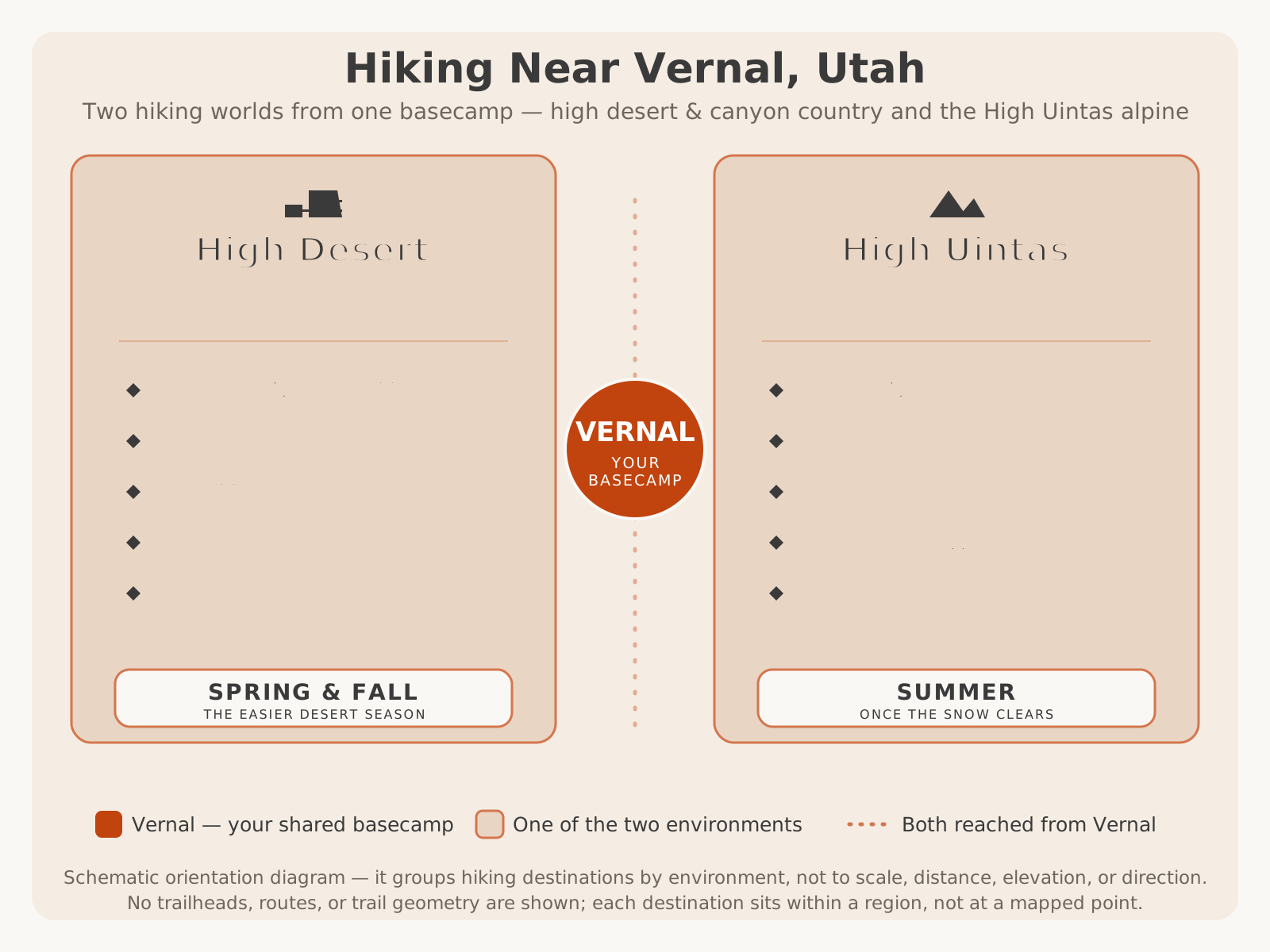
Up high, in the aspen basins and lake country of the Uintas, fall comes early and hard. The cold arrives first here, so the aspens typically turn first, the nights drop below freezing well before the valley cools, and the first snows of the season can fall while the desert is still in shirtsleeves. This is also where the season ends first: the high roads, trailheads, and passes begin to close with those early storms, and the window for high-country hiking can slam shut quickly. The reward for catching it right is the region’s classic autumn scene — gold aspens against granite and dark spruce, still lakes reflecting the change, and crisp, clear air (see our alpine lakes hiking guide).
In the middle, the mid-elevation forests and foothills take the change a few weeks later and hold a gentler version of the high country’s weather — cool, clear, and often still very hikeable when the peaks are already white. This is the zone to follow the color into as the season progresses.
Down low, in the canyons, river corridors, and desert around Vernal, Dinosaur National Monument, Red Fleet, and Flaming Gorge, fall is the warmest and latest act. The cottonwoods along the rivers turn last, often holding their gold well into the season, and the desert hiking that was a heat-managed dawn affair all summer becomes comfortable all day. The low country’s season also lasts the longest — it’s where you’ll still be hiking in comfort after the high trails have closed for the year.
The practical lesson of the ladder is simple and powerful: when one elevation closes down or turns unpleasant, another is coming into its prime. A fall trip that starts high in early season and works its way down to the desert as the weeks pass can chase good conditions and good color for a remarkably long time. And on any single trip, if the high country is snowed out or the color hasn’t arrived, the answer is almost always to move down the ladder rather than to force the plan. Because the timing of every rung — first color, first snow, road and trail closures — shifts every year and is set by the managing agencies, VERIFY WITH OFFICIAL SOURCE (Ashley National Forest, the National Park Service, and Utah State Parks) for current conditions at the elevation you’re headed to before you go.
Best Fall Hiking Areas
The region’s autumn hiking sorts naturally into a handful of areas, each occupying a different rung of the elevation ladder and offering a different kind of fall. Rather than name exact trails and mileage — which change, and which the linked destination guides and the official sources describe best — here’s the autumn character of each, roughly from high to low, so you can match the area to the season and the experience you’re after.
Ashley National Forest
Ashley National Forest is the heart of fall-color hiking near Vernal. Its forests, foothills, and mountain drainages hold the aspen stands that put on the region’s classic autumn show, and because the forest spans a wide range of elevations, it offers fall over a long window — high and early up in the mountains, lower and later down in the foothills. Aspen groves turning gold against dark conifer, mountain meadows going to seed, and the crisp, clear air of a high-country fall are the signature experiences here. The forest is also laced with campgrounds and the region’s best scenic drives, making it ideal for pairing a hike with a slow color-hunting drive (see Combining Scenic Drives & Hiking). The catch is that the higher country closes first: roads, trailheads, and campgrounds begin shutting down with the early snows, so always check current status. For the forest’s overnight options in the shoulder season, see our camping guide, and VERIFY WITH OFFICIAL SOURCE (Ashley National Forest) for current road, trail, and campground status before you go.
High Uintas
The High Uintas are the region’s high, wild heart — a vast range of granite peaks, alpine basins, and hundreds of lakes — and they experience fall first and most fiercely. Early in the season, the aspen fringes and the meadows of the high basins turn while the lakes still lie open and reflective, and a hike up here on a clear early-fall day, with gold leaves, cold blue water, and the first snow dusting the peaks, is as good as autumn hiking gets in Utah. But the Uintas are also the least forgiving place to be caught by the changing season: the elevation means bitter mornings, fast weather, and early snows that close the access roads and passes quickly and sometimes without much warning. Fall hiking up here is for prepared, flexible hikers who watch the forecast, carry real cold-weather gear, always have a lower backup plan, and turn back or turn down the mountain without hesitation when the weather shifts. Our alpine lakes hiking guide covers the lake basins in depth, and the Kings Peak guide covers the range’s high, committing terrain — both of which become far more serious undertakings in fall. VERIFY WITH OFFICIAL SOURCE (Ashley National Forest) for road, trail, and weather status before any fall trip into the high country.
Dinosaur National Monument
Dinosaur National Monument is where fall becomes a low-desert pleasure. As the high country cools and closes, the monument’s canyons and river corridors enter their most comfortable hiking window of the year: the summer heat that pushed hikers to dawn starts eases into pleasant, all-day walking weather, and the cottonwoods that line the Green and Yampa rivers turn gold against the warm red and buff cliffs, often well into late fall. The combination of autumn color, red rock, river, and the monument’s signature deep-time landscape — fossils and ancient rock art — is a distinctly Dinosaur Country kind of fall you won’t find in the mountains. The monument’s trails also stay open and accessible far later into the season than the high country, making it a reliable low-elevation backup when the mountains snow out. Days are still short and mornings cold, so pack accordingly. VERIFY WITH OFFICIAL SOURCE (the National Park Service) for current trail access, hours, and seasonal advisories before you go.
Red Fleet
Red Fleet State Park, just north of Vernal, is a compact, family-friendly fall-hiking spot built around a red-rock reservoir. In autumn the shoreline trails offer the region’s signature meeting of elements — gold shoreline brush and cottonwoods, deep-red sandstone, and blue water, often with far more solitude than the summer boating season brings. It’s an easy, close-to-town option for a shorter fall hike, a family outing, or a golden-hour walk, and its low elevation means it stays comfortable and accessible late into the season. The cooler water and quieter shores also make it a pleasant reflection-and-color spot for photographers. As always, facilities and access vary by season — VERIFY WITH OFFICIAL SOURCE (Utah State Parks) for current park hours, trail access, and conditions before you go.
Flaming Gorge
Flaming Gorge, on the region’s northern edge where the reservoir cuts its dramatic red canyon, adds a big-water dimension to fall hiking. The country here spans elevations, so it offers both higher forested trails that turn earlier and lower canyon-and-shoreline walks that hold color and comfort later, all set against the gorge’s spectacular red rock and deep blue water. Autumn thins the summer crowds dramatically, and the clear fall air makes the gorge’s long views and vivid color contrasts especially striking — a favorite for photographers and scenic-drive-and-hike days via the Flaming Gorge–Uintas Scenic Byway. Because the area covers a wide elevation range and straddles the transition to the high country, conditions and access vary a lot from spot to spot and change with the season — VERIFY WITH OFFICIAL SOURCE (the U.S. Forest Service and Utah State Parks) for current trail, road, and facility status before you go.
Desert vs Mountain Fall Color
The region’s two fall-color worlds — the high mountains and the low desert — turn at different times and offer genuinely different experiences. The smartest autumn trips use both, following the color down the ladder.
| Mountain Fall Color | Desert Fall Color | |
|---|---|---|
| Where | High Uintas and Ashley National Forest | Vernal, Dinosaur National Monument, Red Fleet, Flaming Gorge |
| Signature color | Gold and rust aspens against granite and dark conifer | Yellow-gold cottonwoods against red rock and blue water |
| Typical timing | Earlier — the high country turns first | Later — cottonwoods hold gold well into the season |
| Weather | Cold, crisp, fast-changing; early snow possible | Cool and comfortable; mild days, cold mornings |
| Access window | Shorter — closes early with high-country snow | Longer — trails stay open late into fall |
| Best for | Prepared hikers chasing classic aspen color early | Families, late-season trips, comfortable all-day hiking |
| Main watch-out | Early snow, road closures, bitter mornings | Short days, cold nights, still-strong midday sun |
Wildlife During Fall
Fall is one of the richest wildlife-watching seasons of the year in Dinosaur Country, because autumn is a season of urgent activity in the animal world. As the days shorten and the cold comes on, the region’s wildlife is busy preparing for winter — feeding hard, moving to new ground, and, for the deer and elk, entering the rut — and all that activity puts animals out in the open where a quiet, observant hiker can see them.
The headline event is the big-game rut. In fall, deer and elk grow far more active and visible, and the elk especially become vocal — the bugling of bull elk is one of the definitive sounds of a Dinosaur Country autumn. Animals that lay low through the summer heat are out on the meadows, forest edges, and canyon bottoms in the cool mornings and evenings. At the same time, animals of every kind are feeding to fatten for the lean months ahead, which keeps them moving and foraging where they can be watched. And the season brings its own bird movement, as migrating and gathering birds pass through and congregate along the rivers, reservoirs, and wetlands.
The habits that make for good wildlife watching are the same in fall as any season, only more rewarding now. Dawn and dusk are prime — animals are most active in the cool, low light at the ends of the day. Move slowly and quietly, watch the edges where meadow meets forest and canyon meets water, and let the animals come to their routines rather than chasing them. A long lens or binoculars lets you watch closely while keeping a respectful distance.
Fall also raises the stakes on the one rule that always governs wildlife watching, because a rutting animal is a genuinely dangerous animal. Give rutting elk and deer, and moose at any time, a very wide berth — bulls in the rut are unpredictable and can be aggressive, and a cow with young or a bull defending territory will not tolerate a close approach. Never bait, feed, call in, crowd, or chase any animal for a look or a photo; if an animal stops feeding, fixes on you, or moves away, you are too close, and you should back off. Sightings are never guaranteed — wildlife is wild and moves with season, weather, and chance — but fall stacks the odds in your favor as few seasons do. For the full art of hiking to see animals responsibly, see our dedicated wildlife hiking guide near Vernal, and because wildlife rules, hunting seasons, and closures are set by the managing agencies and change, VERIFY WITH OFFICIAL SOURCE (the National Park Service, Utah State Parks, Ashley National Forest, and Utah’s wildlife agency) before you go — note that fall overlaps with hunting seasons on many public lands, so check current regulations and wear blaze orange where appropriate.
Photography Opportunities
If there is a photographer’s season in Dinosaur Country, it’s fall — and for reasons that go well beyond the obvious color. Autumn brings together the raw materials landscape photographers chase: changing color, some of the clearest air and best light of the year, dramatic weather as the first storms move through, the first snow dusting the peaks above still-golden slopes, and active wildlife in flattering low light. All of it comes with the thin crowds and empty viewpoints that make the shooting relaxed.
The color is the headline, and it rewards the same elevation-chasing logic as the hiking: shoot the gold aspens of the high country early in the season against granite and the first snow, then follow the color down to the cottonwoods glowing against red rock and blue water at Red Fleet, Flaming Gorge, and Dinosaur National Monument as the weeks pass. Reflections are a special fall gift — a still lake or reservoir doubling the autumn color and the first snow is one of the season’s signature images.
The light and air of fall may matter even more than the leaves. The low, warm autumn sun rakes across the landscape for a longer, gentler golden hour than summer’s high sun allows, the clear cold air renders distant peaks and long canyon views crisply, and the season’s changeable weather — building clouds, passing storms, mist in the canyons — makes for dramatic skies that a clear summer day never offers. Combined with the earlier, more civilized sunrise and sunset times, fall is a forgiving and generous season to be out with a camera.
A few fall-specific instincts help. Chase the elevation ladder for color, starting high and working low. Welcome imperfect weather — a passing storm, fresh snow on the peaks, or a few clouds at sunrise will beat a clear sky nearly every time. Be ready for the light early and late, since the shorter days pack the good light into a tighter window and the sun sets early. And carry a headlamp and warm layers, because the best fall light comes at cold, dark-adjacent hours. For the full craft of photographing this country — golden hour, blue hour, reflections, wildlife, and the region’s exceptional dark night skies — see our dedicated photography hikes near Vernal guide. And because access, viewpoints, seasonal road openings, and sunrise and sunset times change and are set by the managing agencies, VERIFY WITH OFFICIAL SOURCE before building a shoot around a specific spot or time.
Weather & Clothing
Fall weather in Dinosaur Country is the season’s defining challenge and, handled right, its quiet pleasure — but it demands more respect and preparation than summer does. The single most important thing to understand is that a fall hiking day here can span three seasons in a single outing: a cold, dark, frosty trailhead at dawn; a mild, sunny, shirtsleeve midday; and a fast-cooling, early dusk that turns cold again well before you might expect. Dress and pack for all three.
The elevation multiplies everything. The valley around Vernal can be pleasant while the high country is well below freezing, buried in the first snow, or being raked by a fast-moving storm. Mountain weather in fall changes quickly and can turn genuinely dangerous — cold, wind, rain, and snow can arrive in an afternoon — while the low desert stays milder and more predictable. Reading which world you’re hiking into, and checking the current forecast for that elevation close to your departure, is a core fall-hiking skill.
The answer to all of it is layering. Build your clothing so you can add and shed warmth as the day and the elevation change:
- A warm base layer to wick and hold heat, never cotton against the skin for a serious hike.
- An insulating mid-layer — fleece or a light puffy — for the cold mornings, evenings, and high country.
- A wind-and-rain shell you can throw on when the weather turns, which in fall it can do fast.
- A warm hat and gloves, especially for the mountains, where dawn can be bitter even on a fine day.
- Sturdy footwear with grip for leaf-slick, frosty, or lightly snowy trails.
Beyond clothing, a few items are non-negotiable in fall. Carry a headlamp on every hike — the days are short, the light goes early, and it’s easy to be caught out after dark. Bring more warmth than you think you’ll need, real rain and wind protection, sun protection (the fall sun is still strong, and snow reflects it), plenty of water and extra food, and navigation you don’t have to charge. And always, in fall more than any season, have a lower-elevation backup plan for when the high country is snowed in or storming.
Above all, stay flexible and check the most current local forecast close to your departure — fall weather shifts fast, and the first snows arrive with little notice. Because conditions change constantly and are set by the managing agencies, VERIFY WITH OFFICIAL SOURCE for current weather and closures before you go, and never push a hike into dangerous weather to save a plan. Our Vernal weather guide covers the region’s month-by-month patterns in detail, and our what to bring guide lays out the full season-by-season packing foundation.
Family Fall Hiking
Fall is a wonderful season to hike with children in Dinosaur Country, and in some ways the best of all. The heat that makes a summer family hike a sweaty test of patience is gone, the crowds have thinned, the wildlife is active and exciting to spot, and the changing color gives kids something to notice, collect, and marvel at. A cool, colorful, quiet fall trail is far more forgiving of small legs and short attention spans than a hot, busy summer one.
The winning family formula in fall is to keep it short, low, and midday. Favor the lower-elevation, close-to-town trails — the shorelines of Red Fleet, the gentle canyon and river walks around Dinosaur National Monument, and easy interpretive paths — which stay comfortable and accessible late into the season, avoid the high country’s cold and unpredictable weather, and put the color and the wildlife within an easy walk. And time family hikes for the warm middle of the day, when the frost has burned off and before the early dusk brings the cold back, rather than the cold mornings and evenings the grown-ups might chase for light and wildlife.
Fall also offers kids a season’s worth of natural fascination. Make the changing color part of the adventure — spot the turning aspens and cottonwoods, notice how the color climbs down the mountain, watch for deer and elk and gathering birds, and let the crisp air and crunching leaves be the point. A camera or a simple nature-spotting game turns a short hike into a full outing.
The fall-specific cautions are worth stating plainly. Dress kids in warm layers — they chill faster than adults, and a cold, wet, tired child ends a hike fast — and pack extra warmth, food, and a headlamp against the short days. Keep the whole group well back from wildlife, and give rutting deer and elk and any moose an especially wide berth, since fall makes big animals more active and less predictable. And watch the time: the early sunset can catch a slow family group out, so turn around with plenty of daylight to spare. For gentle, scenic, family-friendly trails and the full art of hiking here with children and multi-generational groups, see our dedicated family hiking near Vernal guide, and for more kid-focused ideas around town, things to do in Vernal.
Family vs Advanced Fall Hikes
Fall hiking here spans a wide range, from gentle low-country color walks perfect for kids to committing high-country trips for experienced, well-prepared hikers. Choosing the right end of that range for your group and the season is the key to a safe, good day.
| Family / Casual Fall Hikes | Advanced Fall Hikes | |
|---|---|---|
| Where | Red Fleet, monument canyons, low river trails, interpretive paths | High Uintas basins, Kings Peak country, remote backcountry |
| Elevation & timing | Low; comfortable and accessible late into fall | High; short, early window that closes with first snow |
| Effort | Short, gentle, forgiving; scenery close to the trailhead | Long, rugged, high; real distance from help |
| Weather exposure | Milder, more predictable; warm midday window | Cold, fast-changing; early snow and storms |
| Best for | Families, casual hikers, late-season and first-time visitors | Fit, experienced, self-reliant hikers with cold-weather skills |
| Main watch-outs | Short days, cold kids, keeping back from active wildlife | Early snow, road closures, cold, remoteness, no cell service |
Accessibility
Fall’s easing heat and thinner crowds make it an especially good season for visitors who want to experience the region’s autumn color and wildlife with limited mobility or stamina, because many of the best fall scenes are available close to the road. The reservoir shorelines, river-access areas, developed day-use sites, drive-up viewpoints, and short paved or well-graded interpretive paths that put a visitor near gold cottonwoods, red rock, blue water, and autumn light often require little walking — and the lower-elevation sites that stay open and comfortable latest into fall are frequently the most accessible ones, too.
A car itself makes an excellent, low-impact way to experience a Dinosaur Country fall: the region’s scenic drives deliver mile after mile of changing color from the comfort of the vehicle, with accessible pullouts, overlooks, and short paths to stop and take it in (see Combining Scenic Drives & Hiking). By contrast, the high-country trails and remote canyons cross uneven, rocky, sometimes steep ground — and in fall may be snowy, icy, or closed — and are not uniformly accessible.
Because specific accessible facilities, paved surfaces, viewpoints, and trail and road conditions vary by site and change with the season — and because fall weather can bring frost, ice, and early snow that affect accessibility — anyone in your group with particular mobility requirements should VERIFY WITH OFFICIAL SOURCE (the National Park Service, Utah State Parks, and Ashley National Forest) for current accessible options and seasonal conditions before you go. Pairing an accessible viewpoint or shoreline with a slow, color-hunting scenic drive is often the best way for a mixed-ability group to share a Dinosaur Country autumn.
Combining Scenic Drives & Hiking
The single best way to experience fall in Dinosaur Country — and the one locals reach for again and again — is to pair a scenic drive with short hikes along the way. It’s a strategy tailor-made for the season, because it lets you cover a lot of elevation and a lot of color in a day, follow the changing leaves up and down the mountain from the comfort of the car, and stop to walk into the scenes that grab you. On a fall day when the color is scattered across elevations and the weather is changeable, a drive-and-hike plan is far more flexible than committing to one long trail.
The region’s scenic drives are genuinely world-class for fall color. The Red Cloud Loop climbs from the desert up into the aspen and conifer country of the Ashley National Forest and back, threading exactly the elevations where fall color unfolds — a loop that can show you gold aspens up high and turning cottonwoods down low in a single drive, with countless short walks and overlooks along the way. The Flaming Gorge–Uintas Scenic Byway runs through high forest and down to the dramatic red-rock reservoir of Flaming Gorge, pairing big water and big color, and the region’s other byways add still more.
The drive-and-hike rhythm works beautifully for every kind of fall visitor. Families and casual hikers get the color and the wildlife without a demanding trail. Photographers can chase the light and the elevation, stopping wherever the scene is best. Leaf-peepers cover the maximum color in the time they have. And anyone gets a built-in flexibility that fall demands: if a trail is snowed out or the color hasn’t arrived at one elevation, you simply drive to another. The one fall caution is that the highest, best drives climb into the country that closes first — mountain roads can gate with early snow — so check current road status and always have a lower drive as a backup. Because seasonal road openings and closures are set by the managing agencies and change every year, VERIFY WITH OFFICIAL SOURCE (Ashley National Forest, the U.S. Forest Service, and Utah State Parks) for current road and byway status before you set out.
Hiking vs Scenic Drives During Fall
Both are superb ways to experience a Dinosaur Country autumn, and the best fall trips combine them. Here’s how they compare.
| Fall Hiking | Fall Scenic Drives | |
|---|---|---|
| Best for | Getting into the color, wildlife, and quiet up close | Covering the most color and elevation in a day |
| Effort & access | Ranges from easy to strenuous; on foot into the scene | Low-effort; open to all abilities from the car |
| Color strategy | Pick an elevation and hike its color window | Chase color up and down the elevation ladder |
| Flexibility in fall | Committing once you’re on the trail | Very flexible — reroute around snow or missed color |
| Weather exposure | Full exposure; must prepare for cold and change | Sheltered; but high roads close first with snow |
| The local move | Combine them — drive the color, then hike into the best of it, with a lower backup ready | |
Planning Tips
Pull it all together into a simple, flexible plan for a Dinosaur Country fall:
- Plan around elevation, not a date. Fall comes down the mountain. Start high early in the season for the first aspen gold, and follow the color to lower elevation — the monument canyons, Red Fleet, Flaming Gorge, and the river cottonwoods — as the weeks pass. There’s good fall hiking somewhere near Vernal across a long stretch of the season.
- Never bank on peak color. Foliage timing swings every year and can be ended by one storm. Pick a range of dates rather than one weekend, watch current conditions in the days beforehand, and come for the whole autumn experience — cool air, quiet trails, clear light, active wildlife — so a great trip doesn’t hinge on a single photograph.
- Always carry a lower-elevation backup. The high country closes first, and early snow can shut a road or trail with little warning. Never assume a mountain road is open, and turn a closed gate into a reason to hike somewhere lower rather than to push on.
- Dress and pack for three seasons in a day. Cold morning, mild midday, cold dusk — layer up, carry a warm hat and gloves for the mountains, and bring more warmth and food than a summer hike needs.
- Carry a headlamp on every fall hike. The days are short and the light goes early; it’s the season’s most-forgotten essential. Plan to be off the trail with daylight to spare.
- Respect the fall wildlife. Autumn makes deer, elk, and moose active and less predictable in the rut — keep a wide distance, never approach or bait, and check current hunting seasons and rules on public land, wearing blaze orange where appropriate.
- Combine drives and hikes. A scenic drive up the elevation ladder, with short walks into the best color, is the most flexible and rewarding way to spend a fall day — perfect for families, photographers, and leaf-peepers alike.
- Base in Vernal and build a full trip. Vernal is the region’s gateway and nearest full-service town. Pair your fall hikes with camping in Dinosaur Country (crisp fall nights and fewer crowds, where facilities are still open), a color-hunting scenic drive, and the rest of things to do in Vernal. Coming from out of state? See our Salt Lake City to Vernal guide.
- Verify the details that change — every time. Color timing, first snows, trail and road openings and closures, seasonal facility hours, and hunting seasons are set by Ashley National Forest, the National Park Service, Utah State Parks, and Utah’s wildlife agency and change every year. VERIFY WITH OFFICIAL SOURCE before you go, and read the companion guides: our photography hikes, wildlife hiking, alpine lakes hiking, High Uintas day hikes, and best hikes in Dinosaur National Monument guides, plus the Vernal weather guide and what to bring guide.
Approached with the right elevation strategy, the right layers, and a willingness to move with the weather and the color, fall hiking near Vernal offers something rare: a season that comes down the mountain over many weeks, so there’s always good hiking and often good color somewhere in reach — the gold aspens of the high Uintas, the turning cottonwoods of the red-rock canyons, the active wildlife, the clear light, and the deep quiet of trails the summer crowds have left behind. Chase the color down the ladder, prepare for the cold and the short days, protect the country and its wildlife, and let a Dinosaur Country autumn show you what it will. For the light and the color up close, our photography hikes guide is the natural next step; for the active fall wildlife, the wildlife hiking guide leads the way. And when you want to trade the trail for a guided backcountry adventure into red-rock country you’d never reach on foot — with the cool air and low autumn light at their best — book a UTV tour with Adventure Tours Vernal and let Dave and Trudy show you Dinosaur Country in the finest season of the year.