Key Takeaways
- Choose the hike to fit the child, not the other way around. Match distance, difficulty, and the reward at the end to the youngest, slowest member of your group, and family hiking here almost always ends in smiles.
- Wonder is close to the trailhead. Fossils, rock art, reservoir shorelines, and even alpine lakes sit near the road on short walks — you don’t need long miles to give kids a genuine “wow.”
- Elevation is your thermostat. Hike the cool High Uintas when the desert bakes and the mild desert trails in spring and fall — you can chase comfortable temperatures up or down the mountain nearly year-round.
- Dinosaurs make this place unrepeatable. The chance to walk up to real fossils and tracks turns an ordinary hike into an adventure kids remember for years — the region’s signature family experience.
- Prepare for the desert and the mountains. Sun, heat, and water in the desert; altitude and afternoon storms up high. Start early, carry more water than you think, and verify every changing detail with the managing agency.
Why Family Hiking Is Special in Dinosaur Country
Most family-hiking destinations ask you to trade the reward for the effort: the best scenery is the farthest away, and small legs give out long before you get there. Dinosaur Country works the other way around. Here, an astonishing amount of what makes this region extraordinary — real dinosaur fossils, thousand-year-old rock art, red-rock canyons, and cool alpine lakes — sits within a short, gentle walk of where you park. That single fact is what makes family hiking near Vernal so unusually rewarding: the wonder is front-loaded, so a preschooler, a grandparent, and a first-time hiker can all reach it.
The other gift this region gives families is range — of both landscape and elevation. In a single trip, based out of Vernal, a family can walk a desert trail past fossils and petroglyphs in the morning and, on another day, drive up into the High Uintas to sit beside a mountain lake in cool, pine-scented air. Because those two worlds sit at such different elevations, you can nearly always find comfortable temperatures somewhere: the mild desert in spring and fall, the high country when summer bakes the valleys. Few family destinations let you pick your climate by driving up or down a mountain.
And then there’s the thing no other place can replicate: dinosaurs, for real, in the ground. Dinosaur National Monument is world-famous for its fossils, and the trails here let children get closer to the deep past than almost anywhere on Earth — not behind museum glass, but out on the land where the bones were found. For a kid, walking up to a real dinosaur fossil is a form of magic that outlasts the trip. It’s the memory they’ll tell their friends about, and the reason so many families come back.
Put those three things together — reward close to the trailhead, a climate you can choose, and genuine dinosaurs — and you have a family-hiking region unlike any other. This guide is the family-focused companion to our broader hiking hub: where the Dinosaur National Monument hikes guide covers the monument’s trails and the High Uintas day hikes guide covers the alpine day hikes, this one owns the art of hiking here with children and multi-generational groups — how to choose, prepare, and make the day a joy for everyone from a toddler to a grandparent.
Choosing the Right Hike
The single most important skill in family hiking isn’t fitness or gear — it’s choosing the right hike, and the golden rule is simple: plan around the youngest, slowest, or least confident member of your group. A hike that’s easy for a parent can be a mountain to a four-year-old, and a day that ends in tears usually started with a trail that was too long, too hot, or too hard. Get the choice right and the rest tends to take care of itself.
Start with your kids’ ages and stamina, honestly. Babies and toddlers ride in carriers and do best on very short, flat walks with something to see. Preschoolers can walk short distances if there’s a clear, close reward. Elementary-age kids can handle real trails and thrive on a mission — finding fossils, reaching a lake, spotting wildlife. Teens can take on genuine half-day hikes. Then layer in the other factors that matter more than mileage: scenery (kids need something to look at), wildlife opportunities, educational value (fossils and rock art are catnip for curious minds), the time you actually have, and your family’s confidence level on trails.
Above all, resist the urge to measure a family hike in miles. The right question isn’t “how far?” but “what’s at the end, and can everyone get there happily?” A quarter-mile walk to a wall of dinosaur bones will thrill a child more than a scenic five-miler with nothing to reach. Keep the goal concrete and close, build in snack stops, and treat turning back early as a success, not a failure.
| Preschool (toddlers–5) | Elementary (6–12) | Teen-Friendly | |
|---|---|---|---|
| Ideal distance | Very short; a carrier as backup | Short to moderate, with breaks | Real half-day hikes |
| What keeps them going | A close, concrete reward and constant small discoveries | A mission — fossils, a lake, wildlife to find | A genuine challenge and a big payoff |
| Best hike types | Drive-up viewpoints, flat fossil and shoreline walks | Fossil and rock-art trails, easy lake and reservoir hikes | Basin lake hikes, longer desert trails, first summits of ambition |
| Pace & plan | Slow, frequent stops; expect to carry them | Steady with snack breaks; let them lead | Steady adult pace; give them responsibility |
| Main watch-outs | Heat, sun, water and drop-offs; overtired melts | Sun and hydration; not over-promising distance | Altitude, storms, overconfidence far from the car |
Beyond your children’s ages, the other big decision is which of the region’s two environments to hike — and the next two sections follow exactly that split. Here’s how the family destinations divide between them:
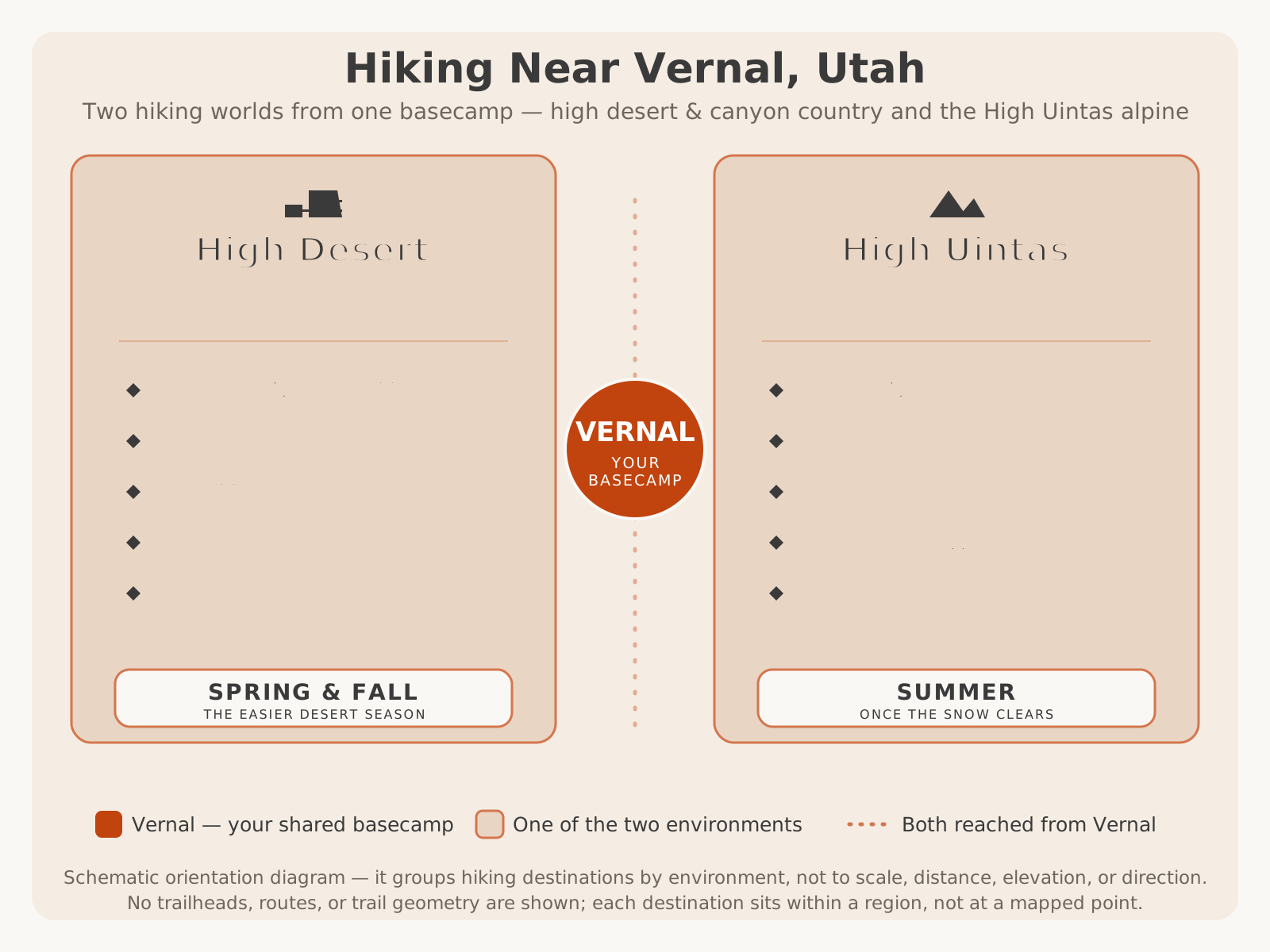
Easy Desert Walks
The desert around Vernal and Dinosaur National Monument is the region’s family-hiking heartland, and its great virtue for families is generosity per step. These are trails where a short, mostly gentle walk delivers red-rock canyons, river views, fossils, and ancient rock art — a huge amount of interest in a small, manageable distance. For young children and grandparents especially, the desert’s easy walks are where the region’s family hiking usually begins.
The kinds of easy desert walks families gravitate to here include:
- Fossil and interpretive walks near the monument, where short trails put real geology and paleontology right at kid height, often with signs that explain what you’re seeing. The educational payoff is enormous for the effort.
- Rock-art walks, where a gentle path leads to panels of petroglyphs and pictographs left on the canyon walls a thousand years ago — a doorway into human history that fascinates kids and adults alike.
- River and canyon-bottom strolls, shaded and relatively cool, where the walking is easy and there’s water, cottonwoods, and cliff scenery to hold a child’s attention.
- Reservoir shoreline walks at the nearby state parks, where gentle paths meet the water — a place to combine a short hike with wading, rock-skipping, and a picnic.
Because the desert is hot and exposed for much of the year, the local rules for an easy desert walk with kids are non-negotiable: go early in the day, carry far more water than seems necessary, and load up on sun protection — hats, sunscreen, and light long sleeves. Keep close watch near the river, canyon edges, and any drop-offs. And because which specific trails, sites, and facilities are open — and any entrance or day-use fees — change and are set by the managing agencies, VERIFY WITH OFFICIAL SOURCE (the National Park Service and Utah State Parks) before you go. For the monument’s trails in depth, see our guide to the best hikes in Dinosaur National Monument.
Easy Mountain Hikes
When the desert heats up in summer, families have a card few destinations can play: drive up and cool off. North and west of Vernal, the High Uintas and the surrounding Ashley National Forest rise into a green, lake-strewn alpine world where the air is cool, the scenery is spectacular, and — crucially for families — some of the loveliest spots are reachable on short, gentle walks. It’s the region’s summer answer for families who want to hike without frying.
The family-friendly mountain hikes worth seeking out are the gentle ones:
- Drive-up and roadside lakes, where a mountain lake — with a shoreline to explore, cold water to wade, and maybe a fish rising — is only a short walk from where you park. This is the highest reward-per-step in the high country.
- Short lakeside and campground loops, with gentle footing around a lake or through cool forest, ideal for young children and for letting the whole group adjust to the altitude.
- Easy meadow walks that fill with wildflowers in the heart of summer — high on scenery, modest on effort, and a delight for kids and photographers.
Save the longer basin climbs for older, fitter kids, and keep even those well within their limits, because altitude turns a “short” hike hard fast for little legs. The high country has its own rules: everyone tires and can feel headachy sooner at elevation, so go slow, hydrate hard, and snack often; and because afternoon thunderstorms build almost daily in summer, start early and be heading down as the clouds gather. Pack layers even on a warm morning — the mountains turn cold and windy in a hurry. Which lakes, roads, and trailheads are open changes constantly, so VERIFY WITH OFFICIAL SOURCE (Ashley National Forest) before building a day around a particular spot. For the full range of gentle alpine options, see our High Uintas day hikes guide and our alpine lakes hiking guide.
Desert vs Alpine Family Hikes
The desert and the mountains offer families genuinely different days, and the smart move is often to do both on a single trip — one for each mood and each kind of weather.
| Desert Family Hikes | Alpine Family Hikes | |
|---|---|---|
| Where | Around Vernal and Dinosaur National Monument | Up in the High Uintas and Ashley National Forest |
| Best seasons | Spring and fall; summer early mornings only | High summer into early fall |
| The draw for kids | Fossils, rock art, canyons, river, reservoirs | Mountain lakes, wildflowers, cool air, wildlife |
| Main comfort factor | Heat and sun — hike early, carry water | Altitude and afternoon storms — start early, pack layers |
| Effort | Mostly short, flat, and gentle | Short walks near the road; more effort for basin lakes |
| Best for | Year-round base, dinosaur wonder, easy access | Escaping summer heat, alpine scenery, a change of world |
Dinosaur-Themed Hiking
If there’s one thing that makes hiking here unforgettable for a child, it’s the dinosaurs — and this is the one place on the planet where a family walk and world-class paleontology are the same outing. Dinosaur National Monument earned its name from an extraordinary concentration of fossils, and the region turns that deep-time story into experiences kids can walk right up to.
The dinosaur-themed experiences families come for include a famous wall of real dinosaur bones, preserved in place under a roof so you can stand before hundreds of fossils exactly where they were entombed; short fossil-discovery trails where you can spot fossils in the rock along the path; and, elsewhere in the region, ancient dinosaur trackways where you can see the footprints these animals left behind. For a child who loves dinosaurs — and what child doesn’t — this is the trip of a lifetime, the moment the picture books become real.
A few things make a dinosaur day work best with kids. Lean into the story: talk about what lived here, how the bones got into the rock, how long ago it was — the sense of deep time is half the magic. Combine the marquee fossil site with a short fossil or interpretive trail so the kids get both the big “wow” and a walk of their own. And remember the ordinary desert rules still apply — heat, sun, and water — because excitement doesn’t cancel the sun. Which exhibits, trails, and features are open, and any fees, hours, shuttle arrangements, or reservations, change and are set by the managing agencies, so VERIFY WITH OFFICIAL SOURCE (the National Park Service and Utah State Parks) before your visit. For the full dinosaur-country trail picture, see our best hikes in Dinosaur National Monument guide, and for more kid-focused ideas around town, fun things to do in Vernal with kids.
Wildlife Viewing
For kids, spotting a wild animal can be the highlight of an entire trip, and family hiking near Vernal offers plenty of chances across both the desert and the mountains. In the desert around the monument, families may see mule deer, lizards sunning on the rocks, and a rich variety of birds along the river and canyons; up in the high country, kids delight in the marmots that whistle and sun themselves on high boulders, the pikas darting through the rockslides, and — with luck and distance — deer, elk, and moose in the meadows. Watching for animals gives children a reason to hike quietly and pay attention, which is a gift in itself.
Turning wildlife into a safe, joyful part of the hike comes down to a little etiquette that kids can learn easily. Keep a respectful distance from every animal, never approach or feed wildlife, and teach children the simple rule that we watch, we don’t touch or chase. Give large animals — moose in the mountains especially — a wide berth, since they’re far bigger, faster, and less predictable than they look, and a mother with young is best avoided entirely. Keep food controlled at picnics and pack out every scrap, because an animal that learns to associate people with food ends up in trouble. And watch for wildlife on the roads at dawn and dusk.
The best family wildlife viewing rewards the same habits as good photography: go early or late, move quietly, and simply look. Bring binoculars if you have them and let the kids do the spotting — it keeps them engaged and moving. Because specific wildlife guidance and any seasonal advisories are set by the managing agencies and can change, VERIFY WITH OFFICIAL SOURCE (the National Park Service and Ashley National Forest) for the current rules before your trip.
Photography for Families
A family hike here is a photographer’s gift — dinosaurs, rock art, red-rock canyons, mountain lakes, and, best of all, kids discovering all of it — and you don’t need fancy gear to bring home images your family will treasure. A few simple instincts make the difference between snapshots and keepers.
- Shoot the light, not the middle of the day. Early morning and late afternoon give warm, soft light that flatters both the landscape and your kids’ faces — and early is when you should be hiking in the desert anyway, to beat the heat.
- Photograph the discovery, not just the scenery. The best family photos are the moments — a child’s face at the wall of bones, small hands tracing the air near a petroglyph, a first cast at a mountain lake. Keep the camera ready for reactions, not just views.
- Get down to kid level. Crouch to your child’s height to capture the world as they see it, with the fossil, the lake, or the canyon towering behind them.
- Let the kids shoot too. Handing an older child a camera or phone turns them into an engaged explorer and produces a wonderful, wobbly record of the day from their point of view.
- Respect the resources. Never touch rock art or fossils to get a photo, stay on the trail and durable ground, and leave every site exactly as you found it — the pictures matter far less than the place.
The region is full of original-photography opportunities no stock library can match — a family at a real dinosaur wall, a grandparent and grandchild at a mountain lake — the kind of firsthand imagery that tells this place’s story better than anything. Keep the camera accessible, and prioritize the moments only your family’s day can give you.
Teaching Kids Outdoors
One of the quiet joys of hiking near Vernal is how naturally it teaches — this is a landscape that turns a walk into a living classroom, and a little intention on your part turns that into learning your kids will carry home. The raw materials are extraordinary: fossils that make deep time real, rock art that opens a window onto the people who lived here long ago, and geology written plainly in the canyon walls.
You don’t need to be an expert to make the most of it. Ask questions instead of giving answers — “What do you think made this track?” “Why is the rock red here?” — and let curiosity do the work. Read the interpretive signs together at the monument and the parks; they’re written to spark exactly these conversations. Give kids a job: a fossil to find, an animal to spot, a map to follow, a number of steps to a lake. And name the wonder out loud — that the bones are a hundred and fifty million years old, that a person painted that figure a thousand years ago — because the scale of it is what lodges in a young mind.
Layered into the natural history is the most durable lesson of all: how to treat wild places. Model and teach the simple ethics — stay on the trail, pack out everything, keep a respectful distance from wildlife, never touch rock art or fossils, take only pictures. Kids who learn stewardship on a trail like this tend to keep it for life. For more ways to turn a Vernal trip into hands-on learning and fun, see fun things to do in Vernal with kids and the broader things to do in Vernal.
Packing for Children
Packing well is most of the battle in family hiking, because the two things that end a kids’ hike early — running out of water and running out of good cheer — are both preventable from your daypack. You don’t need a mountain of gear, but you do need the right things, and a little more of them than you’d carry for yourself.
- Far more water than you think you’ll need, for every person, plus a bit extra. Dehydration comes fast in the dry desert air and at altitude, and a thirsty child is an unhappy one.
- Sun protection for everyone — hats, sunglasses, sunscreen, and light long sleeves. The high-desert and high-elevation sun is intense even on cool or cloudy days.
- Layers, always. A warm layer and a rain shell for each child, even on a hot morning, because the desert cools at the edges of the day and the mountains turn cold and stormy in a hurry.
- Plenty of snacks — more than seems reasonable. Frequent small snacks keep energy and moods up; a “snack goal” partway along is a classic trick to keep little legs moving.
- Sturdy, broken-in footwear and a change of socks; rocky, uneven, sometimes wet ground is hard on small feet.
- A carrier for the youngest. Even walkers tire, and a carrier for a toddler is the difference between finishing the hike and carrying a meltdown.
- A small first-aid kit with the basics for scrapes and blisters, plus any personal essentials.
- Comfort items and simple entertainment — a favorite small toy, a magnifying glass for fossils and bugs, a bag for “treasures” — that turn the walk into an adventure.
Scale the pack up for a longer mountain hike and down for a short fossil walk, but never skip the water, sun protection, and snacks. For a full, season-by-season breakdown for the whole region, see our what to bring guide.
Weather Considerations
Weather shapes family hiking here more than any trail rating, because the region serves up two very different sets of conditions, and knowing which one you’re walking into keeps the day safe and happy. In the desert, the headline is heat and sun: much of the year the low country around Vernal and the monument gets hot and exposed, and there’s little shade on many trails. In the mountains, the headline flips to cold and storms: the high country is cool even in summer and prone to near-daily afternoon thunderstorms, with lightning, wind, rain, hail, and a fast temperature drop.
The practical response is the same simple discipline in both worlds: start early. An early start beats the desert heat, catches the calm mountain morning before the storms build, and gives you margin to go slow and turn back with time to spare. In the desert, plan the hike for the cooler morning hours, carry ample water, and treat midday summer heat as a reason to rest, swim, or head for the high country instead. In the mountains, be reaching your goal by late morning and heading down as the clouds gather, pack layers and rain gear for everyone, and remember that snow can fall at elevation in any month.
Above all, stay flexible and be willing to change the plan. The high-desert and alpine weather can shift fast, so check the most current local forecast close to your departure, keep a lower or shadier option in your back pocket, and never hesitate to turn a family around when the sky or the heat says so. Because conditions change constantly, VERIFY WITH OFFICIAL SOURCE for current conditions before you go. Our Vernal weather guide covers the region’s month-by-month patterns in detail.
Seasonal Advice
The great seasonal advantage of family hiking near Vernal is that you can chase comfortable temperatures up and down the mountain, so there’s good family hiking somewhere much of the year — as long as you match the season to the elevation. Spring and fall are the sweet spot for the desert trails around Vernal and the monument, with mild temperatures, smaller crowds, and comfortable walking for kids and grandparents alike. Summer bakes the desert, so summer hiking means early mornings down low or the cool High Uintas up high, where the alpine season runs roughly July into September. Winter turns most trails cold and snowy and shifts the region toward a quieter, more limited season.
Because summer and fall are when most families visit, it helps to see how the two compare for a family trip:
| Summer | Fall | |
|---|---|---|
| Desert trails | Hot and exposed — hike early morning only | Mild and comfortable, often the best desert hiking of the year |
| Mountain trails | Prime alpine season; cool relief, full lakes, wildflowers | Cooling fast; gold aspens and quiet, but the high season is closing |
| Crowds | The busiest window — school’s out | Thinner crowds and easier parking |
| Daylight | Long days, more time for early starts and afternoon rests | Shorter days — plan to finish earlier |
| Main watch-out | Desert heat and mountain afternoon storms | Early snow up high; cold mornings; changeable weather |
| Best for families who want | Alpine lakes, long days, the full dinosaur-and-mountains trip | Comfortable desert hiking, fall color, fewer people |
Safety
Family hiking here is very safe when you respect a few realities of the desert and the mountains, and the good news is that the same short list keeps everyone — from a toddler to a grandparent — out of trouble. None of it is complicated; it’s mostly about preparation and humility.
- Start early and manage the heat. In the desert, the sun and heat are the main hazard — hike in the cool morning, carry more water than you think you’ll need for every person, use real sun protection, and rest in the shade or the water at midday.
- Take altitude and storms seriously up high. In the mountains, go slow, hydrate, watch for headaches or fatigue (in kids too), and be off exposed ground before the afternoon thunderstorms build. Descending cures altitude.
- Keep the group together and kids close. Never let a family spread out, and keep young children within arm’s reach near water, cliff edges, canyon rims, and any drop-off. The river and reservoirs demand constant supervision.
- Teach kids what to do if separated. A simple plan — “stop, stay put, hug a tree, blow your whistle” — and a whistle for each child are cheap insurance that pays off if anyone wanders.
- Don’t rely on a phone. Cell service is unreliable in much of the region, especially in the high country. Carry a map, tell someone your plan and expected return, and know your route.
- Watch water and wildlife. Don’t let kids drink untreated water from any source, and teach everyone to keep a wide, respectful distance from all animals.
- Turn back freely. The willingness to cut a hike short — for weather, heat, altitude, tired kids, or just a feeling — is the most important family-hiking skill there is. The trail will still be there next time.
Accessibility
Multi-generational hiking — grandparents and grandkids on the same trail — is genuinely realistic here, and the reason is the same one that makes the region so good for young children: so much of the best scenery sits close to the road on short, gentle walks. Fossils, rock art, reservoir shorelines, and even alpine lakes can be reachable with little walking, which means a family spanning three generations can often share the same experience rather than splitting up.
The most accessible experiences tend to be the drive-up viewpoints, developed sites, short paved or well-graded paths, and shoreline walks near the parking areas, where real wonder is within reach of visitors with limited mobility or stamina. By contrast, the longer desert trails and the basin hikes up in the mountains cross uneven, rocky, sometimes steep ground and are not uniformly accessible.
Because specific accessible facilities, paved surfaces, restrooms, and trail conditions vary and change over time — and because accessibility needs are personal — anyone in your group with particular mobility requirements should VERIFY WITH OFFICIAL SOURCE (the National Park Service, Utah State Parks, and Ashley National Forest) for the current accessible options before you go. Pairing an accessible viewpoint or shoreline with one of the region’s scenic drives is often the best way for a mixed-ability family to experience the country together from close to the road.
Half-Day Adventures
Most family hikes are best kept to a half-day, and here that’s a feature, not a compromise — a morning is often exactly enough to reach real wonder, and it leaves the afternoon for a swim, a nap, a museum, or a meal in town before anyone melts down. A few half-day shapes work especially well for families:
- The dinosaur morning. Visit the marquee fossil site and add a short fossil or interpretive trail — a huge “wow” in a couple of easy hours, ideal for all ages. Confirm current hours, fees, and any reservation or shuttle arrangements first.
- The rock-art walk. A gentle walk to a panel of petroglyphs, with time to talk about the people who made them — history and an easy hike in one.
- The reservoir half-day. A short shoreline walk at a nearby state park combined with wading, rock-skipping, and a picnic — hiking and water play in one forgiving package.
- The mountain-lake morning. In summer, drive up to a roadside or short-walk lake, let the kids explore the shoreline, and be back down before the afternoon storms. Cool relief and a real mountain lake with minimal walking.
The half-day formula’s strength is that it builds in margin: you can go slow, follow the kids’ curiosity, and still be done with energy to spare. Start early, keep the goal close and concrete, and treat the walk itself — not the mileage — as the adventure.
Half-Day vs Full-Day Family Adventures
Knowing when to keep it short and when to make a full day of it is one of the arts of family hiking here.
| Half-Day Family Adventure | Full-Day Family Adventure | |
|---|---|---|
| Best for | Young kids, grandparents, hot days, first-timers | Older kids and teens, cooler days, confident families |
| Typical shape | One short walk plus a reward — fossils, rock art, a shoreline | A bigger hike or two stops linked with a picnic and a drive |
| Pace | Relaxed; done by lunch with energy to spare | Steady, with a real midday break and plenty of margin |
| Weather cushion | Large — beat the heat or the storms easily | Requires an early start and careful weather-watching |
| Rest of the day | Swim, nap, museum, or town | The hike is the day; keep the evening easy |
| Watch-out | None really — the safe default for families | Overreaching; always plan around the youngest member |
Weekend Family Itineraries
With a weekend based in Vernal, a family can string together the region’s best without ever overreaching — one morning of hiking, an easy afternoon, and a different world the next day. These are sketches to adapt to your kids’ ages and the weather, not fixed schedules; keep every day flexible and let the youngest set the pace.
- The classic dinosaur-and-water weekend. Spend one morning on the dinosaur experience — the wall of bones plus a short fossil trail — then cool off with an afternoon at a nearby reservoir. The next morning, take a gentle rock-art or canyon walk, and keep the afternoon easy in town. It’s the quintessential first family trip to Dinosaur Country.
- The desert-and-mountains weekend. Hike the desert early on day one — fossils and canyons before the heat — then, on day two, drive up into the cool High Uintas for a short lakeside walk and a mountain picnic. Two completely different worlds, a comfortable base between them, and a climate to suit each day.
- The relaxed multi-generational weekend. Built around grandparents and grandkids: short, accessible walks and drive-up viewpoints, plenty of breaks, a scenic drive to link it all, and unhurried afternoons. The goal is shared wonder, not miles.
Whatever the shape, base in Vernal — the region’s gateway town with the nearest full services — and build in downtime, because a rested family is a happy one. Turn a weekend into a longer stay with camping in Dinosaur Country, or fill the non-hiking hours with the rest of things to do in Vernal. Coming from out of state? See our Salt Lake City to Vernal guide for the drive in.
Planning Tips
Pull it all together into a simple, flexible family plan:
- Plan around the youngest, slowest member — always. Match the hike’s distance, difficulty, and reward to your least-able hiker, and let them set the pace and the turnaround. This one habit prevents most bad family-hiking days.
- Choose the goal, then the trail. Kids hike toward things, not distances. Pick a concrete, close reward — a wall of bones, a rock-art panel, a mountain lake — and let the scenery be the point.
- Chase the temperature with elevation. Hike the mild desert in spring and fall, go early on summer desert mornings, and head up to the cool High Uintas when the valley bakes. There’s comfortable family hiking somewhere near Vernal much of the year.
- Start early, every time. An early start beats the desert heat, catches the calm mountain morning before the storms, eases parking, and buys you the margin to go slow and turn back with time to spare.
- Overpack water, snacks, sun protection, and patience. These four solve most family-hiking problems before they start. Add layers and a carrier for the little ones, and keep the day’s ambitions modest.
- Base in Vernal and build a full trip. Vernal is the region’s gateway and nearest full-service town. Pair your family hikes with camping at Red Fleet or Steinaker State Park, a scenic drive, and the rest of fun things to do in Vernal with kids.
- Verify the details that change — every time. Trail access, fees, hours, reservations, closures, and facilities are set by the National Park Service, Utah State Parks, and Ashley National Forest and change constantly. VERIFY WITH OFFICIAL SOURCE before you go, and read the companion guides: our best hikes in Dinosaur National Monument and High Uintas day hikes, plus the Red Fleet State Park guide for its dinosaur trackway.
Planned around the kids, family hiking near Vernal delivers something rare: genuine wonder — real dinosaurs, ancient art, red-rock canyons, and cool mountain lakes — within reach of short, gentle walks that a toddler, a grandparent, or a nervous first-timer can actually finish. Keep the goal close, the pace slow, and the day flexible, and let this remarkable country do the rest. And when you want to trade the trail for a guided backcountry adventure the whole family will remember, book a UTV tour with Adventure Tours Vernal and let Dave and Trudy show you Dinosaur Country up close.