Key Takeaways
- Two wildlife worlds, one base. From Vernal you can hike a warm high desert of deer, lizards, and river birds one day and a cool alpine range of marmots, elk, and moose the next — a range of habitat few destinations can match.
- Dawn and dusk are everything. Most animals are most active in the cool, low light at the ends of the day and lie up through the heat of midday. Hike early or late and you dramatically improve your odds.
- Watch the edges, and go slow. Wildlife concentrates where habitats meet — forest and meadow, water and shore, cliff and canyon. Quiet, patient walking beats covering distance, and binoculars turn a blank hillside into a scene.
- Distance is the whole ethic. Never approach, crowd, or feed an animal; give moose, elk, and any mother with young an especially wide berth. If an animal reacts to you, you are too close — the animal’s welfare always comes first.
- No sighting is ever guaranteed. Wildlife is wild and moves with season, weather, and chance. Come for the country and the quiet, improve your odds with skill and timing, and treat every sighting as earned — and verify changing access and rules with the managing agency.
Why Wildlife Hiking Is Special in Dinosaur Country
Most people come to this corner of northeastern Utah for the dinosaurs and the red rock, and leave surprised by how much living wildlife they saw along the way. That surprise is the whole point. Wildlife hiking near Vernal is special for a reason that has nothing to do with luck and everything to do with geography: in a single, compact region you can hike through several completely different wildlife habitats, each with its own community of animals, without ever driving far. Few places let you watch a mule deer browse a desert wash in the morning and a marmot sun itself on an alpine boulder that same week.
The engine behind that variety is elevation. The region sweeps from the warm, dry canyons and sagebrush flats around the monument up into the cool forests, meadows, and tundra of the High Uintas — a rise of thousands of feet that creates a whole ladder of habitats. Down low, the story is desert: mule deer, jackrabbits, lizards, rodents, and the birds of river, cliff, and sagebrush. Up high, it flips to a mountain story of marmots and pikas in the rockslides, deer and elk in the meadows, moose in the willows, and an alpine cast of birds. In between, the river corridors and the reservoirs pull in yet more life, concentrating birds and mammals along the water. Hike the ladder and you sample them all.
There’s a second gift here, quieter but just as real: space and solitude. This is uncrowded country. Away from the marquee sites you can often walk a whole trail, canyon, or lake basin without seeing another person — and animals behave more naturally, and show themselves more readily, where there are fewer people to push them into hiding. The uncrowded trails that make Dinosaur Country such a good hiking region also make it a good wildlife region.
Put those together — a ladder of habitats, water that concentrates life, and the quiet that lets animals be themselves — and you have a place where wildlife watching and hiking are the same activity. This guide is the wildlife-focused companion to our broader hiking hub: where the Dinosaur National Monument hikes guide covers the monument’s trails and the High Uintas day hikes guide covers the alpine day hikes, this one owns the art of hiking to see animals in their natural habitats, responsibly — where to look, when to go, and how to watch without doing harm.
That habitat ladder tracks the region’s two hiking worlds — a desert community low, an alpine one high — so it helps to picture where each sits:
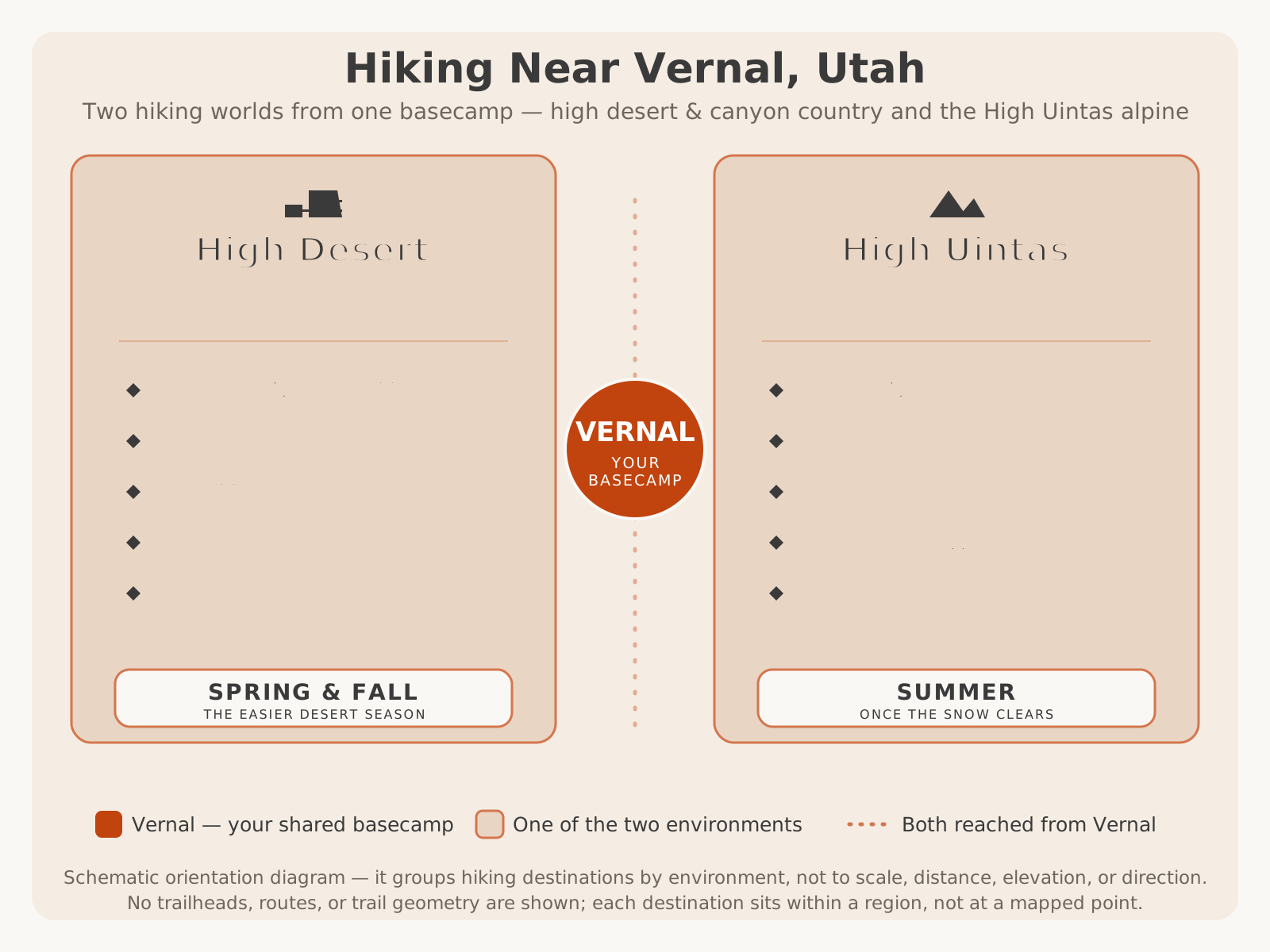
Common Wildlife
Before you head out, it helps to know the cast of characters you’re most likely to meet, and roughly where each belongs. Think of the region’s common wildlife in two broad groups — the animals of the high desert down low and the animals of the mountains up high — with the birds threading through both. What follows describes the animals hikers commonly encounter in each world and the habitats they favor; it is not a promise that you’ll see any particular one on any particular day.
In the high desert around Vernal, the monument, and the reservoirs, the animals hikers see most often include:
- Mule deer, the region’s signature large mammal, browsing washes, canyon bottoms, and brushy slopes, most visibly at dawn and dusk.
- Jackrabbits and cottontails, common in the sagebrush and along trail edges, especially in the cool hours.
- Lizards, basking on warm rock and darting across the trail through the heat of the day when the mammals have gone quiet.
- Ground squirrels, chipmunks, and other rodents, busy around rocks, brush, and the edges of developed areas.
- A rich variety of birds, from raptors overhead to songbirds in the brush and waterbirds along the rivers and reservoirs (see Bird Watching, below).
Up in the mountains of the High Uintas and Ashley National Forest, the common cast shifts entirely:
- Yellow-bellied marmots, the plump, whistling sentinels of the high boulder fields, often seen sunning on rocks.
- Pikas, small and quick, darting through the talus and rockslides with mouthfuls of grass — heard as often as seen.
- Mule deer and elk, browsing and grazing the meadows and forest edges, most active early and late.
- Moose, the giants of the mountain willows, wet meadows, and lakeshores — magnificent, and to be given a wide berth (see Safety).
- Squirrels, chipmunks, and mountain birds, constant companions in the forest and around the lakes.
You may, with luck and distance, glimpse larger or shyer animals in either world, but this guide won’t promise them — the joy of wildlife hiking is precisely that the country decides what it shows you. Because which specific areas and trails are open, and any seasonal advisories, are set by the managing agencies and change, VERIFY WITH OFFICIAL SOURCE (the National Park Service, Utah State Parks, and Ashley National Forest) for current conditions before you plan around a particular animal or place.
Bird Watching
For birders, Dinosaur Country is a genuine destination rather than an afterthought, and the reason is the same variety that makes the region so good for mammals: several distinct habitats sit close together, and each draws its own community of birds. A patient hiker with binoculars can build a long and varied list here in a single trip simply by moving between worlds.
The region’s best birding habitats each have their own character:
- River corridors and canyon bottoms along the Green and Yampa rivers in Dinosaur National Monument — shaded, water-rich ribbons that concentrate songbirds, waterbirds, and raptors, and among the most productive birding in the region.
- Reservoir shorelines at Red Fleet, Steinaker, and Flaming Gorge — open water and edges that draw waterfowl, shorebirds, and fish-eating raptors.
- High-desert sagebrush, cliffs, and canyons — open country for soaring raptors, cliff-nesting birds, and the birds of the sage.
- Mountain forests, meadows, and lakes in the High Uintas — an entirely different, higher-elevation community, from jays and nutcrackers to mountain bluebirds and the birds of the alpine.
The birder’s craft rewards the same habits as all wildlife hiking, only more so. Early morning is prime — birds are busiest and most vocal in the first hours after sunrise. Move slowly, stop often, and listen as much as you look; much of birding is hearing a bird before you find it. Watch the water and the edges, where activity concentrates. And carry binoculars — they turn a distant speck into a species. Because bird life shifts dramatically with the seasons and with which areas are open, treat any list as a starting point, come with patient expectations, and VERIFY WITH OFFICIAL SOURCE for current access before building a day around a specific birding spot. A dedicated regional bird-watching guide is a natural next step for this hub.
High Desert Wildlife
The high desert is where most wildlife hiking near Vernal begins, and its animals are shaped by one overriding fact: it is hot, dry, and exposed. The desert’s wildlife has adapted to survive that, and understanding those adaptations is the key to seeing animals here. The mammals largely disappear through the heat of the day — browsing, grazing, and moving in the cool of dawn and dusk and lying up in shade and cover when the sun is high — while the reptiles do the opposite, emerging to bask and hunt in the warmth the mammals avoid.
This is mule-deer country above all, and the deer are the animal most hikers come away having seen: browsing the canyon bottoms, washes, and brushy slopes early and late, often in the green ribbons near water. Jackrabbits and cottontails work the sagebrush and trail edges in the cool hours; lizards bask on sun-warmed rock through the day; and ground squirrels, chipmunks, and other rodents busy themselves among the rocks and brush. Overhead and along the cliffs, raptors ride the thermals, and the river corridors and reservoirs pull in a concentration of birds and mammals drawn to the water — the desert’s great gathering places for life.
The best desert wildlife hiking follows the desert’s own rhythm. Go early (or stay out late), when the mammals are active and the heat is bearable — this serves your wildlife-watching and your safety at once. Follow the water and the edges, where the canyon bottoms, riverbanks, and reservoir shores concentrate animals in an otherwise dry land. Move quietly and watch the shade and the brush, where animals rest out the heat. And carry far more water than you think you need, because the desert’s real hazard is not its animals but its heat and sun. For the monument’s desert trails in depth, see our best hikes in Dinosaur National Monument guide, and because access, sites, and any seasonal advisories change and are set by the managing agencies, VERIFY WITH OFFICIAL SOURCE (the National Park Service and Utah State Parks) before you go.
Mountain Wildlife
When summer bakes the desert, the high country offers a completely different wildlife world — cooler, greener, and home to animals you’ll see nowhere else in the region. North and west of Vernal, the High Uintas and Ashley National Forest rise into forest, meadow, lake basin, and open tundra, and each of those bands holds its own life. For many hikers, the mountains deliver the region’s most memorable wildlife encounters.
The signatures of the high country are the animals of rock and meadow. Marmots — plump, sun-loving, and quick to whistle a warning — are the classic sight of the alpine boulder fields, often lounging on a prominent rock. Pikas, their smaller neighbors, dart through the talus and rockslides with mouthfuls of grass and are frequently heard before they’re seen. In the meadows and forest edges, mule deer and elk browse and graze early and late, and in the willow thickets, wet meadows, and lakeshores lives the giant of the range: the moose, magnificent and genuinely to be respected (see Safety). Around it all move squirrels, chipmunks, and a mountain community of birds, from bold jays to the birds of the alpine.
Mountain wildlife hiking rewards patience and an early start most of all. The animals are most active in the cool mornings and evenings; the middle of a summer day is quieter — and, crucially, that’s when the afternoon thunderstorms build, so being high early and heading down as the clouds gather serves both your safety and your wildlife-watching. Move slowly along the edges of meadows and lakes, glass the open slopes and boulder fields for marmots, and listen for pikas in the talus. Keep a very wide distance from moose. For the full range of alpine day hikes and lake basins, see our High Uintas day hikes guide and our alpine lakes hiking guide, and because roads, trailheads, and areas open and close with the short mountain season, VERIFY WITH OFFICIAL SOURCE (Ashley National Forest) before building a day around a particular spot.
Desert vs Alpine Wildlife
The two worlds offer genuinely different wildlife experiences, and the smart move is often to hike both on a single trip — one for each kind of weather and each cast of animals.
| Desert Wildlife Hiking | Alpine Wildlife Hiking | |
|---|---|---|
| Where | Around Vernal, Dinosaur National Monument, and the reservoirs | Up in the High Uintas and Ashley National Forest |
| Signature animals | Mule deer, jackrabbits, lizards, rodents, river-and-cliff birds | Marmots, pikas, deer, elk, moose, alpine birds |
| Best seasons | Spring and fall; summer at dawn only | High summer into early fall |
| Where to look | Canyon bottoms, washes, riverbanks, reservoir shores, shade | Meadow edges, lakeshores, willow thickets, boulder fields, talus |
| Main comfort factor | Heat, sun, dehydration — hike early, carry water | Altitude and afternoon storms — start early, pack layers |
| Best for | Year-round base, easy access, desert species | Escaping summer heat, mountain and alpine species |
Best Times of Day
If you remember only one thing about wildlife hiking here, make it this: time of day matters more than trail choice. The same trail that seems empty of animals at noon can be alive with them at dawn. Most of the region’s mammals are crepuscular — most active in the cool, low light of early morning and late evening — and they lie up in shade and cover through the heat of the day, especially in the desert. The animals aren’t gone at midday; they’re resting, hidden, and waiting for cool.
That makes early morning the single best window for wildlife hiking. The air is cool, the light is soft and golden, the animals are moving and feeding, the birds are at their most vocal, and — as a bonus — you beat both the desert heat and the mountains’ afternoon storms. Late afternoon into dusk is the second great window, as animals emerge again to feed in the cooling light. Midday, by contrast, is the quiet time for mammals: it’s the hour to rest in the shade, watch for lizards on the warm rock, swim at a reservoir, or simply enjoy the scenery, saving your wildlife hopes for the edges of the day.
The craft, then, is to be on the trail at first light or in the last hours before dark, move slowly and quietly, and let the animals keep to their routine rather than chasing them across the heat of the day. Watch for wildlife on the roads, too, at dawn and dusk, when you’re driving to and from trailheads and animals are crossing. Remember that animal activity varies with season, weather, and place, so treat these as reliable patterns rather than promises.
Sunrise vs Sunset Hiking
Both ends of the day are golden for wildlife, and each has its own advantages — the best trips often use both.
| Sunrise Hiking | Sunset Hiking | |
|---|---|---|
| Wildlife activity | Peak — animals feeding after the cool night; birds most vocal | Strong — animals emerging to feed in the cooling light |
| Temperature | Coolest of the day; ideal in the summer desert | Warm cooling to comfortable; can still be hot early in the desert |
| Light for photos | Soft golden light; calm air and still water for reflections | Warm golden light; often more dramatic color and clouds |
| Storm safety (mountains) | Best — the calm window before afternoon storms build | Requires care — be sure storms have cleared before heading up |
| Crowds & parking | Emptiest trails; easiest parking; most solitude | Quiet, but plan your return in fading light |
| Main watch-out | Cold start up high; a truly early alarm | Finishing in the dark — carry a headlamp and know your route |
Seasonal Wildlife
Wildlife hiking changes character through the year, because the animals themselves change with the seasons — where they are, how they behave, and how visible they are all shift as the calendar turns. Matching your trip to those rhythms, and to the region’s elevation ladder, is how you find animals rather than empty trails.
Spring brings the desert to life as the country greens and warms: it’s a comfortable, active season down low, while the high country is still snowbound and slow to wake. Summer splits the region in two — the desert bakes, pushing its animals to the cool edges of the day and its hikers to dawn starts, while the high country comes into its prime, with the alpine season running roughly July into September and the mountain animals active in the cool air. This is also the season of young animals in many species, which is a joy to witness and a reason for extra distance and care around protective mothers. Fall is many locals’ favorite for wildlife: the desert turns comfortable again, and up high the cooling weather and the fall rut make deer, elk, and moose more active and more visible — while also more unpredictable, so fall is the season to be most disciplined about distance. Winter quiets the region, concentrating animals at lower elevations and turning most high-country trails over to snow.
Because most visitors hike in summer and fall, and because those two seasons offer real trade-offs for wildlife, it helps to compare them directly.
| Summer | Fall | |
|---|---|---|
| Desert wildlife | Active only at the cool edges of the day; midday is quiet | Comfortable and active more of the day; an easier desert season |
| Mountain wildlife | Prime alpine season; marmots, pikas, deer, elk, moose active | Rut makes deer, elk, and moose more active — and less predictable |
| Behavior note | Young animals about — keep extra distance from mothers | Rutting season — give elk and moose an especially wide berth |
| Best strategy | Dawn in the desert, or head up to the cool high country | Comfortable desert days; high country closing as snow returns |
| Scenery bonus | Green meadows, full lakes, wildflowers, long days | Gold aspens, low warm light, thinner crowds |
| Main watch-out | Desert heat; mountain afternoon storms | Early snow up high; cold mornings; more unpredictable large animals |
Photography Ethics
Wildlife hiking and wildlife photography go hand in hand here, and the region offers extraordinary, honest images no stock library can match — a marmot on an alpine boulder, a mule deer in a desert wash at first light, an elk in a misty meadow. But a camera in hand changes behavior, usually for the worse, so the first rule of wildlife photography is also the most important: the animal’s welfare always outweighs the photo. A great picture is never worth stressing, displacing, or endangering a wild animal — or yourself.
That principle turns into a handful of concrete habits:
- Keep your distance and use your lens, not your feet. Let a long lens or your camera’s zoom do the work of getting close. If an animal stops feeding, freezes, stares, or moves away because of you, you are too close — back off.
- Never bait, feed, call in, or chase. Luring or pursuing an animal for a shot is harmful and, in many places, against the rules. The best photos are of animals behaving naturally, undisturbed.
- Give young, nests, and dens a wide berth. A mother with young — a cow moose especially — is both the most sensitive and the most dangerous subject. Photograph from a great distance, or not at all.
- Never surround or corner an animal, and never block its escape route. Give it room and an easy way out at all times.
- Shoot the golden hours. Early morning and late evening give the soft, warm light that flatters wildlife and are when animals are most active — the ethical and the aesthetic align perfectly.
- Stay on the trail and on durable ground, and leave no trace. Trampling habitat for an angle harms the very place you came to photograph.
- Respect fossils, rock art, and the land as much as the animals — never touch or alter anything to improve a frame.
Held to these habits, wildlife photography becomes part of watching responsibly rather than a reason to break the rules. A wild animal at a respectful distance, behaving naturally, makes a better and more honest photograph than a stressed one up close — and it leaves the animal, and the next hiker’s chance to see it, unharmed. Because specific photography and wildlife rules are set by the managing agencies and can change, follow all posted guidance and VERIFY WITH OFFICIAL SOURCE where you’re hiking. (A dedicated photography-hikes guide is a natural companion to this one.)
Viewing Wildlife Responsibly
Everything about wildlife hiking comes back to one idea: we are visitors in these animals’ home, and the goal is to watch without changing what we watch. Responsible viewing isn’t a set of restrictions that get between you and the wildlife — it’s the very skill that lets you see more, because animals that aren’t frightened or harassed stay in view, keep to their routines, and reveal their natural behavior. The ethic and the experience are the same thing.
The core of it is distance. Keep a respectful, generous distance from every animal, and let its comfort set that distance rather than your desire for a closer look. A simple, reliable test: if your presence changes an animal’s behavior — if it stops feeding, tenses, stares, or moves off — you are too close, and you should quietly back away. Give the largest animals the most room of all, and give any mother with young, and any animal in the fall rut, a very wide berth.
Around that core sit a few more habits that define responsible viewing:
- Never feed wildlife, ever. A fed animal learns to associate people with food, grows bold, and often ends up in danger or destroyed. Keep food controlled at picnics and pack out every crumb.
- Never approach, chase, or crowd an animal to get a better view or photo, and never surround one or cut off its escape.
- Watch quietly and let them be. Move slowly, keep voices low, and resist the urge to make an animal react. The reward for stillness is more, not less, to see.
- Keep dogs under control where they’re permitted, and be aware they can stress or provoke wildlife.
- Teach kids the simple rule: we watch, we don’t touch, feed, or chase (see Family Considerations).
- Leave no trace and stay on durable ground, so the habitat that draws the animals stays intact.
Watched this way, wildlife hiking gives back far more than it takes — better sightings for you, no harm to the animal, and an unspoiled experience for the next hiker. Because specific viewing guidance and any seasonal advisories are set by the managing agencies and can change, VERIFY WITH OFFICIAL SOURCE (the National Park Service, Utah State Parks, and Ashley National Forest) for the current rules before your trip.
Safety
Wildlife hiking here is very safe when you respect a short list of realities — and it’s worth saying plainly that the region’s most common real hazards are not its animals but its heat, sun, dehydration, altitude, and weather. Manage those first, then add a little wildlife awareness, and you keep both yourself and the animals out of trouble.
- Keep your distance from every animal. The golden rule of viewing is also the golden rule of safety: never approach, crowd, or feed wildlife. Most problems come from people getting too close.
- Give moose the most space of all. In the mountain willows, wet meadows, and lakeshores, moose are far bigger, faster, and more unpredictable than they look. A cow with a calf, or a bull in the fall rut, is best avoided entirely — detour widely and never get between a moose and its calf or its escape route.
- Respect elk and deer, especially in fall. Large animals in the rut are more active and less predictable; keep well back.
- Watch your hands and feet in the desert. Rattlesnakes live in the high desert — watch where you step and where you place your hands on warm rock and ledges, and never reach blindly. Give any snake a wide berth and let it move off.
- Don’t let wildlife draw you into danger. Don’t scramble onto cliffs, into water, or off-trail chasing a photo or a closer look; the terrain hurts far more hikers than the animals do.
- Store food properly if you camp between hikes — secured, never in your tent — so you don’t teach animals to raid camp. See our camping guide.
- Beat the heat and the storms. Start early, carry more water than you think you need, use real sun protection in the desert, and be off exposed high ground before the afternoon thunderstorms build in the mountains.
- Watch the roads at dawn and dusk. The same low-light hours that are best for wildlife are when animals cross roads — drive slowly and stay alert on the way to and from trailheads.
Family Considerations
Wildlife hiking may be the single best way to get kids excited about a trail — for a child, spotting a wild marmot, deer, or lizard can be the highlight of an entire trip, and the search itself gives kids a reason to hike quietly and pay attention. The good news is that the same habits that make for good wildlife watching make for good family hiking, and Dinosaur Country is unusually generous with easy, animal-rich walks that suit young children and grandparents alike.
A few things make a family wildlife hike work. Keep it short and go early, when the animals are active and the day is cool — a dawn start is worth more than any distance. Turn spotting into a game: give kids a list of animals to look for, let them use (child-safe) binoculars, and let them be the ones to find the marmot or the deer. Watch the edges — meadow rims, lakeshores, canyon bottoms, and reservoir shallows — where animals concentrate and kids can watch from a comfortable distance. And above all, teach the core ethic in words a child can hold onto: we watch, we don’t touch, feed, or chase. Kids who learn respect for wildlife on a trail like this tend to keep it for life.
Safety with children is mostly the grown-up rules, applied a little more carefully. Keep kids close, keep the whole group well back from every animal, and give the big animals — moose especially — a very wide berth; a family should simply detour around a moose, never toward it. Watch children near water, cliff edges, and warm desert rock where snakes may be, and never let excitement over an animal pull a child off the trail or too close. For gentle, wildlife-rich trails and the full art of hiking here with children and multi-generational groups, see our dedicated family hiking near Vernal guide, and for more kid-focused ideas around town, fun things to do in Vernal with kids.
Family Wildlife Hikes vs Remote Wildlife Hikes
Wildlife hiking here spans a wide range, from gentle walks perfect for kids to committing backcountry trips for experienced hikers. Choosing the right end of that range for your group is the key to a good day.
| Family Wildlife Hikes | Remote Wildlife Hikes | |
|---|---|---|
| Where | Reservoir shores, canyon bottoms, meadow and campground walks near roads | Deep desert loops and high basins in the backcountry and wilderness |
| Effort | Short, gentle, forgiving; drive-up viewpoints and easy trails | Long, rugged, high, and committing; real distance from help |
| Wildlife on offer | Deer, marmots, lizards, rodents, and abundant, easy-to-watch birds | The same plus a better chance at shyer animals and true solitude |
| Best for | Kids, grandparents, first-timers, casual nature lovers | Experienced, fit, well-prepared hikers and photographers |
| Main watch-outs | Sun, heat, water, and keeping kids back from animals and edges | Altitude, storms, remoteness, no cell service, self-reliance |
| Payoff | Easy wonder and a genuine “wow” close to the trailhead | Solitude, wild country, and animals behaving undisturbed |
Accessibility
The good news for visitors with limited mobility or stamina is that some of the region’s most rewarding wildlife watching happens close to the road, because the water and the edges that concentrate animals are often reachable with little walking. Reservoir shorelines, developed day-use areas, drive-up viewpoints, and short, well-graded paths can put birds, waterfowl, and browsing mammals within reach of hikers who can’t manage rugged trails — and a car itself makes an excellent, low-impact wildlife blind at dawn and dusk along the region’s scenic drives.
The most accessible wildlife experiences tend to be the developed reservoir and river-access areas, short paved or well-graded interpretive paths, and roadside viewpoints and pullouts, where you can watch water and meadow edges with binoculars from close to the parking area. By contrast, the remote desert loops and the high basins and wilderness trails cross uneven, rocky, sometimes steep ground and are not uniformly accessible.
Because specific accessible facilities, paved surfaces, viewpoints, and trail conditions vary by site and change over time — and because accessibility needs are personal — anyone in your group with particular mobility requirements should VERIFY WITH OFFICIAL SOURCE (the National Park Service, Utah State Parks, and Ashley National Forest) for the current accessible options before you go. Pairing an accessible viewpoint or shoreline with a slow, early-morning scenic drive is often the best way for a mixed-ability group to watch wildlife together from close to the road.
Weather
Weather shapes wildlife hiking twice over: it governs your own safety, and it governs where the animals are and how they behave. The region serves up two very different sets of conditions, and reading them is how you both stay safe and find animals. In the desert, the story is heat and sun: much of the year the low country is hot and exposed with little shade, which is exactly why the mammals retreat to cover at midday and move at the cool edges of the day — so the weather that challenges you also tells you when to hike. In the mountains, the story flips to cool air and storms: the high country is pleasant even in summer but prone to near-daily afternoon thunderstorms, with lightning, wind, rain, hail, and a fast temperature drop.
The response to both is the same simple discipline that also happens to be best for wildlife: start early. An early start beats the desert heat, catches the calm mountain morning before the storms build, lands you on the trail during the prime dawn wildlife window, and gives you the margin to move slowly and turn back with time to spare. In the desert, hike the cool morning, carry ample water, and treat midday summer heat as a reason to rest, swim, or head for the high country. In the mountains, be reaching your goal by late morning and heading down as the clouds gather, pack layers and rain gear even on a warm morning, and remember that snow can fall at elevation in any month.
Above all, stay flexible: the high-desert and alpine weather can shift fast, so check the most current local forecast close to your departure, keep a shadier or lower-elevation option in your back pocket, and never hesitate to change the plan. Because conditions change constantly, VERIFY WITH OFFICIAL SOURCE for current conditions before you go. Our Vernal weather guide covers the region’s month-by-month patterns — heat, cold, and afternoon storms — in detail.
Planning Tips
Pull it all together into a simple, flexible wildlife-hiking plan:
- Hike the right habitat at the right hour. Match the animals you hope to see to their world — desert or mountain — and be on the trail at dawn or dusk, when wildlife is most active. Time of day matters more than trail choice.
- Watch the edges, and go slow. Wildlife concentrates where habitats meet — forest and meadow, water and shore, canyon and cliff. Quiet, patient, slow walking beats covering distance every time, and stopping often is a skill.
- Bring binoculars and patience. Optics turn a distant speck into a scene, and patience turns an empty hillside into a sighting. Come for the country and the quiet, and treat every animal as a bonus.
- Chase comfortable temperatures — and different wildlife — with elevation. Hike the mild desert in spring and fall, go early on summer desert mornings, and head up to the cool High Uintas when the valley bakes. There’s good wildlife hiking somewhere near Vernal much of the year.
- Keep your distance and never feed. Give every animal room, give moose and elk the most room of all, and let the animal’s comfort set the distance. If it reacts to you, back away. This ethic is also what lets you see more.
- Start early and pack for range. An early start serves your safety and your wildlife-watching at once. Overpack water, sun protection, layers, and snacks, and carry a map — cell service is unreliable across much of the region.
- Base in Vernal and build a full trip. Vernal is the region’s gateway and nearest full-service town. Pair your wildlife hikes with camping in Dinosaur Country, a scenic drive at dawn, and the rest of things to do in Vernal. Coming from out of state? See our Salt Lake City to Vernal guide.
- Verify the details that change — every time. Trail access, area and seasonal closures, fees, and any wildlife advisories are set by the National Park Service, Utah State Parks, and Ashley National Forest and change constantly. VERIFY WITH OFFICIAL SOURCE before you go, and read the companion guides: our best hikes in Dinosaur National Monument, High Uintas day hikes, and alpine lakes hiking, plus the Red Fleet and Flaming Gorge guides.
Approached with the right habitat, the right hour, and the right ethic, wildlife hiking near Vernal offers something rare: genuine wild animals — deer and lizards in the desert, marmots, elk, and moose in the mountains, and birds threading through both — watched respectfully in their own home, across a region compact enough to sample every world in a single trip. Keep your distance, hike the golden hours, watch the edges, and let this remarkable country show you what it will. For scenery-first hikers, our alpine lakes guide is the natural next step; for those chasing a real challenge, our Kings Peak hiking guide leads to the roof of Utah. And when you want to trade the trail for a guided backcountry adventure into country you’d never reach on foot, book a UTV tour with Adventure Tours Vernal and let Dave and Trudy show you Dinosaur Country up close.