Key Takeaways
- Spring climbs up the mountain. The low desert — Vernal, Dinosaur National Monument, Red Fleet, and the lower gorge — wakes first and offers the earliest reliable spring hiking, while the high country stays snowbound for weeks longer. Follow the thaw upward through the season.
- Mountain “spring” is late — often early summer. The High Uintas and upper Ashley National Forest hold deep snow, then a muddy, high-water melt-out, and only become good hiking late in spring. Don’t drive up to a high trailhead winter isn’t finished with.
- Expect mud, snowmelt, and swinging weather. Spring trails can be dry, muddy, snowy, or crossing cold, high water — and the weather can flip from warm sun to wind or snow in a day. Bring waterproof footwear, layers, sun protection, and flexibility.
- Never promise yourself wildflowers or a peak. Blooms are weather-driven and vary hugely year to year; high roads and trailheads open on the agencies’ schedule. Come for the whole spring, keep a lower backup, and treat great color as a gift.
- Verify the details that change. Snowmelt, trail drying, high water, bloom timing, wildlife closures, and road openings shift every year and are set by the managing agencies — VERIFY WITH OFFICIAL SOURCE before every spring hike.
Why Spring Hiking is Special
Spring is the season when Dinosaur Country comes back to life, and hiking it means walking through a landscape that is visibly, daily changing. If winter is about staying low and still, and fall is about chasing color down the mountain, spring is about following the thaw up it, and watching the country wake as you go. A few things set the season apart.
First, it is a transition, not a state. Where summer and winter are relatively stable, spring is a moving front — a line of melting snow, greening ground, and returning life that climbs from the desert floor to the high peaks over many weeks. There is no single “spring” here: it’s early spring in the desert while it’s still deep winter up high, and a late spring in the mountains that overlaps with early summer in the valleys. Hiking spring well is about reading where that front is and meeting it at the right elevation.
Second, the awakening itself. After the quiet of winter, the desert turns green, washes run with snowmelt, birds return, animals raise their young, and — in a good year, at the right time — wildflowers appear. Spring is the only season that offers the pleasure of watching a landscape you know come back to life.
Third, comfort and daylight. In the low desert, spring hits a sweet spot before the summer heat — mild temperatures that make midday hiking pleasant, on trails that will be punishing in a couple of months. And the days are growing long again, reversing the tight, dark windows of winter and fall, taking the time pressure off and opening up longer outings.
Fourth, the honest one, unpredictability. Spring is the most changeable season here: weather can swing from warm sun to wind, rain, or snow within a day; trails move through a muddy transition; snowmelt sends cold, high water down the washes; and the high country’s schedule is set by a winter that doesn’t end on any calendar date. Spring rewards flexibility above all — a willingness to move up or down the mountain and take the season as it comes.
Put together, spring offers a front-row seat to a whole region waking up, on comfortable desert trails under lengthening days, with the peaks still white on the horizon. This is the seasonal companion to our broader hiking hub: where our fall and winter guides own the slide into and through the cold, this one owns the thaw.
Spring Weather Patterns
Spring weather in Dinosaur Country is best understood as change, layered on elevation. The region’s defining spring feature is that no two elevations are in the same season at the same time — and that the weather at any of them can shift fast. As a general pattern, the low desert around Vernal, Dinosaur National Monument, and the reservoirs warms first and most reliably, moving into pleasant, mild hiking weather while the high country of the High Uintas and upper Ashley National Forest is still holding winter’s cold and snow.
Within that pattern, spring is the season of the swing. A spring day in the desert can begin cold at a frosty trailhead, warm into shirtsleeve hiking by midday, and turn windy or stormy by afternoon. Late-season snow is entirely possible, especially early in spring and at any elevation with a passing storm, and wind is a frequent companion in the open country. Up high, winter conditions persist far longer than the calendar suggests, and mountain weather can turn severe quickly even as the valleys bask.
Spring also brings water and mud into the weather story like no other season. As the snow melts, the ground softens and trails turn muddy through a transitional “mud season,” and snowmelt sends cold, sometimes high water down the washes, creeks, and rivers. A warm spell can raise water levels quickly; a cold snap slows everything down. That’s why the same spring trail can be firm and dry one week and a muddy, running mess the next.
The single most important spring-weather habit is to check the current, local, elevation-specific forecast close to your departure — and plan for it to change. Don’t let a warm valley forecast lull you into underpacking for the mountains or an afternoon storm. Because the specifics — temperatures, storm timing, snow levels, wind, and snowmelt — change constantly every spring and are managed by the official sources, this guide gives you the patterns, not numbers to bank on. VERIFY WITH OFFICIAL SOURCE (the National Park Service, Utah State Parks, Ashley National Forest, and the National Weather Service) for the current forecast at the elevation you’re headed to, and read our Vernal weather guide for the region’s month-by-month patterns.
Where Spring Arrives First
If there’s one idea that organizes a spring hiking trip, it’s this: spring arrives first down low, and climbs the mountain from there — the mirror image of fall. Where autumn color starts high and descends, spring’s greening, drying, and warming start in the desert and ascend, so the season plays out at different elevations at different times, and there’s almost always good spring hiking somewhere if you meet the thaw at the right height.
That elevation ladder maps neatly onto the region’s two hiking worlds — spring greens the low desert first, then climbs toward the alpine — so it helps to picture where each destination sits:
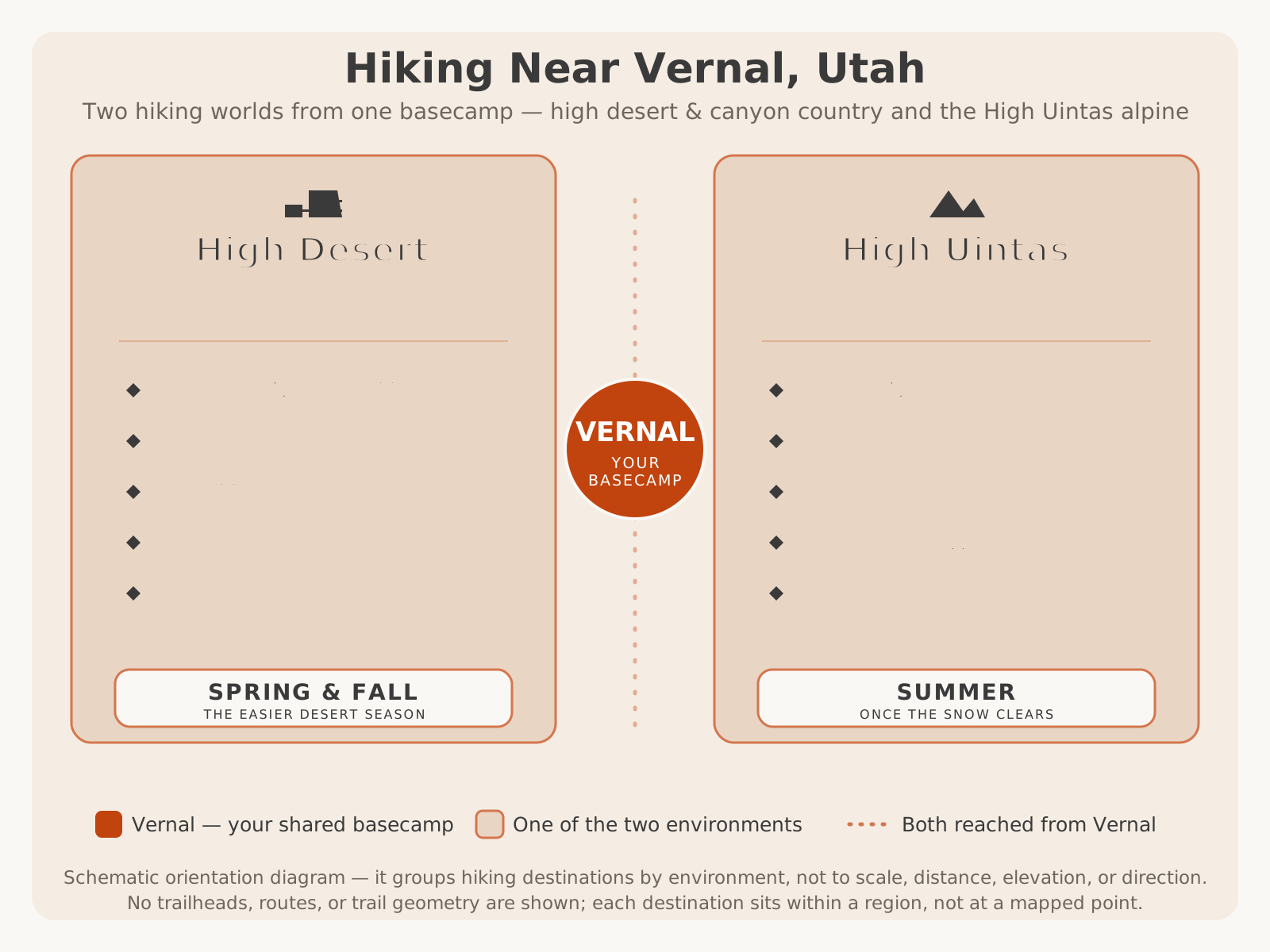
The low desert leads. The valleys and canyon country around Vernal, Dinosaur National Monument, Red Fleet, and lower Flaming Gorge are the first to shake off winter — warming, greening, and drying into walkable trails weeks before the high country does. This is where the earliest reliable spring hiking is found, and where the comfortable window is longest before summer heat sets in.
The foothills and mid-elevations follow. As spring settles into the desert, the thaw works up into the foothills and middle elevations — the transition zone where snow is retreating, trails are drying unevenly, and mud season is often in full swing. This band is a moving target: great one week as it dries out, muddy or snow-patched the next after a storm.
The high country comes last. The upper Ashley National Forest and the High Uintas hold their snow long after the valleys are green, melting out on their own slow schedule — commonly late in spring and into early summer, and later still in a heavy-snow year. Higher, shadier, and north-facing slopes keep snow longest of all. For much of spring, the high country is effectively still in winter, and any hiking there is really the start of summer.
The strategy that falls out of this is simple and powerful: start low early in the season, and follow the thaw up. Hike the desert while it’s at its spring best, then move higher as the weeks pass and the snow line retreats — rather than driving up to a high trailhead that winter hasn’t finished with. Because where the thaw has reached changes every year, VERIFY WITH OFFICIAL SOURCE for current conditions at your target elevation before you go.
Early Spring vs Late Spring
Spring is long and it changes character completely from beginning to end, so “spring hiking” means something very different depending on when you come. Knowing where you are in the season — and where the thaw has climbed to — sets the right expectations.
| Early Spring | Late Spring | |
|---|---|---|
| Where the hiking is | Low desert only — valleys, canyons, reservoir shores | Desert plus foothills and, late, the melting-out mid and high country |
| High country | Still deep winter — snowbound and closed to ordinary hiking | Melting out; mud season and high water; opening late and unevenly |
| Trail conditions | Desert drying; possible late snow and cold; some mud after storms | Widespread mud season; snowmelt and high water; lingering high snow |
| Greening & blooms | Desert first to green; earliest low-elevation flowers (never guaranteed) | Green and any blooms climbing the mountain; longer, moving flower season |
| Weather | Coldest, most winter-like of spring; big daily swings | Warmer in the desert; still changeable; afternoon storms possible |
| Best approach | Stay low, take the mild desert window, expect winter to linger | Chase the thaw upward; verify high routes; mind mud and water |
Desert Spring Hiking
The lower desert is the heart of spring hiking near Vernal, and for a stretch of the season it may be the best hiking of the year. As winter loosens its grip, the desert country around Vernal, the canyons of Dinosaur National Monument, and the red-rock shores of Red Fleet warm, green, and dry into comfortable, walkable trails — early, while the high country is still buried. This is the earliest reliable spring hiking in the region, and it lands in a genuine sweet spot.
The appeal is specific. Temperatures are mild — warm enough for pleasant midday hiking, before the summer heat that will make these same trails punishing in a couple of months. The days are getting long, reversing winter’s tight windows. The desert turns green and comes alive, trading winter’s starkness for fresh growth, running washes, birdsong, and — in a good year, at the right time — early low-elevation wildflowers. And the crowds haven’t arrived, so trails are quiet before the summer rush.
Spring does ask a little care, though. Storms can leave trails muddy, and desert mud is both slippery and easily damaged — more on the ethics of that below. Snowmelt and rain can send water down the normally dry washes, sometimes quickly, so low canyon bottoms deserve respect. And the weather can swing, so even a warm desert forecast calls for layers and a look at the sky.
For most of spring, and for most visitors — families, beginners, photographers, wildlife watchers, and experienced hikers alike — the desert is the right answer, and it’s where the bulk of this guide’s recommendations point. Because desert trail and wash conditions change with every storm and warm spell, VERIFY WITH OFFICIAL SOURCE for current conditions before you go.
Mountain Spring Hiking
The mountains come to spring last, and setting honest expectations about them is one of the most useful things this guide can do — because “spring hiking in the mountains” is often a misnomer. For much of the season, the upper Ashley National Forest and the High Uintas are not in spring at all — still in winter, well after the valleys have turned green.
The high country’s spring unfolds in slow stages. First comes lingering deep snow — the winter snowpack holds on for weeks or months, especially on higher, shadier, north-facing slopes, keeping trails buried and roads closed. Then comes the melt-out, a muddy, water-logged transition when snow is retreating but the ground is saturated and snowmelt sends cold, often high water down the creeks. Only after that does the high country dry into good hiking — commonly late in spring and into early summer, later in a heavy-snow year.
That timeline drives the planning. The mountain roads, trailheads, and passes that reach the good high country open on the managing agencies’ schedule, not the calendar’s, often late in spring — so a high trailhead you’re eyeing may be gated or snow-blocked well into the season. Lingering snow can hide the trail and make footing tricky. And the high, cold snowmelt water in the streams is a genuine spring hazard, discussed in the safety section below — never to assume, always to verify, never to force.
The response is the one this guide keeps returning to: chase spring up the mountain. Take the desert early, and move higher only as the thaw and the official openings catch up — verifying that a specific higher trail or road is actually clear, open, and safe before you commit, and always keeping a lower backup. Treat the high country in spring as a late-season and early-summer reward. Because high-country snowmelt, trail status, high water, and road openings change every year, VERIFY WITH OFFICIAL SOURCE (Ashley National Forest and the National Park Service) before you drive up. For the mountains at their summer and fall best, our High Uintas day hikes and alpine lakes hiking guides are the natural next step once the snow is gone.
| Desert Spring Hiking | Mountain Spring Hiking | |
|---|---|---|
| Where | Vernal, Dinosaur National Monument, Red Fleet, lower Flaming Gorge | Upper Ashley National Forest, High Uintas, higher gorge country |
| When it’s good | Early and through much of spring — first to wake, before summer heat | Late spring into early summer — after the melt-out |
| Typical conditions | Warming, greening, drying trails; some mud and running washes | Lingering snow, then muddy melt-out and high, cold water |
| Access | Lower roads and trailheads open earliest; still verify | High roads and trailheads open late, on the agencies’ schedule |
| What it takes | Layers, waterproof footwear, sun protection, flexibility | The above plus traction, routefinding on snow, water sense — later in season |
| Best for | Nearly every spring visitor, most of the season | Prepared hikers late in spring, following the thaw up |
Best Spring Hiking Areas
The region’s spring hiking sorts into a handful of areas that come into season in sequence, from the low desert that wakes first to the high country that melts out last. Rather than name exact trails and mileage — which change with conditions, and which the linked destination guides describe best — here’s the spring character of each, low to high, so you can match the area to where the thaw has reached. Conditions vary daily and access is never guaranteed.
Dinosaur National Monument
Dinosaur National Monument is the anchor of spring hiking near Vernal. As the high country stays locked in snow, the monument’s lower canyons, river corridors, and desert trails are among the first in the region to warm, green, and dry into comfortable walking — spring trades summer’s heat and crowds for mild temperatures, fresh growth, active wildlife, and the singular sight of green desert and running washes against red rock, fossils, and ancient rock art. That said, spring changes the monument: some roads, trails, and facilities transition from winter to summer operations on their own schedule, washes and the river can run high with snowmelt, and trails can be muddy after storms. VERIFY WITH OFFICIAL SOURCE (the National Park Service) for current spring hours, road and trail access, water conditions, and facility status before you visit.
Red Fleet
Red Fleet State Park, just north of Vernal, is a compact, close-to-town spring option built around a red-rock reservoir. As the season warms, its shoreline turns green against the deep-red sandstone, and the park offers short, accessible spring walks and striking photography before the busy summer boating season arrives — an easy choice for an early-season hike, a family outing, or a golden-hour walk under the lengthening days. As everywhere in spring, expect variable footing after storms, changeable weather, and a shift from off-season to summer services. VERIFY WITH OFFICIAL SOURCE (Utah State Parks) for current spring hours, access, and conditions before you go.
Flaming Gorge
Flaming Gorge spans a wide range of elevations, so in spring it comes into season in stages. The lower canyon-and-shoreline country warms and opens earlier, offering accessible spring walking against the gorge’s dramatic red rock and deep blue water, with crowds still light. The higher forested country around and above the gorge holds winter longer and moves through the same late, muddy, high-water melt-out as the rest of the high country. Spring here rewards the same elevation awareness as the region as a whole: take the lower areas early, and treat the higher country as a later-spring-into-summer destination. VERIFY WITH OFFICIAL SOURCE (the U.S. Forest Service and Utah State Parks) for current road, trail, and facility status before you go.
Ashley National Forest
Ashley National Forest is a study in elevation, and in spring it melts out from the bottom up. Its lower margins and foothill country may offer some of the earliest forest spring hiking where roads are open and trails are drying, often through a muddy transition. But the bulk of the forest climbs into high country that holds snow long into the season and comes to spring late — lingering snow, a saturated melt-out, and high, cold runoff — with many roads, byways, and trailheads opening only late in spring. For much of the season, the forest is best enjoyed from its lower edges and the open, maintained roads, with the higher terrain saved for late spring and summer. Because forest road openings, trail status, and snowmelt change every year, VERIFY WITH OFFICIAL SOURCE (Ashley National Forest) for current access and conditions, and see our camping guide for how the forest’s facilities open seasonally.
High Uintas
The High Uintas are the region’s high, wild heart, crowned by Kings Peak at 13,528 feet, the highest point in Utah — and in spring they are the last place to let go of winter. For most of the season the roads, trailheads, and passes that reach the range remain snow-blocked, the high basins and peaks stay deep in snow, and any travel there is winter or early-season mountaineering with snow and, in places, avalanche hazard — beyond the scope of this guide. Only late in spring and into early summer does the range begin to open to hikers, and even then snow lingers high and water runs cold and fast. For most of spring, the right way to enjoy the Uintas is from a distance — as the white skyline behind your greening desert hikes — and to save their trails for the melt-out and summer. If you’re a trained early-season mountain traveler, plan through the official sources and current avalanche information. VERIFY WITH OFFICIAL SOURCE (Ashley National Forest and the regional avalanche center) for all high-country conditions before you go.
Wildflowers
Spring’s most famous promise is wildflowers, and the first thing to say plainly is that this is a spring hiking guide, not a wildflower guide, and we will never guarantee you a bloom. Wildflowers here are a living, weather-driven event, and treating them as a scheduled attraction is the surest way to be disappointed.
Here’s the honest pattern. Like everything else in spring, the flowers generally begin low and early in the desert and climb the mountain over the following weeks, so there can be blooms somewhere across a long stretch of the season. But whether it’s a good flower year at all, how intense the display is, and when it peaks depend on the winter’s moisture, the spring’s temperatures, and elevation — and they vary enormously year to year. A slope that is a carpet of color one spring can be sparse the next; a warm spell can rush a bloom and end it early; a dry winter can mute the whole show. There is no date to bank on.
So the way to enjoy wildflowers here is to come for the whole spring and treat flowers as a gift, not a guarantee. Build a trip around the season’s reliable pleasures — mild temperatures, longer days, green desert, active wildlife, quiet trails — and let any color you find be a bonus. Watch current conditions before you travel, stay flexible, and follow the blooms up the elevation ladder if you’re chasing them.
When you do find flowers, tread lightly. Stay on the trail rather than trampling in for a closer look, never pick wildflowers, and give the fragile desert ground — especially delicate biological soil crusts — a wide berth; the next hiker deserves to find them too. Because bloom timing changes every year, VERIFY WITH OFFICIAL SOURCE for current conditions, and never build a non-refundable trip around catching a bloom. (A dedicated wildflower hiking guide is a natural future companion to this one.)
Wildlife Activity
Spring is the busiest, most alive season in the animal world, which makes it one of the most rewarding — and most sensitive — times to watch wildlife from the trail. After the hardship of winter, the country fills with activity: animals move back up out of the low winter range as the high country greens, migratory birds return in waves, and, above all, spring is the season of new young. A quiet, respectful hiker may see deer and elk on fresh green range, a variety of returning and nesting birds, and the general bustle of a landscape raising its next generation.
But spring’s new life raises the stakes on responsible wildlife watching, because this is the season when disturbance does the most harm. Animals are courting, nesting, giving birth, and raising vulnerable young, with little margin for stress. The most important spring rule follows: keep a very wide distance from all wildlife, never approach, follow, or crowd animals, and give an especially wide berth to young animals and nesting birds. In particular, never approach or “rescue” a young animal that appears to be alone — a fawn or newborn left still and quiet is very often exactly where its parent meant to leave it, with the adult nearby and watching, and human interference can do real harm. If an animal notices you or moves away, you’re already too close; back off quietly. Never feed wildlife, and keep dogs, where permitted, under strict control so they can’t chase or flush nesting birds and young.
The usual good habits matter more now: watch from a distance with binoculars or a long lens, move slowly and quietly, and be content to observe animals going about the serious business of spring without registering you as a threat. Spring is also a superb season for birds — the returning migrants and resident nesters make it one of the best times of year to watch and listen, a natural entry point into the region’s rich birding and a subject worth its own dedicated guide. Sightings are never guaranteed. For the full art of hiking to see animals responsibly, see our dedicated wildlife hiking guide near Vernal. Because wildlife regulations and nesting and calving closures change and are set by the managing agencies, VERIFY WITH OFFICIAL SOURCE (the National Park Service, Utah State Parks, Ashley National Forest, and Utah’s wildlife agency) before you go, and respect any seasonal closures absolutely.
Photography Opportunities
For photographers, spring offers a palette Dinosaur Country wears in no other season, and, like the hiking, it moves up the mountain as the weeks pass. The raw materials are wonderful: fresh green against red rock, the vivid contrast of new growth on warm sandstone; snow-capped peaks behind a greening desert, the signature spring composition of the white High Uintas skyline over green and red low country; running water, as snowmelt fills the washes and rivers with motion; wildflowers, where and when they appear (never counted on, always a bonus); and the dramatic, changeable skies of a stormy season, when clearing weather throws spectacular light across the landscape.
Spring’s lengthening days reshape the schedule, too: the golden hours spread wider and the days grow long, giving more time and flexibility than the compressed windows of the cold seasons — though midday light is climbing back toward its harsh summer angle, so the ends of the day still do the best work. Active wildlife, returning birds, and new growth add rich foreground, and the clean air after a storm renders distant snowy peaks with striking clarity.
A few spring instincts help. Shoot around the storms, when clearing weather delivers the most dramatic light and freshest air. Watch for the green-and-white-and-red combination as the desert greens while the peaks stay snowy; that overlap doesn’t last. Respect the wildlife, giving nesting birds and young animals a wide berth. And mind the mud and water, for your own footing and to avoid trampling wet, fragile ground or blooms for a shot. For the full craft of photographing this country across all seasons, see our dedicated photography hikes near Vernal guide. Because access, road status, water conditions, and sunrise and sunset times change, VERIFY WITH OFFICIAL SOURCE before building a spring shoot around a specific spot.
Family Spring Hiking
Spring can be one of the best seasons to hike with children in Dinosaur Country — mild temperatures, longer days, green desert, running water, and animals raising their young make for natural wonder and comfortable conditions — as long as you plan for the season’s few real hazards. The spring family formula is simple: stay low, stay flexible, mind the mud and the water, and keep your distance from wildlife.
Favor the lower-elevation, close-to-town options — the shoreline of Red Fleet, the gentle canyon and river walks and easy interpretive paths near Dinosaur National Monument, and other short desert trails — which come into spring first, stay comfortable before the summer heat, and keep you well away from the snowbound, muddy high country. Spring’s longer daylight takes the time pressure off, so families can enjoy relaxed outings; just keep them short and forgiving for young legs.
Teach the season’s cautions as you go. Mud is slippery and, on soft trails, easily damaged — a chance to teach kids to walk through a muddy patch rather than widen the trail around it, or to choose a drier trail. Snowmelt water in the washes and streams runs high, fast, and very cold — keep children well back from it, and never let anyone wade or cross. Weather swings, so pack layers and rain protection even on a warm forecast. And spring wildlife is raising young, so make “give animals lots of space and never approach a baby animal” a firm family rule. Turn the season into the adventure — fresh green, returning birds, running water, tracks in soft ground — while keeping everyone safe and respectful. For gentle, family-friendly trails and the full art of hiking here with children, see our dedicated family hiking near Vernal guide, and for around-town ideas when the weather turns, things to do in Vernal. Because trail, water, and weather conditions change constantly in spring, VERIFY WITH OFFICIAL SOURCE before you go.
Family vs Experienced Spring Hikes
Spring hiking here spans a range, from gentle low-desert walks that families and beginners can enjoy early in the season to longer outings and higher, later-season objectives for experienced, well-equipped hikers following the thaw up the mountain. Choosing the right end of that range for your group and the moment in the season is the key to a good spring day.
| Family / Beginner Spring Hikes | Experienced Spring Hikes | |
|---|---|---|
| Where & when | Low desert, close to town, through much of spring | Desert early, then higher ground as it melts out — later in spring |
| Length & terrain | Short, gentle, forgiving; near the car | Longer, rougher, more remote; snow, mud, and water in play |
| Conditions handled | Mild days, easy footing; avoid mud, high water, and snow | Mud season, lingering snow, high cold water, changeable weather |
| Skills & gear | Layers, waterproof shoes, sun protection; turn back at hazards | Traction, routefinding on snow, water judgment, self-reliance |
| High country | Not in spring — save it for summer | Only late spring into early summer, and only when verified open and safe |
| Best for | Families, children, beginners, casual spring visitors | Fit, experienced, well-equipped hikers chasing the thaw up |
Accessibility
Spring’s mild temperatures and lengthening days make it an appealing season for visitors who want to experience Dinosaur Country with limited mobility or stamina — often more comfortable than summer’s heat or winter’s cold. Many of the most striking spring scenes are available close to the road: drive-up viewpoints, developed day-use areas, reservoir overlooks, and short paved or well-graded paths can put a visitor near green desert, red rock, running water, and snow-capped peaks with little walking, and the lower-elevation sites that come into season first are frequently the most accessible.
The spring cautions are mud and lingering wet. A paved path, overlook, or parking area may be muddy, puddled, or soft after storms and during the melt, and surfaces firm in summer can be messy in spring; runoff can also affect low-lying areas near water. And facilities may be in transition from off-season to full summer operation, so what’s available can vary. A car remains an excellent, low-impact way to experience a Dinosaur Country spring: the region’s scenic drives, where roads are open and maintained, deliver miles of greening scenery from the comfort of the vehicle, with accessible pullouts to stop (see Combining Scenic Drives & Hiking below).
Because accessible facilities, surface conditions, and the transition from off-season to summer operations vary by site and change with the weather, anyone with particular mobility requirements should VERIFY WITH OFFICIAL SOURCE (the National Park Service, Utah State Parks, and Ashley National Forest) for current accessible options and surface conditions before you go. Pairing an accessible viewpoint with a maintained scenic drive is often the best way for a mixed-ability group to share a Dinosaur Country spring.
Spring Safety
Spring hiking near Vernal is safe and rewarding when you plan for the season’s particular hazards, and those hazards — water, mud, lingering snow, and swinging weather — are different from any other season.
Respect high, cold snowmelt water — spring’s signature hazard. As the snow melts, creeks, streams, rivers, and normally dry washes can run high, fast, and dangerously cold, and water levels can rise quickly with a warm spell. Cold, moving water is far more dangerous than it looks — deceptively strong, quick to sap your strength, and able to turn a routine crossing into a life-threatening one. The rule is simple: do not wade into or cross high or fast water, keep children well back, and treat any uncertain crossing as a reason to turn around. Never assume a crossing is safe because it was earlier in the day; verify current conditions and don’t force it.
Manage mud, and go easy on the trails. Spring’s mud is both a footing hazard and a trail-care issue, because hiking a saturated trail widens and damages it. The Leave No Trace answer is to walk through the mud, single file, rather than around it — or better, choose a drier trail when one is a mud pit. If you’re sinking in and tearing up the ground, it’s a sign to be somewhere else.
Handle lingering snow up high. As you gain elevation, expect old snow on higher, shadier, north-facing slopes well into the season — it can hide the trail, complicate footing, and be icy in the mornings. Carry simple traction if you may encounter it, be ready to turn back where snow makes the route uncertain, and remember that snow travel and avalanche terrain are beyond this guide.
Prepare for swinging weather and be self-reliant. Spring weather can flip within a day, so carry layers and rain protection even on a fair forecast. Cell service is unreliable across much of the region, so carry navigation that doesn’t depend on a phone, extra warmth and food, and the means to handle a delay — and always tell someone your plan and return time. Mind the drive, too: spring roads can be muddy, and high roads may still be closed.
The overriding rule is every season’s: no hike is worth pushing into danger. Turn back for high water, deep mud, snow, weather, or a bad feeling without hesitation. Because conditions and hazards change constantly in spring, VERIFY WITH OFFICIAL SOURCE (the National Park Service, Utah State Parks, Ashley National Forest, and, for any mountain travel, the regional avalanche center) before every spring hike.
What to Wear
Spring clothing is about being ready for a season that can’t make up its mind, and for mud and water underfoot. The principle is every season’s — layer, so you can adjust — but spring turns up the range: prepare for a mild sunny midday, a cold or windy morning, and the real possibility of rain or snow, sometimes in one outing.
- A warm base layer — merino wool or synthetic, never cotton against the skin — to wick moisture and hold heat when the temperature drops.
- An insulating mid-layer, such as fleece or a light puffy, for the cold mornings and for when the weather turns or you gain elevation; spring can still be genuinely cold.
- A wind- and water-resistant shell — spring’s most valuable single layer — to block wind and shed the rain and wet snow the season can throw at you.
- Waterproof footwear with good grip, which earns its keep in spring’s mud, slush, and snowmelt more than in any other season.
- Traction devices — simple slip-on spikes — worth carrying if you may hit lingering snow or ice at higher elevation, plus trekking poles for stability on mud and uneven, wet ground.
- A warm hat and gloves for cold mornings and higher elevations, and quick-drying, non-cotton socks (bring a spare pair — wet feet are common in spring).
- Strong sun protection — the spring sun is more intense than it feels, and brutal off any remaining snow; bring sunglasses, sunscreen, and a hat.
Beyond what you wear, pack more warmth and rain protection than a sunny forecast suggests, plenty of water and extra food, navigation that doesn’t rely on a phone battery, and — even though the days are lengthening — a headlamp, because plans slip. Dress children for more cold and wet than the forecast implies, and check the current local forecast close to departure. Our what to bring guide lays out the full season-by-season packing foundation, and our Vernal weather guide details the region’s spring patterns. Because conditions change constantly, VERIFY WITH OFFICIAL SOURCE for current weather before you go.
Combining Scenic Drives & Hiking
Spring is a wonderful season to pair a scenic drive with short hikes, and the combination suits a transitional season with changeable weather and unevenly open trails. A drive lets you cover a lot of country from the comfort of the vehicle, gives you a dry, warm refuge when a shower blows through, offers flexibility when a trail turns muddy or a high road is still closed, and opens the greening scenery to everyone in a mixed-ability group. On a variable spring day, a drive-and-hike plan is far more forgiving than one long trail.
The catch, as with everything in spring, is elevation and timing. The region’s scenic drives come into season the same way the trails do — the lower, maintained roads open and dry first, while some higher drives, like the mountain stretches of the Red Cloud Loop and the high portions of the Flaming Gorge–Uintas Scenic Byway, climb into country that stays snow-blocked until late in spring. Early in the season, stick to the lower, open roads for miles of greening desert, red rock, and water, with pullouts and short paths to walk into the best of it; later, as the high roads open, the drives climb into the melting-out high country. The approach is to choose open, maintained roads, check current road status, keep a backup, and never drive past a closure or into deteriorating conditions. Because seasonal road openings and maintenance change every year, VERIFY WITH OFFICIAL SOURCE (Ashley National Forest, the U.S. Forest Service, and Utah State Parks) for current road and byway status before you set out.
Hiking vs Scenic Drives During Spring
Both are excellent ways to experience a Dinosaur Country spring, and in a changeable, unevenly open season the two work beautifully together. Here’s how they compare.
| Spring Hiking | Spring Scenic Drives | |
|---|---|---|
| Best for | Getting into the green, the water, and the waking country on foot | Covering the most spring scenery in comfort, whatever the weather |
| Effort & access | Requires the right elevation, footwear, and flexibility | Low-effort; open to all abilities from the car |
| Weather exposure | Full exposure to spring’s swings — prepare for all of them | Sheltered, with a warm, dry refuge between stops |
| Flexibility | More committing once you’re on a trail | Very flexible — reroute around mud, closures, and storms |
| Spring watch-out | Mud, high water, lingering snow, changeable weather | Muddy or still-closed high roads; open roads first, high routes late |
| The local move | Combine them — drive the open, lower roads, take short walks into the greenest, most scenic spots, and keep a dry backup for when spring turns | |
Planning Tips
Pull it all together into a simple, flexible plan for a safe and rewarding Dinosaur Country spring:
- Follow the thaw up the mountain. Spring arrives first in the low desert and climbs from there. Start low — Vernal, Dinosaur National Monument, Red Fleet, the lower gorge — early in the season, and move to higher ground only as it melts out and the official openings catch up. Don’t drive up to a high trailhead winter hasn’t finished with.
- Treat mountain “spring” as late spring into early summer. The High Uintas and upper Ashley National Forest hold snow, then a muddy, high-water melt-out, long after the valleys are green. Save the high country for later, and enjoy the peaks meanwhile as a snowy backdrop.
- Expect mud, snowmelt, and swinging weather — and prepare for all of it. Bring waterproof footwear, layers, a rain shell, sun protection, and, up high, traction. Walk through the mud (don’t widen the trail), and check what the trails and roads are actually doing in the days before you go.
- Respect high, cold water. Snowmelt makes creeks, streams, and washes run high, fast, and frigid. Keep well back, keep children away from it, and never wade or cross high or fast water — turn around instead.
- Never promise yourself wildflowers or an open high road. Blooms are weather-driven and vary hugely year to year; high roads and trailheads open on the agencies’ schedule. Keep a lower, drier backup, come for the whole spring, and treat great color as a gift.
- Protect spring wildlife. Animals are nesting and raising young — keep a very wide distance, never approach a young animal that seems alone, give nesting birds space, and respect any seasonal closures absolutely.
- Enjoy the longer days — but still be self-reliant. Spring’s lengthening daylight eases the time pressure, yet cell service is unreliable, so carry navigation, extra warmth, food, and a headlamp, and always leave your specific plan and return time with someone.
- Lean on scenic drives. In a changeable, unevenly open season, a drive on open, maintained roads with short walks into the greenest scenes is often the most flexible, comfortable, and family-friendly plan of all — just verify road status and keep a backup.
- Base in Vernal and build a full spring trip. Vernal is the region’s gateway and nearest full-service town. Pair your spring hikes with a scenic drive, the rest of things to do in Vernal, and, as facilities open for the season, camping options. Coming from out of state? See our Salt Lake City to Vernal guide.
- Verify the details that change — every time. Snowmelt, trail drying, high water, bloom timing, wildlife closures, spring facility hours, and road openings are set by the National Park Service, Utah State Parks, and Ashley National Forest and change constantly. VERIFY WITH OFFICIAL SOURCE before you go, and read the companion guides: our fall hiking and winter hiking guides for the seasons on either side, our photography hikes, wildlife hiking, and family hiking guides, our best hikes in Dinosaur National Monument guide, and the Vernal weather guide and what to bring guide.
Approached with the right elevation strategy — low and early, then following the thaw up — the right layers and waterproof footwear, and a willingness to stay flexible, spring hiking near Vernal offers something rare: a whole region waking up around you, green desert against red rock and white peaks, running water, returning birds, the chance of wildflowers, and long comfortable days on quiet trails before the summer crowds arrive. Follow the thaw up the mountain, respect the mud and the water, protect the spring wildlife, and verify what changes. For the fresh green light and snow-capped-peak-over-green-desert scenes, our photography hikes guide is the natural next step; for the season’s returning and nesting wildlife, the wildlife hiking guide leads the way. And when you want to trade the trail for a guided backcountry adventure into red-rock country you’d never reach on foot, book a UTV tour with Adventure Tours Vernal and let Dave and Trudy show you Dinosaur Country as the warm seasons return.