Key Takeaways
- Three days lets you have it all without rushing. Dinosaur National Monument, a backcountry UTV tour, a scenic byway, a hike, and one water activity fit into three days — but only if you sequence for flow instead of trying to see everything.
- Follow the land: desert, then backcountry, then high country. Day 1 low and red at the monument, Day 2 into the canyons and onto the water, Day 3 up the byway into the mountains. Each day has its own character, and the arc keeps every day fresh.
- The UTV tour is the anchor — book it first. It’s the one experience with fixed departure times, limited capacity, and no substitute; reserve it early and let the flexible sights bend around it.
- Base in Vernal and keep Days 1–2 short on driving. The monument, the reservoirs, and the tour staging are all close to town. Day 3 is the deliberate exception — the long, high byway drive is part of the adventure.
- Match the elevation to the season, and verify the details. The High Uintas are a summer destination; the desert shines spring and fall. Hours, fees, seasonal road openings, and reservations change constantly — confirm them before you commit.
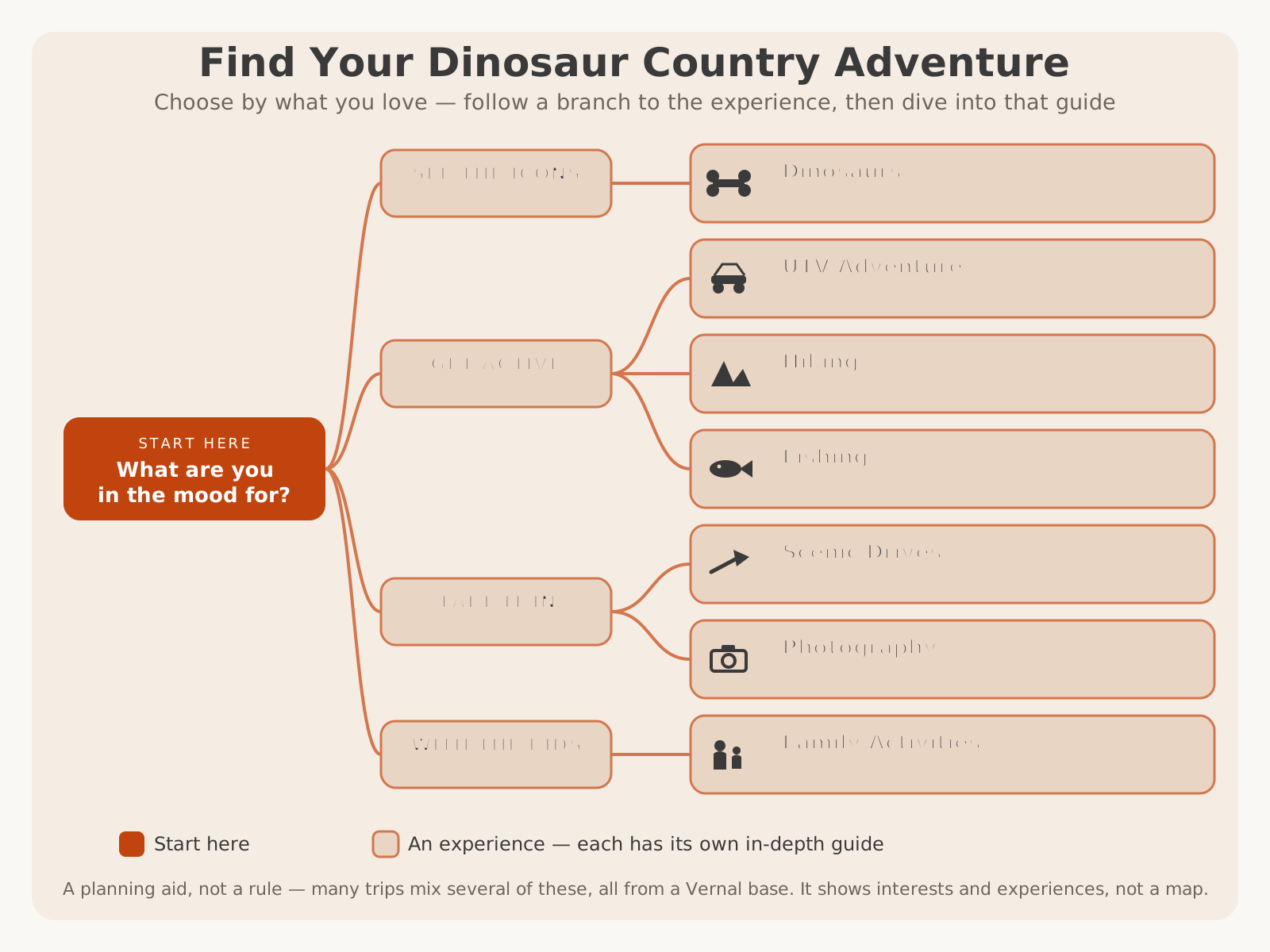
Three days is enough to combine several of these experiences, so it helps to see the full menu first. The selector below sorts the region’s experiences by interest — a quick way to decide which ones earn a day, or a morning, on your trip.
Who This Trip Is For
This itinerary is written for travelers who want to maximize adventure over three days while keeping a realistic, enjoyable pace. If your idea of a great trip is a backcountry ride, a canyon hike, a great road, and a swim in red-rock water — all in one long weekend, without feeling like you ran a race — this is the plan built for you.
It’s an especially strong fit for a handful of travelers. Adventure travelers get the region’s best off-pavement experiences sequenced into a logical arc. Couples get a big-range weekend that balances adrenaline with scenery and genuine downtime. Groups of friends get a shared centerpiece — the guided UTV tour holds a whole group at once — and activities that scale to any number. Outdoor enthusiasts get desert, canyon, water, and alpine terrain in three days. And road-trippers, including anyone driving in from Salt Lake City, get a self-contained three-day anchor that slots into a larger Western loop.
A word on what this guide is not, because the boundaries are what make it useful. This is not an itinerary for everyone — it deliberately leans into adventure, and families or travelers wanting a gentler trip are better served by our 2-day family itinerary or the broader Itineraries hub. It is not a backpacking guide, a UTV guide, or a hiking guide — those live elsewhere on the site, in depth, and this page links to them where they belong. It’s a planning guide: it explains why each activity sits where it does in the three days, so you can adapt the flow to your own group, season, and appetite for adventure with confidence.
The one assumption it makes is that you’ll base in Vernal and treat each day as an outing from town. That single decision — hub-and-spoke, not a moving trip — is what makes three days feel abundant instead of frantic. Unpack once, and let the region come to you.
Planning Before Arrival
A little planning is what turns three ambitious days into three smooth ones. The prep here is short, but the order matters.
First and most important: book your anchor — the guided UTV tour — before anything else. It’s the only experience in this itinerary with fixed departure times and limited capacity, and there’s no substitute for it, so everything else flexes around a set tour time. Adventure Tours Vernal runs 3-hour guided tours on Kawasaki KRX 1000 side-by-sides at $349 per machine for up to 2 riders, with a $125 ride-along option for a third person and a $99-per-hour rate if you extend; there’s a 3-person minimum and room for up to 12 guests across 6 machines, so a couple-plus-one or a whole group of friends can ride together. Reserve early in the busy summer season, and call (435) 219-9447 with any questions about your group. For a fuller picture of what the ride is like, read our backcountry UTV tours guide and the UTV hub.
Next, decide where you’ll sleep and lock it in. Basing in Vernal keeps all three days a manageable day trip and keeps restaurants, fuel, and easy resets close at hand. If you’d rather sleep closer to the adventure, a reservoir campground puts you on the water for Day 2, and a forest campground in Ashley National Forest puts you up in the mountains for Day 3 — see the camping hub for the trade-offs. Either way, reserve ahead in peak season.
Then handle the details that change, because these are the ones that derail adventurers who assume last year’s information still holds. Before you go, confirm current opening hours, entrance and day-use fees, and any reservation, timed-entry, or shuttle arrangements at the monument and the state parks; confirm seasonal road and facility status, especially the higher, more remote stretches of the Day 3 byway, which can close with snow; and check whether any seasonal events coincide with your dates. All of these are set by the managing agencies and change year to year — VERIFY WITH OFFICIAL SOURCE (the National Park Service, the U.S. Forest Service, and Utah State Parks).
Finally, respect the altitude and the arrival. Vernal sits above 5,000 feet, and Day 3 climbs far higher; the elevation and dry air tire visitors faster than they expect, so an easy arrival evening pays off across all three days. If you’re driving in from the Wasatch Front, do the long driving at the edges of the trip and read our Salt Lake City to Vernal travel guide for the route over the mountains, then check the season’s patterns in the Vernal weather guide and pack from our what to bring guide.
Day 1 — Morning: Dinosaurs & Deep Time
Start where the region gets its name, and start early. The first morning belongs to Dinosaur National Monument, and arriving near opening does double duty: the high desert is coolest and calmest in the early hours, and the monument’s marquee sites are more pleasant before the day’s heat and crowds build.
The centerpiece is the monument’s famous wall of real dinosaur bones — hundreds of genuine fossils preserved in place under a roof, exactly where they were entombed. Standing before it is the kind of moment that reframes the whole trip; it’s a jolt of deep time that a photograph never quite delivers. Take your time with it, read the interpretive signs, and let the scale of it land before you move on.
This is exposed high desert, so the ordinary rules apply even in the morning: hats, sunscreen, and far more water than seems necessary. And because the specifics of a monument visit are exactly the things that change — which exhibits and trails are open, entrance fees, opening hours, and any timed-entry, shuttle, or reservation arrangements are set by the National Park Service and vary by season — VERIFY WITH OFFICIAL SOURCE before you build your morning around a particular site. For the monument in depth, read our full visiting Dinosaur National Monument guide.
Day 1 — Afternoon: Cub Creek Drive & a Canyon Hike
The afternoon of Day 1 is where the trip’s first real adventure flavor arrives — not adrenaline yet, but the freedom of a great backcountry road and a trail underfoot. After a Vernal lunch and a cooldown through the hottest part of the day, spend the afternoon on the Cub Creek Road (Tour of the Tilted Rocks) scenic drive inside the monument. It’s a short, spectacular route past dramatically tilted rock, roadside Fremont petroglyphs, and a historic homestead cabin — the kind of drive where the stopping is the point.
Pair the drive with a short canyon or desert hike to stretch the legs and get off the pavement. The monument and the country around it hold gentle-to-moderate trails that reward a half-hour or an hour with big desert scenery and a real sense of the landscape’s bones — see our best hikes in Dinosaur National Monument guide to pick one that matches your energy after a travel day. Keep it reasonable: this is the on-ramp to the trip, not the summit push, and you want gas in the tank for Day 2.
The pacing logic of Day 1 is deliberate: the big, sheltered “wow” in the cool morning; the open road and a short trail in the afternoon. It eases you into the region’s rhythm — hard and hot early, flexible and scenic later — which you’ll lean on again over the next two days. As always, the details that matter most are the ones that change: road status, petroglyph-site access, and facility hours along the drive are set by the National Park Service and vary seasonally, so VERIFY WITH OFFICIAL SOURCE, and carry water — services are sparse once you leave town.
Day 1 — Evening: Settle In & Set Up Day 2
Keep the first evening relaxed and purposeful. After a travel day and an afternoon in the sun, the goal isn’t another activity — it’s a good dinner, a real rest, and a bit of setup so tomorrow’s adventure starts clean. Head back into Vernal, refuel, and let the altitude settle; a mellow first night is the quiet secret to feeling strong on Days 2 and 3.
Use the wind-down to lock in the anchor: confirm your UTV tour departure time, lay out closed-toe shoes and layers for the morning, and refill and freeze water bottles. If you’re a group, sort out who’s driving which machine and settle the ride-along question now rather than in the staging area. A little logistics tonight buys a lot of ease tomorrow.
If anyone still has energy, an easy stroll around town or a short sunset viewpoint is plenty — resist adding a third big stop. Restaurant hours and availability change and can be limited in a small town, especially off-season, so check current hours in advance and don’t count on a late kitchen; VERIFY WITH OFFICIAL SOURCE (the individual establishments) for anything time-sensitive.
Day 2 — Morning: The Backcountry UTV Tour
Day 2 is the heart of the trip, and it opens with the experience most adventurers remember longest: a guided backcountry UTV tour. This is the reason a three-day trip here reads as an adventure and not just a sightseeing loop — it takes you into canyon country most visitors never reach, to arches, slickrock, and remote rock art beyond the end of any paved road.
Here’s how it works, and why it’s such a good fit for a group. Adventure Tours Vernal runs 3-hour guided tours on Kawasaki KRX 1000 side-by-sides, with owners Dave and Trudy handling the driving, the route-finding, and the storytelling, so no prior off-road experience is required — you ride, take it in, and let the guides do the work. The pricing is straightforward: $349 per machine for up to 2 riders, a $125 ride-along for a third person, and a $99-per-hour rate if you want to extend, with a 3-person minimum and capacity for up to 12 guests across 6 machines. That capacity is why the tour anchors a friends’ trip so well — the whole group rides together, on the same route, at the same pace, into country you simply couldn’t reach on your own.
Because the tour is the fixed point of the day, reserve it first and treat its start time as the backbone of Day 2 — a morning departure leaves the whole afternoon open for the water activity that follows. For more on what the ride covers and how it compares to the other tour styles, see our backcountry tours and best UTV trails guides, and the group tours guide if you’re traveling with friends.
Day 2 — Afternoon: Your Water Activity
After the tour and a Vernal lunch, spend the hot part of the afternoon on the water — the single water activity that rounds out the adventure day and cools you off after a morning in the canyons. This is where the itinerary’s “one water activity” belongs, and you have a few genuinely different ways to take it.
The simplest and most flexible option is a reservoir afternoon. Red Fleet State Park pairs a red-rock reservoir with a set of fossilized dinosaur trackways — swim, paddle, and see something extraordinary in one stop. Steinaker State Park is a closer, easy reservoir for a straightforward swim and shoreline time. Both are excellent for an afternoon cast as well, if fishing is more your speed than swimming.
If you’d rather add a second dose of adventure, point the afternoon at the Green River below the dam — a world-class tailwater for fly fishing, and stunning even if you only came to look — or make the water activity a paddle. The bigger water and boating of Flaming Gorge is another option, though it fits more naturally into Day 3’s northern loop if you’d rather keep today close to town. For the full menu of what each water offers, see the fishing hub.
The pacing here mirrors Day 1: the intense, exposed adventure in the cool morning; the restful, cooling water in the hot afternoon. Keep constant watch near reservoirs and rivers, reapply sun protection — the sun reflects hard off water — and know that day-use fees, swim and boat rules, and facility hours at the parks, and licenses, limits, and regulations for fishing, are set by Utah State Parks and the state wildlife agency and change seasonally. VERIFY WITH OFFICIAL SOURCE before you go.
Day 2 — Evening: Recover & Look North
Day 2 has earned an easy, celebratory evening. You’ve done the trip’s centerpiece; now recover for the high-country day to come. Head back into Vernal for a good dinner, swap stories from the tour, and get off your feet — Day 3 is the longest and highest of the three, and it rewards a rested start.
Use the evening to look north and prepare. Day 3 drives the Flaming Gorge–Uintas Scenic Byway up into the mountains, so tonight is the time to check current road and weather conditions over the higher elevations, fuel up (services thin out fast once you leave town), and pack layers and plenty of water for a day that will be cooler up high and can turn stormy in the afternoon. Freeze water bottles again, charge cameras, and decide roughly how far up you want to go — a decision the weather may make for you.
Keep it early. The temptation after a big adventure day is to push the night late, but the best version of Day 3 starts with an early, unhurried departure while the light is good and the high country is calm. Road openings and mountain weather change quickly and are set by the agencies and conditions on the ground — VERIFY WITH OFFICIAL SOURCE before you rely on any particular stretch being open.
Day 3 — Morning: Up the Scenic Byway
Day 3 is the deliberate change of scale — you trade the desert for the mountains, and the driving itself becomes part of the adventure. Point north on the Flaming Gorge–Uintas Scenic Byway, which climbs from the high desert into the cool pine forest of Ashley National Forest and down toward the red canyons of the gorge, with overlook after overlook along the way. After two days of short drives, this is the trip’s one long, scenic day behind the wheel, and it’s meant to be savored — stop often, take the overlooks, and let the elevation and the aspens do their work.
If you want to branch off the main byway, the region rewards it: the geology of the Sheep Creek Geological Loop and the forest and fall color of the Red Cloud Loop are both worthy detours that add backcountry character to the drive. Pick one, or stay on the spine of the byway — either way, you’re climbing into genuinely different country. For the full network and how the routes connect, see the scenic drives hub.
This is higher, more remote driving than Days 1 and 2, so treat it accordingly: carry water and a full tank, watch the afternoon sky on exposed high ground, and know that some stretches climb high enough to close seasonally with snow. Road surface, openings, ferry or facility status, and services all change and are set by the U.S. Forest Service and the agencies — VERIFY WITH OFFICIAL SOURCE for current status before you count on the full loop.
Day 3 — Afternoon: A High-Country Hike & the Drive Home
The afternoon of Day 3 is where the trip reaches its highest point — literally — and then turns for home. Somewhere along the byway, trade the car for the trail and take a high-country hike. The High Uintas offer some of Utah’s finest day hiking, from short drive-up-lake walks to half-day basin routes, in cool alpine air that feels a world away from Day 1’s desert. Choose a hike that matches what’s left in your tank after two full days — this is the trip’s scenic exclamation point, not a test — and let the mountains be the reward.
For most groups, a mellow-to-moderate day hike to an alpine lake or an overlook is exactly right. Ambitious hikers with the fitness and the daylight can aim higher, but keep it realistic: this is the third day of an adventure trip, and the High Uintas are big, remote, and high — the region tops out at Kings Peak, 13,528 feet, the highest point in Utah, which is a serious undertaking well beyond a casual afternoon (see our Kings Peak guide and backpacking guide if the range pulls you back for a bigger trip). Describe your ambitions honestly and let conditions and daylight decide.
Then protect the drive home. Do the descent and any long drive at the calm edge of the day rather than pushing a tired group late into the evening on unfamiliar mountain roads, and check current road and weather conditions before you leave — see the Salt Lake City to Vernal travel guide for the route back over the mountains to the Wasatch Front. Trail distances, difficulty, trailhead access, permits, and road openings all change and are set by the U.S. Forest Service; carry a map where there’s no cell service, and VERIFY WITH OFFICIAL SOURCE before any high-country hike.
Optional Adventure Upgrades
The three-day frame above is complete on its own, but it’s built to scale up for travelers who want more edge. Each of these upgrades adds intensity without breaking the flow — swap one in, don’t just pile them on.
- Extend the UTV tour. If three hours in the canyons leaves you wanting more, ask about extending your tour (the $99-per-hour rate makes a longer ride simple), or look at the different tour styles in the UTV hub. More time on the machines is the most direct way to add adventure to Day 2.
- Add a camping night. Trade a hotel night for a night at a forest campground before Day 3 and you’ll wake up already in the mountains, or a reservoir campground to start the water day on the shore. See the camping hub for the options.
- Make Day 3 a bigger hike. Swap the mellow alpine walk for a longer, more demanding High Uintas day hike if your fitness and the daylight allow — just start early and keep a hard turnaround time.
- Layer in serious fishing. Give the Green River tailwater a proper half-day rather than an afternoon dip; our Green River fly fishing guide covers what makes it world-class.
- Stretch to a fourth day and go deep. With one more day, pick a theme and commit — a High Uintas backpacking overnight, a dedicated fishing trip, or the full Flaming Gorge experience. The Itineraries hub lays out the deeper, theme-first trips.
The one rule with upgrades is the same as with the base trip: add intensity, but not clutter. Every swap should keep the day’s rhythm intact — one anchor per day, hard-and-high paired with rest. A trip you remember is one where a few great things had room to breathe, not one where six adventures blurred together.
Seasonal Variations
The same three days make genuinely different trips depending on when you come, and the biggest planning mistake is fighting the season instead of leaning into it. The rule that ties it together: pair elevation with the calendar — the high country is a summer destination, the desert shines in the shoulder seasons — and let the weather steer the details.
- Summer is the widest-open window and the only time all three days are fully in play: the High Uintas are melted out for Day 3, the reservoirs are prime for the water activity, and the desert simply needs early starts and hard hydration. It’s peak season, so reserve the tour and lodging early, and watch for near-daily afternoon thunderstorms up high on Day 3.
- Fall is a local favorite — cool, comfortable desert days for Days 1–2 and gold aspens on the byway for Day 3, with thinner crowds. The trade-off is a closing window up high: the high country begins to shut down with early snow, so Day 3’s hike options narrow as the season turns, and daylight gets shorter. Confirm road and trail status before you count on the full loop.
- Spring opens the desert first while the mountains are still melting out and muddy. Days 1 and 2 can be superb, but Day 3’s high-country hike may not be feasible yet — plan a lower byway drive or a reservoir day as the alternate, and treat the high trails as a bonus only if they’ve opened.
- Winter is out of scope for this itinerary as written. The high country is snowbound, the byway’s upper stretches close, and the water activity is off-season; a winter visit becomes a low-desert, town-based trip instead. See our winter hiking near Vernal guide for what the cold season does offer.
The two seasons most adventure travelers choose between are summer and fall, and they make genuinely different trips. Here’s how the same three days compare.
| Summer | Fall | |
|---|---|---|
| High country (Day 3) | Fully open — prime for the alpine hike and the full byway loop | Open early, then closing with snow; the window narrows as the season turns |
| Desert (Days 1–2) | Hot and exposed — start early, hydrate hard | Mild and comfortable; often the best desert weather of the year |
| Water activity | Prime reservoir and river season | Cooling; swimming tapers, fishing stays strong |
| Scenery | Green high country, long daylight | Gold aspens on the byway — a color trip |
| Crowds | The busiest window; reserve early | Thinner crowds and easier parking |
| Main watch-out | Heat below and near-daily afternoon thunderstorms up high | Early snow up high and shorter days |
Adventure vs. Relaxed Travel
Even within three days, this itinerary can be dialed up or down. Some travelers want to squeeze every ounce of adventure out of the weekend; others want the same landmarks at a gentler tempo. Here’s how the same three days look at each setting — and why, on a trip this full, a little restraint usually pays off.
| Adventure Tempo | Relaxed Tempo | |
|---|---|---|
| Day 1 | Monument at opening, Cub Creek drive, a longer canyon hike | A leisurely monument morning, the drive, a short easy walk |
| Day 2 | UTV tour, then the Green River or a paddle — a double adventure day | UTV tour, then an easy reservoir swim and shoreline time |
| Day 3 | The full byway loop and a longer High Uintas day hike | The byway’s best overlooks and a short drive-up-lake walk |
| Pace | Dawn starts, long days, few gaps | Later starts, built-in downtime, early dinners |
| Best for | Fit outdoor enthusiasts, groups chasing maximum adventure | Couples, mixed groups, anyone at altitude for the first time |
| Watch-out | Fatigue and heat by Day 3 — hydrate and keep turnaround times | None, really — this is the safe default on a full trip |
UTV-Focused vs. Hiking-Focused
Adventure travelers tend to lean one of two ways: toward the machines and the backcountry access they unlock, or toward the trails and summits underfoot. The three-day frame flexes to either — here’s how to weight it.
| UTV-Focused | Hiking-Focused | |
|---|---|---|
| Day 1 | Monument core, then more of the Cub Creek drive; a short walk | Monument core, then a longer canyon hike in the afternoon |
| Day 2 centerpiece | Extend the UTV tour; more time on the machines in the canyons | Standard 3-hour tour, then trade the afternoon for a trail |
| Day 3 | The full byway loop with backcountry detours; a shorter hike | A longer High Uintas day hike; less driving |
| Best for | Groups chasing off-pavement access and terrain | Outdoor enthusiasts who measure a trip in trail miles |
| Fitness | Moderate — the guide does the driving | Higher — you’re on your feet at altitude |
| Go deeper with | UTV hub · best UTV trails | hiking hub · backpacking guide |
Camping vs. Hotel
Where you sleep shapes the whole trip, and on an adventure itinerary the choice is a real one. Neither is better — they suit different groups and different appetites for roughing it.
| Hotel in Vernal | Camping | |
|---|---|---|
| Best for | Couples, first-timers, anyone wanting easy resets after big days | Groups of friends, gear-ready travelers, adventure purists |
| Base | Central to all three days; unpack once, day-trip out | Reservoir camp for the water day, or a forest camp to start Day 3 up high |
| Comfort | A/C, beds, restaurants and showers close by | The landscape at your doorstep; rustic comforts |
| Mornings | Drive to each day’s start | Wake up already on the water or in the mountains |
| Bad weather | Painless — retreat indoors anytime | Harder; needs a real plan B, especially up high |
| Cost & vibe | Higher lodging; maximum convenience | Often lower; the campsite is part of the adventure |
Photography Opportunities
This itinerary is a photographer’s three days almost by accident — it moves through red canyon walls, backcountry arches, mirror-calm reservoirs, gold autumn aspens, and dark night skies, and it puts you in the right place at the right hour more often than not. A few opportunities stand out.
- Day 1, early light on the monument. The tilted rock and the petroglyphs along the Cub Creek drive shine in warm, low-angle morning light — and the low sun brings out the carving in the rock art far better than midday glare.
- Day 2, canyons you can’t otherwise reach. The UTV tour puts you in arches, slickrock, and remote rock art beyond any road — genuinely unique frames. Bring a strap and a way to secure your gear on the machine, and shoot the reservoir’s red sandstone and glassy reflections at golden hour in the afternoon.
- Day 3, alpine grandeur and aspen gold. The byway’s overlooks and the High Uintas trailheads deliver sweeping mountain scenes, and in fall the aspens turn the drive into a color trip. Catch first light along the byway before the haze builds.
- Night skies. Away from town, the high desert delivers superb dark skies — on a clear, moonless night, stay out for the Milky Way.
A photographer’s ethic for this region: use natural light to reveal fossils, tracks, and petroglyphs — and never chalk, wet, touch, or move any of them to “improve” a shot; they’re irreplaceable and protected. Get off exposed high ground when storms threaten on Day 3. For a camera-first version of the region, see our photography hikes near Vernal guide.
Accessibility
An adventure itinerary asks more of the body than a gentle one, but Dinosaur Country is more accommodating than most because so much of its wonder sits close to the road. Days 1 and 3 both offer accessible cores: the monument has developed sites and drive-up viewpoints, and the Day 3 byway is fundamentally a drive, with overlooks and scenery reachable from the car — often the great equalizer for mixed-ability groups.
The backcountry pieces are where to plan directly rather than assume. The UTV tour is a seated, guided experience that can suit a range of abilities, but it does involve backcountry terrain — ask about accommodations and any considerations for your group when you book, at (435) 219-9447, so Dave and Trudy can set an appropriate route and pace. The Day 3 hike is the most physically demanding element and the least uniformly accessible; a byway drive with overlooks is the natural alternate for anyone who’d rather stay off the alpine trail.
Because accessibility needs are personal and specific facilities change over time, this is an area to confirm rather than guess. Paved surfaces, accessible restrooms, wheelchair suitability, and any shuttle or timed-entry arrangements at the monument and the state parks are set by the managing agencies and vary — anyone in your group with particular mobility requirements should VERIFY WITH OFFICIAL SOURCE (the National Park Service, the U.S. Forest Service, and Utah State Parks) for current accessible options before the trip.
Packing
Three days across desert, canyon, water, and alpine terrain asks for a bit more range than a single-environment trip, but the region’s defining conditions are constant — high elevation, intense sun, dry air, big temperature swings, and fast-changing mountain weather on Day 3 — so a few essentials carry the whole trip. This is a starting checklist; for a full, season-by-season breakdown, see our what to bring guide, and for tour-day specifics, what to wear on a UTV tour.
- Far more water than you think you’ll need, every day, plus extra in the car. Dehydration is the region’s most common real hazard, and shade is scarce on Days 1 and 2.
- Sun protection for everyone — hat, sunglasses, high-SPF sunscreen, light long sleeves. The sun above 5,000 feet is fierce even on cool or cloudy days.
- Layers, and a rain shell for Day 3. The desert cools hard at the edges of the day, and the high country is genuinely cold and can turn stormy fast in the afternoon.
- Closed-toe shoes for the UTV tour, plus sturdy, broken-in footwear for the canyon and alpine hikes.
- Swim gear and quick-dry clothes for the Day 2 water activity, plus a towel and a change of clothes kept in the car.
- A map for the backcountry and high country, where cell service is thin to nonexistent — don’t rely on your phone alone on Day 3.
- A small first-aid kit, any personal medications, and plenty of snacks for long days out.
- Camera gear with a way to secure it on the machine and on the trail, and a way to keep it cool and dust-free.
Keep a stocked car as your mobile base across all three days — spare water, snacks, layers, and a towel in the trunk mean a hot, tired, or wet group is never a crisis. Never skip the water, sun protection, and layers, whatever else you cut.
Planning Tips
Pull the whole trip together into a few simple, flexible habits:
- Book the UTV tour first, then build around it. The tour is the only fixed-time, limited-capacity, no-substitute anchor — reserve it early in peak season and bend the monument, the water, and the byway around its start time. Call (435) 219-9447.
- Follow the land: desert, backcountry, high country. The desert-then-canyons-then-mountains arc keeps every day distinct and paces the intensity so you finish on a high, not on empty.
- Base in Vernal and keep Days 1–2 short on driving. The monument, the reservoirs, and the tour staging are all close; save the one long drive for Day 3, where the road is the adventure.
- Match the elevation to the season. The High Uintas are a summer day; the desert shines spring and fall; winter reroutes the whole trip to the low desert.
- Prioritize flow over cramming. One anchor per day plus real downtime beats a checklist of rushed stops. When in doubt, do less and enjoy it more.
- Front-load the exposed activities; save water and rest for the heat. Do the hot, open work in the cool mornings and cool off or climb higher in the afternoons.
- Respect the altitude and the backcountry. Ease into the elevation, hydrate hard, carry a map and tell someone your Day 3 plan, and keep firm turnaround times on the high-country hike.
- Verify the details that change — every time. Hours, fees, reservations, seasonal road openings, and trail and road status are set by the agencies and providers and change constantly. VERIFY WITH OFFICIAL SOURCE before you finalize.
Planned this way, three days in Dinosaur Country delivers something rare: a full adventure — real dinosaurs, backcountry canyons, a great road into the mountains, an alpine trail, and red-rock water — with enough room to actually enjoy each one. Choose your tempo, match the season, base in Vernal, and let one great day lead into the next. When you’re ready to anchor the weekend with the ride that makes it an adventure, book a UTV tour with Adventure Tours Vernal and let Dave and Trudy show you the country you’d never reach on your own. For more ways to shape the trip, explore the Itineraries hub.